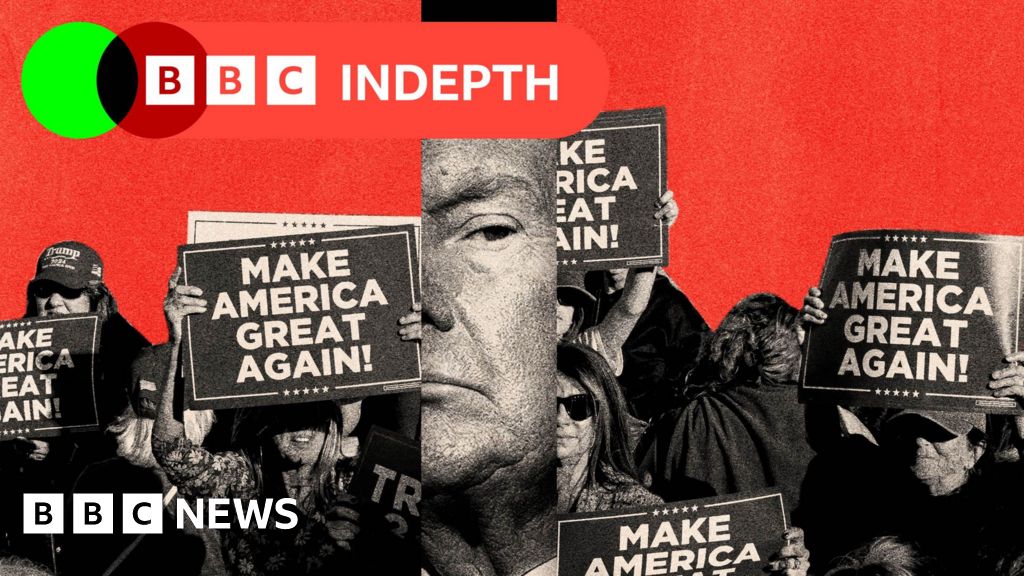
Internal jockeying and ideological fractures are emerging inside Trump’s MAGA coalition as potential successors—figures such as Vice‑President JD Vance, Secretary Marco Rubio, Robert F. Kennedy Jr. and Kristi Noem—position themselves for post‑Trump influence, even as high‑profile feuds (Marjorie Taylor Greene, Nick Fuentes, Elon Musk) and policy disputes expose fault lines. Data cited include a YouGov net approval of -14 (down from +6 at inauguration) and a Manhattan Institute breakdown showing 65% 'core Republicans' versus 29% 'new entrant' Republicans, the latter being younger, more diverse, less reliably pro‑GOP (only just over half say they’d “definitely” vote GOP in 2026), more tolerant of conspiratorial and extreme views, and markedly less unified behind Trump’s potential heirs (roughly 70% core favorable to Rubio/80% to Vance versus ~50% among new entrants). Electoral warning signs include Democratic gains in recent governorships and a ~13% average improvement in margins across contested state and local special elections, while legislative friction (Epstein files vote, filibuster resistance) and policy disagreements raise the prospect of greater political volatility; nonetheless analysts argue the MAGA realignment is structural, meaning the movement will shape GOP policy and risk perceptions even if Trump himself does not remain atop the ticket.
Senior aides and potential successors inside the MAGA orbit are openly jockeying for influence — Vice-President JD Vance, Secretary Marco Rubio, Robert F. Kennedy Jr. and Kristi Noem were all noted at a recent Cabinet meeting as possible post‑Trump figures — while high‑profile feuds (Marjorie Taylor Greene’s split, Elon Musk’s policy criticisms, the Nick Fuentes controversy) and legislative friction (House passage of an Epstein‑files release, resistance to filibuster changes in the Senate) reveal active fault lines within the coalition. Polling and survey data underscore the instability: YouGov shows Trump’s net approval at -14 (down from +6 at inauguration), the Manhattan Institute finds 65% “core Republicans” versus 29% “new entrant” Republicans, new entrants are younger/more diverse and only just over half say they would “definitely” back the GOP in 2026. The new entrants are less unified around likely heirs (core favorability ~70% for Rubio and 80% for Vance versus ~50% among new entrants) and display worrisome tolerance for extreme views (a majority of new entrants say political violence is sometimes justified versus 20% among core Republicans). Recent electoral data — Democrats winning Virginia and New Jersey governorships and a ~13% average Democratic improvement in contested special elections — combined with a moderately negative sentiment score (-0.45) and modest market impact score (0.28) point to elevated political risk but not yet broad market dislocation; the article also argues MAGA’s realignment is structural, meaning long‑term policy direction (economic nationalism, secure borders, America‑First foreign policy) will remain consequential regardless of leadership transitions.
AI-powered research, real-time alerts, and portfolio analytics for institutional investors.
Request DemoOverall Sentiment
moderately negative
Sentiment Score
-0.45
Ticker Sentiment
