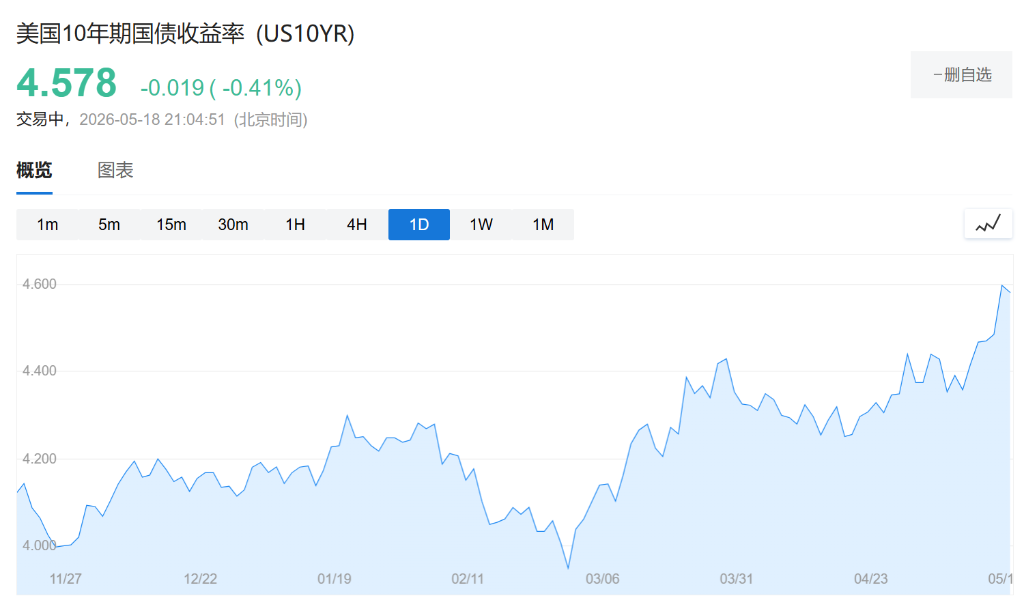
Options trading in TLT surged to more than 3x the recent daily average, with about 1.4 million contracts traded and put buys outpacing call buys by roughly 1.6:1. A trader spent about $2 million on 15,000 June 75 strike puts, while another put on a $3 million straddle through January 2028, signaling expectations for either a sharp further drop in long-duration bond prices or extreme volatility. The move comes amid hotter-than-expected CPI, oil above $100/barrel, and uncertainty around the Fed leadership transition, all of which are pressuring Treasury yields higher.
The important signal is not the headline bearishness in rates, but the asymmetry of positioning: when investors pay up for downside convexity in duration after a CPI/oil shock, it usually means hedgers are responding to balance-sheet pain, not just expressing a view. That makes the move self-reinforcing over the next few sessions because dealer hedging into rising yields can mechanically pressure long-duration assets, especially if TLT breaks prior support and triggers systematic selling from risk parity and vol-control strategies.
The second-order effect is that this is a macro “tightening impulse” even if the Fed stays on hold. Higher long-end yields tighten financial conditions via mortgage rates, corporate discount rates, and refinancing costs, which tends to hit housing, high-multiple growth, and levered credit before it shows up in economic data. If this persists for 2-6 weeks, expect widening swap spreads, weaker auction tails, and more stress in rate-sensitive sectors rather than a clean equity-led recession trade.
The contrarian read is that crowded bearish duration trades often arrive near a local yield spike, not at the start of a multi-month trend. If inflation data merely normalizes and crude retraces, the market could quickly unwind a good portion of the move because the long end is already pricing a lot of policy error and term premium. The key reversal catalyst is not a dovish Fed pivot; it is any evidence that inflation momentum is peaking, because that would force fast covering of put structures and chase buyers back into duration.
AI-powered research, real-time alerts, and portfolio analytics for institutional investors.
Overall Sentiment
moderately negative
Sentiment Score
-0.45
