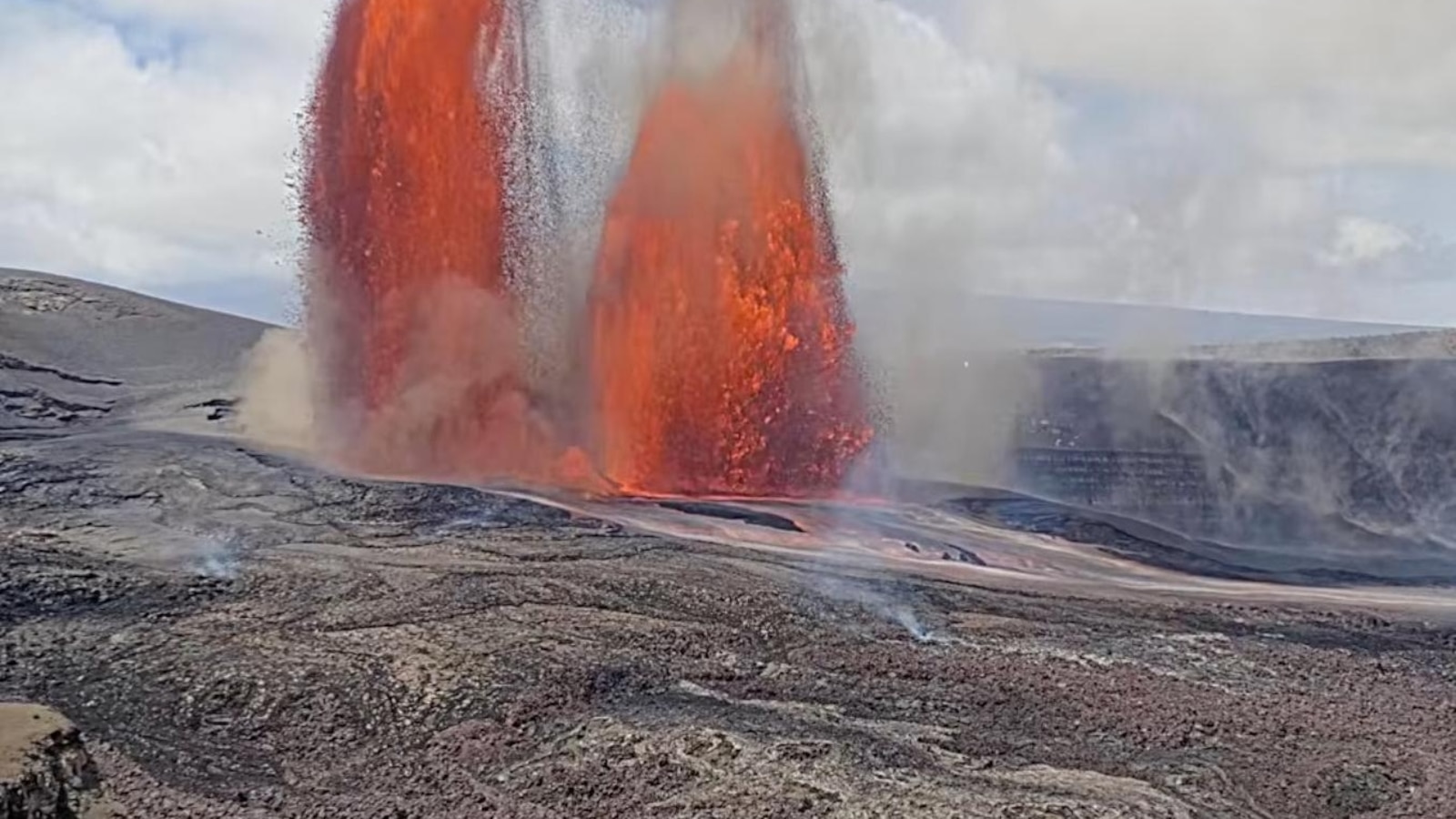
1,000-foot (300 m) lava fountains in Kilauea’s 43rd eruption episode prompted temporary closure of Hawaii Volcanoes National Park and partial closure of Highway 11, with an ashfall warning and opening of a shelter. Falling tephra (ash and volcanic fragments) risks eye/respiratory irritation and can clog water catchment systems used on the Big Island; prior episodes required county cleanup assistance. Market impact is local and limited — short-term disruption to island tourism and transport logistics is possible, but negligible broader market consequences.
This is a localized operational shock with outsized second-order effects on tourism-dependent cash flows and island logistics. Recurrent ash episodes create multi-day demand destruction for discretionary activities (tours, inter-island travel, car rentals) while raising per-incident operating costs for hotels, ferries and airlines via cleanup, HVAC/air filter replacement, and increased insurance friction. Expect booking cancellations and on-the-day spend to drop in the low double-digits for affected micro-regions while national names with concentrated Hawaii exposure see measurable P&L volatility in the coming 1–8 weeks.
Transportation and supply-chain substitution is the key transmission mechanism: when highways and parks are closed, freight and passenger flows re-route — favoring ocean shippers and long-haul carriers capable of resilient routing. Matson and regional freight providers capture short-term volume uplifts and pricing power as road bottlenecks force a modal shift; conversely rental car fleets, ground-transport contractors and tour operators face idled assets and revenue leakage. Capital goods and services players (heavy equipment, HVAC replacement, civil contractors) will see lumpy but tangible demand for weeks–months as communities clean and repair catchment systems and roofs.
Tail risk centers on escalation (wider ash coverage or sustained episodes) which would move impacts from weeks to quarters and trigger state/federal aid, while a rapid cessation reverses effects quickly. Monitor three near-term catalysts: ashfall warnings and highway closure duration (daily), airline cancellation/rebooking ratios (72-hour rolling), and port throughput shifts (weekly). Trades should be sized to reflect high kurtosis — frequent small events with low probability of a large, persistent escalation that would materially change island-wide tourism seasons.
AI-powered research, real-time alerts, and portfolio analytics for institutional investors.
Request DemoOverall Sentiment
neutral
Sentiment Score
0.00
