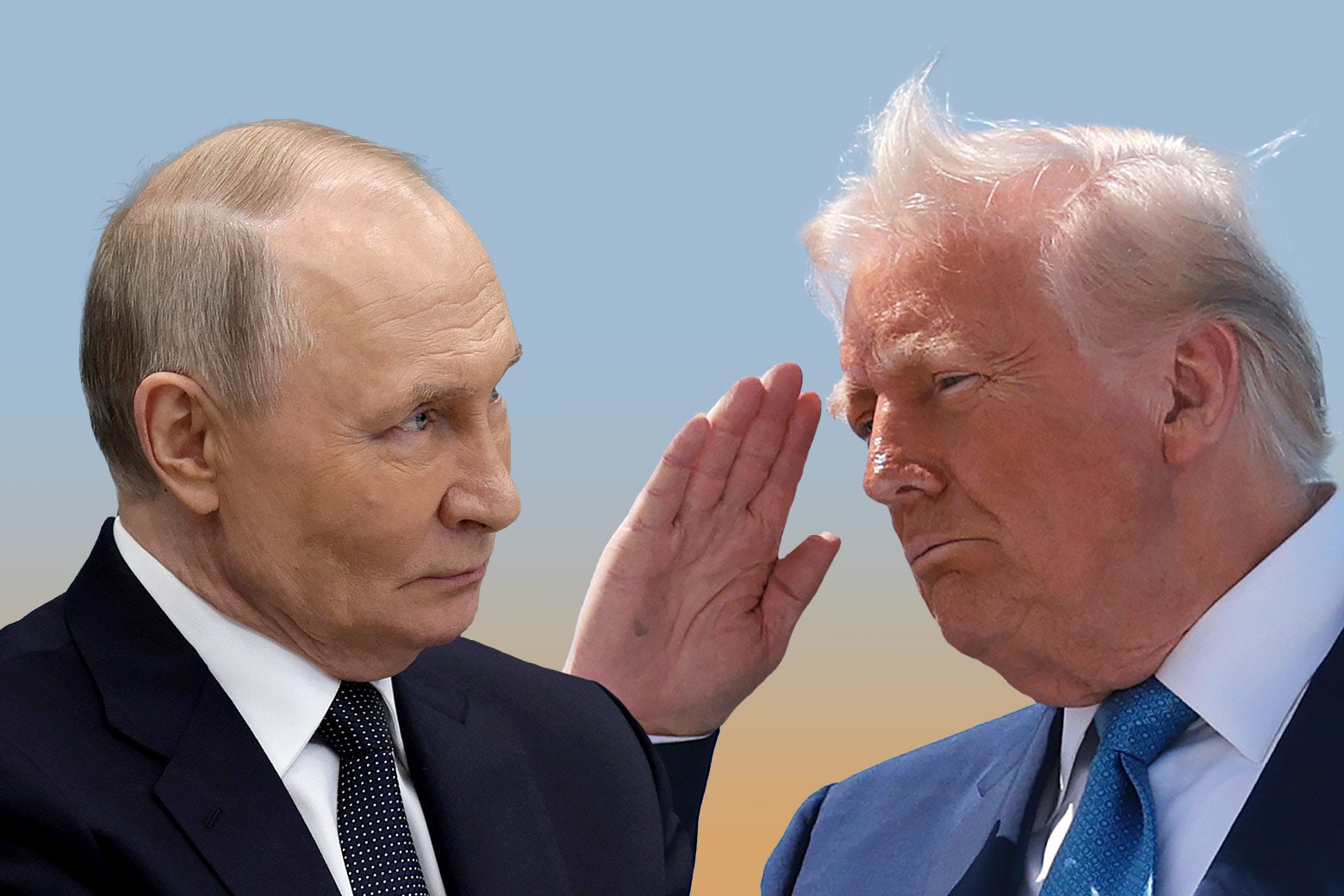
A recent conversation between Donald Trump and Vladimir Putin, lasting over two hours, yielded no progress on the Russia-Ukraine war, with Trump expressing a desire for the conflict to end quickly to facilitate renewed U.S.-Russia trade relations. Trump emphasized the potential for large-scale trade with Russia post-conflict, viewing Ukraine's defense as secondary to these economic and geopolitical goals. This aligns with Trump's broader foreign policy focused on trade, great-power politics, and achieving peace at any cost, potentially impacting Ukraine, Europe, and the established post-World War II global order.
The recent discussion between Donald Trump and Vladimir Putin, reportedly lasting over two hours, yielded no discernible progress toward resolving the Russia-Ukraine war, now in its fourth year. According to the article, Trump emphasized his desire for a swift end to the conflict primarily to re-establish significant trade relations with Russia, which he described as a "tremendous opportunity" with "UNLIMITED" potential, seemingly prioritizing this over Ukraine's sovereignty. This perspective reportedly overshadows the defense of Ukraine, framing it as secondary to what Trump perceives as broader U.S. economic and geopolitical interests. His approach, as outlined, centers on three pillars: trade aimed at U.S. enrichment (potentially through tariffs), transactional "great-power politics," and achieving "peace at any price" to support the former two goals. This policy orientation, if actualized, would mark a departure from traditional U.S. foreign policy by de-emphasizing democratic values, alliances, and soft power, thereby posing significant potential challenges to Ukraine, European security, and the established post-World War II global order. The prevailing sentiment from this information is negative, with a pessimistic tone, and a market impact score of 0.3 suggests underlying geopolitical risk factors rather than acute, broad market dislocation.
AI-powered research, real-time alerts, and portfolio analytics for institutional investors.
Overall Sentiment
Negative
Sentiment Score
-0.30
