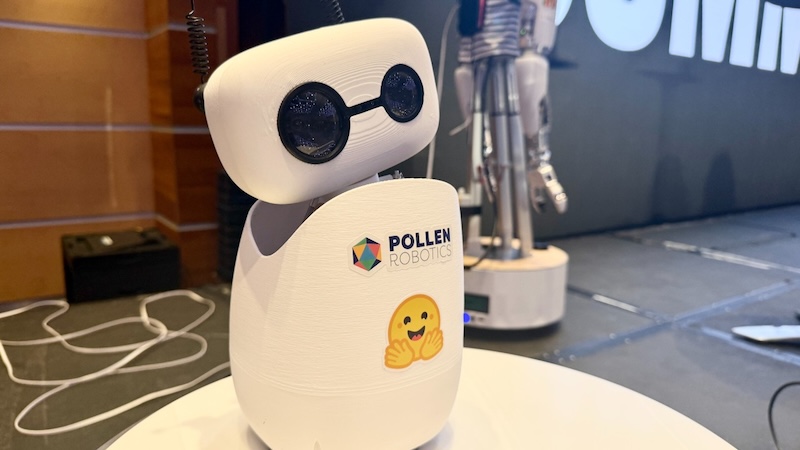
Hugging Face has introduced the open-source Reachy Mini robot, developed via its Pollen Robotics acquisition, a desktop-sized system priced from $299. This represents a drastic reduction from its $70,000 predecessor, aiming to democratize access for AI-robotics development, education, and experimentation with advanced speech, vision, and generative AI models. The strategic launch expands Hugging Face's hardware footprint, positioning it to foster broader innovation and adoption in the accessible robotics and AI integration sector.
Hugging Face is making a significant strategic move into accessible robotics hardware with the launch of the open-source Reachy Mini, a product stemming from its April acquisition of Pollen Robotics. The robot's starting price of $299 represents a dramatic cost reduction from its $70,000 predecessor, Reachy 2, positioning it to democratize access for developers, educators, and researchers. This initiative is synergistic with the company's core open-source AI software strategy, particularly its Le Robot coding repository, as it provides a low-cost physical platform for experimenting with and deploying the latest speech, vision, and generative AI models. By creating an affordable, integrated hardware-software ecosystem, Hugging Face aims to foster a large user community, potentially establishing a standard for AI application development in robotics. While the market includes higher-cost systems like K-Scale's $8,000 K-Bot, Reachy Mini's aggressive pricing carves out a distinct mass-market niche focused on community-driven innovation rather than direct competition in the high-end humanoid robotics segment.
AI-powered research, real-time alerts, and portfolio analytics for institutional investors.
Request DemoOverall Sentiment
strongly positive
Sentiment Score
0.80
