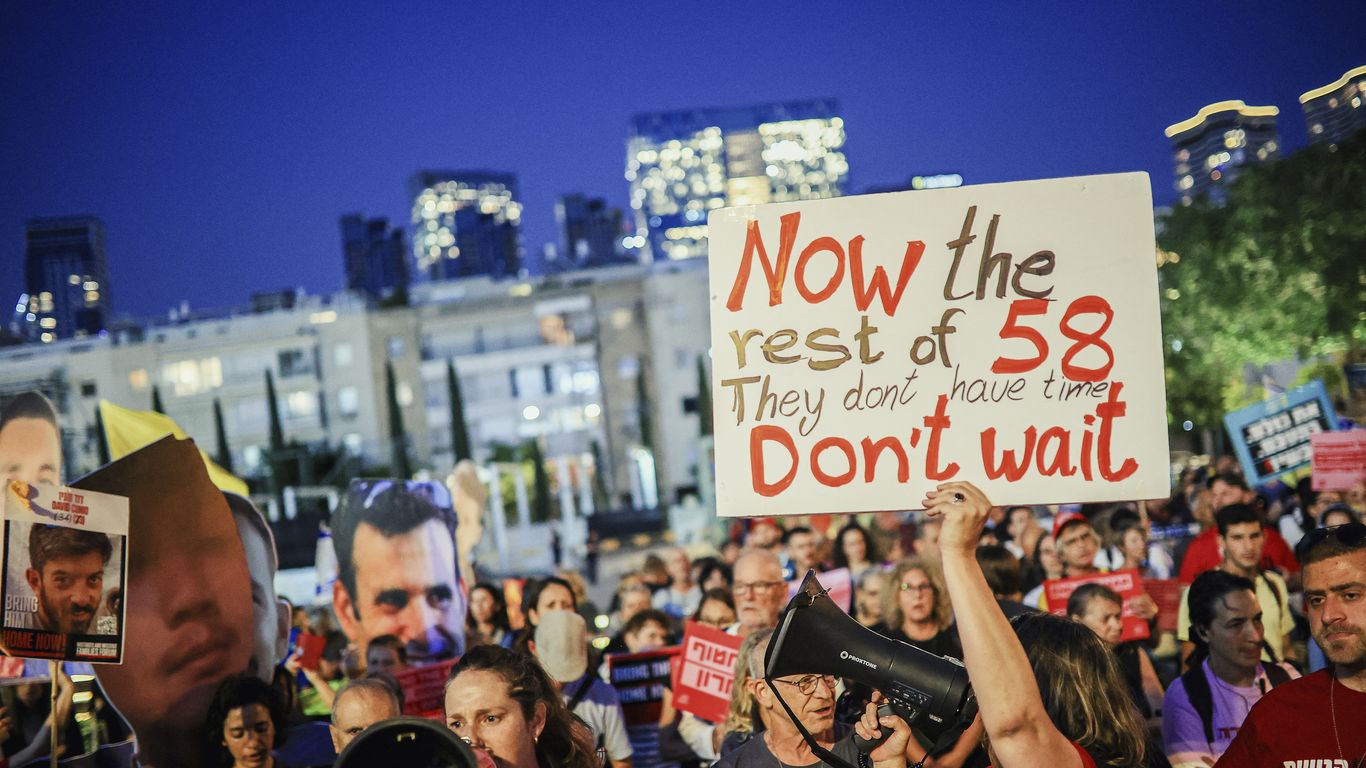
White House envoy Steve Witkoff expressed disappointment over Hamas's rejection of his proposed Gaza hostage and ceasefire deal, which includes the release of 10 live and 19 dead hostages in exchange for a 45-60 day ceasefire and the release of Palestinian prisoners. Contradictory reports have emerged, with Hamas claiming acceptance of a different U.S. proposal involving a 60-day ceasefire and the release of five live hostages initially, followed by another five at the end, alongside increased aid and IDF withdrawal, however, Israeli officials deny this proposal and its terms, particularly regarding a permanent ceasefire, and have rejected a separate deal negotiated by a backchannel intermediary.
Negotiations for a Gaza hostage and ceasefire deal are characterized by significant discord and conflicting accounts, indicating a challenging path to de-escalation. White House envoy Steve Witkoff expressed disappointment over Hamas's failure to accept his proposal, which reportedly includes the release of 10 live and 19 dead hostages in return for a 45 to 60-day ceasefire and the release of Palestinian prisoners, a deal Israel is said to have agreed to. Witkoff asserts this is the sole proposal on the table. Conversely, Hamas announced its acceptance of what it termed a new U.S. proposal, featuring a 60-day ceasefire, the release of five live hostages on day one and another five on the final day, increased humanitarian aid, and an IDF withdrawal to pre-war lines, alongside U.S. guarantees against Israel unilaterally resuming hostilities. This claim is directly contradicted by Witkoff, who denies any new U.S. proposal. Furthermore, a separate agreement negotiated by backchannel intermediary Bishara Bahbah with Hamas, which reportedly included language suggesting an immediate permanent ceasefire after the initial 60-day period, was unequivocally rejected by Israel due to concerns over the number of hostages to be released and the implications of a non-negotiated permanent ceasefire. Amid these diplomatic failures, the Israel Defense Forces are continuing operations in Gaza. The prevailing strongly negative sentiment and pessimistic tone, coupled with a moderate market impact score of 0.6, reflect the high probability of sustained regional instability stemming from this geopolitical flashpoint.
AI-powered research, real-time alerts, and portfolio analytics for institutional investors.
Request DemoOverall Sentiment
strongly negative
Sentiment Score
-0.70
