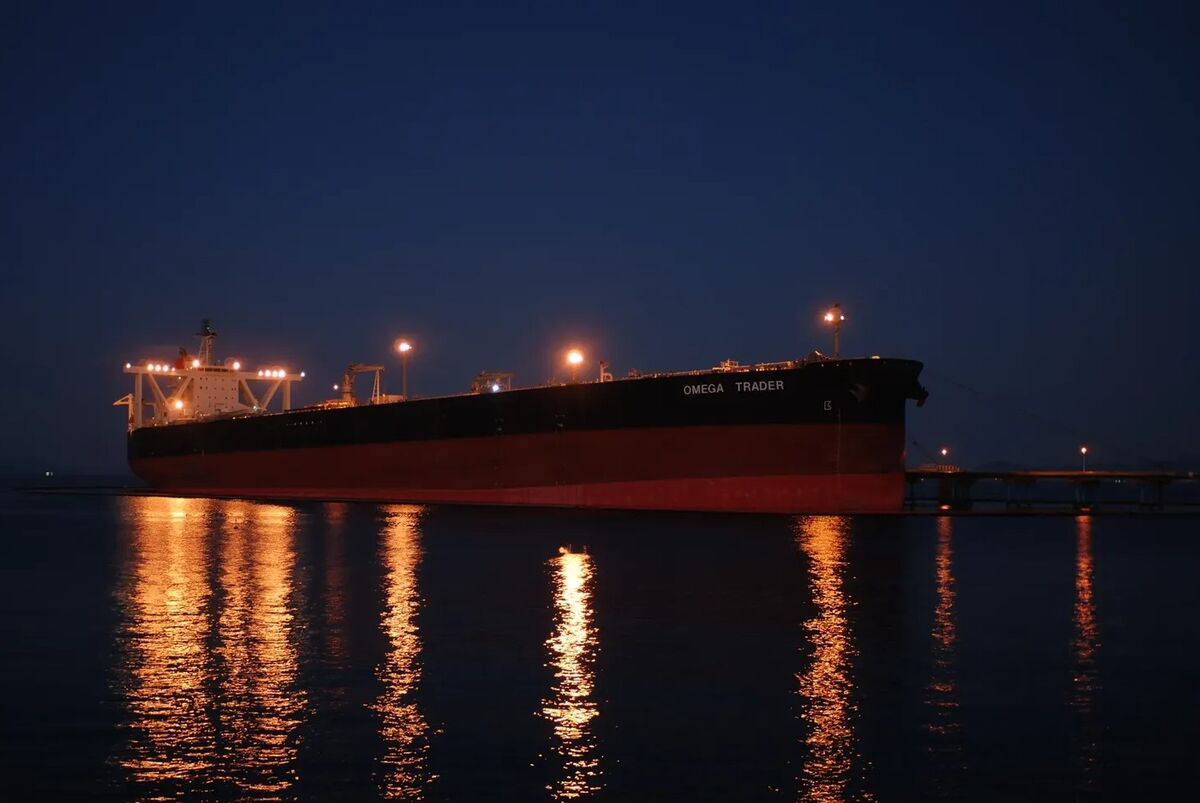
2.0 million barrels of Iraqi crude aboard the tanker Omega Trader transited the Strait of Hormuz with its AIS signal off, the first observed shipment of Baghdad's barrels through the waterway since it largely closed amid the Iran war. Tracking data show the vessel reached Mumbai after last signaling from inside the Persian Gulf more than ten days earlier. The move indicates a limited resumption of Iraqi exports and a modest easing of supply-disruption risk, but the single 2MM-barrel cargo is unlikely to materially move global oil prices.
The transit with AIS off reads as a calibrated market test: buyers and charterers are willing to accept higher operational and insurance friction to keep Asian crude flows intact, but only at a clear risk premium. Expect a marginal barrel surcharge in the short run — operational cost + war-risk premium likely adds roughly $2–6/bbl to delivered price for Gulf-to-Asia cargoes (mechanism: higher P&I premiums, convoy fees, rerouting or time-charter detours). This premium will more than offset small spot Brent moves and is a tradeable spread between crude price and delivered crude economics for refiners in South Asia.
Second-order winners are pure-play VLCC owners and time-charter providers: every incremental voyage earning a $2–5m war-risk uplift meaningfully lifts free cash flow for companies with high fleet utilization; expect buoyant spot rates (BDTI/TD3) to translate to 10–30% near-term EBITDA upside for exposed owners if the situation persists a few weeks. Losers are import-dependent refiners and commodity traders who cannot pass through the premium immediately — margins compress unless they can renegotiate term differentials or source from alternative basins. Insurance and specialty brokers will capture recurring fees; expect reinsurance cycles to harden over months, not weeks.
Tail risks and catalysts are binary and time-sensitive: escalation (missile/attack on a tanker or interdiction) can close the strait for days–weeks, likely spiking Brent $10–30 and freezing exports, while a coordinated naval escort/diplomatic settlement could remove most of the operational premium within 4–12 weeks. Watchable triggers: consecutive days of TD3 VLCC rates > $60k/day, a spike in war-risk hull premiums, or public convoy arrangements announced by buyers/flag states. The most probable near-term reversal is a localized de-escalation that restores insurance market confidence, but structural frictions (sanctions, reflagging, owner caution) will keep a permanent wedge vs pre-war baselines.
The consensus risk is treating this single transit as normalization; it's more likely a market probe that creates a persistent two-tier trade: low-risk sanctioned-free barrels vs marginal, higher-cost barrels that trade at a premium. Positioning should therefore be tactical and volatility-aware — upside is concentrated in owners and short-duration freight exposures, while long commodity exposure is more conditional on escalation outcomes.
AI-powered research, real-time alerts, and portfolio analytics for institutional investors.
Request DemoOverall Sentiment
neutral
Sentiment Score
0.05
