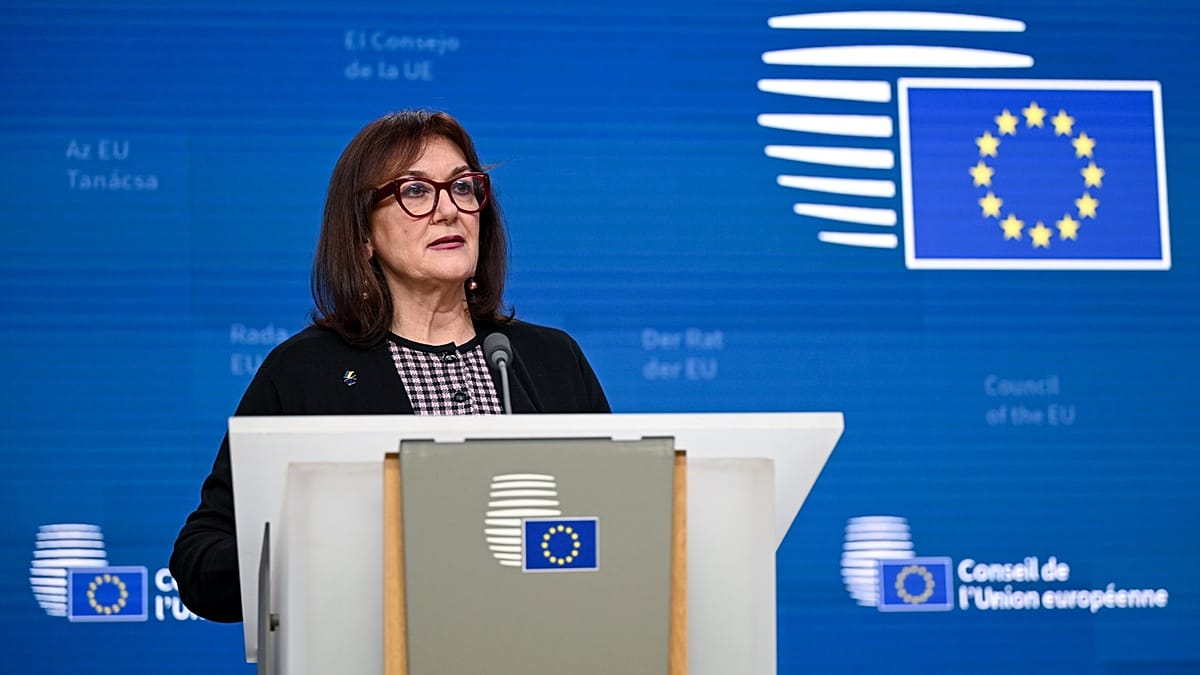
European Commissioner Dubravka Šuica's attendance at the inaugural formal meeting of Donald Trump's Board of Peace in Washington has provoked strong objections from several EU member states, who argue the Commission lacked mandate and may have breached EU treaty norms. The Commission insists it will not join the board but wants to remain engaged in Gaza reconstruction, where the EU is the largest humanitarian donor with €1.65 billion committed since October 7, 2023; Hungary and Bulgaria plan permanent board seats while several other capitals will observe. The dispute highlights risks to EU unity and multilateral coordination over post-war Gaza governance and will be taken up at next week's foreign ministers' meeting, where US-appointed envoy Nickolay Mladenov will link the board to a technocratic Palestinian committee.
Market structure: The Commission's row with member states shifts political weighting toward U.S.-led initiatives and national bilateralism. Immediate beneficiaries are U.S. defense primes and private reconstruction/security contractors who gain de facto preferred-access to Board-funded contracts; losers are EU diplomatic institutions and exporters dependent on a cohesive EU foreign policy, pressuring pricing power for European contractors and raising sovereign risk premia for fiscally stretched members.
Risk assessment: Tail risks include a) accelerated Middle East escalation (low-probability, high-impact) pushing oil +$10+ in weeks and credit spreads +30–100bp for peripheral EU debt, and b) political fragmentation in the EU increasing EUR volatility >3% and sovereign spreads +10–40bp over 1–3 months. Hidden dependency: EU unanimity in foreign policy is fragile — a few more member states joining the Board materially increases the risk of de facto policy bifurcation. Catalysts: next week’s foreign ministers meeting and any public commitments from >5 additional capitals.
Trade implications: Near-term (days–3 months) favor tactical long U.S. defense (6–12 month horizon) and hedges for European macro risk: buy 3-month EURO STOXX 50 5% OTM put spreads (size 1–3% notional) and 3–6 month EUR put spreads ~3% OTM (1–2% notional). If escalation probabilities rise, add 3-month Brent call spreads sized 1% notional to capture oil spikes; conversely reduce long exposure to eurocentric equities and bank debt if peripheral spreads widen >20bp.
Contrarian angles: Consensus underestimates the chance that U.S. leadership of reconstruction accelerates EU defense procurement funding rather than permanently sidelining it; this would benefit select European defense primes over 12–24 months. Consider small, staged long positions in well-capitalized European defense names on 30–90 day pullbacks (target entry if GER/FR rhetoric escalates EUR weakness >2%), because a medium-term rearmament cycle can re-price under-owned European defense assets.
AI-powered research, real-time alerts, and portfolio analytics for institutional investors.
Request DemoOverall Sentiment
neutral
Sentiment Score
-0.10
