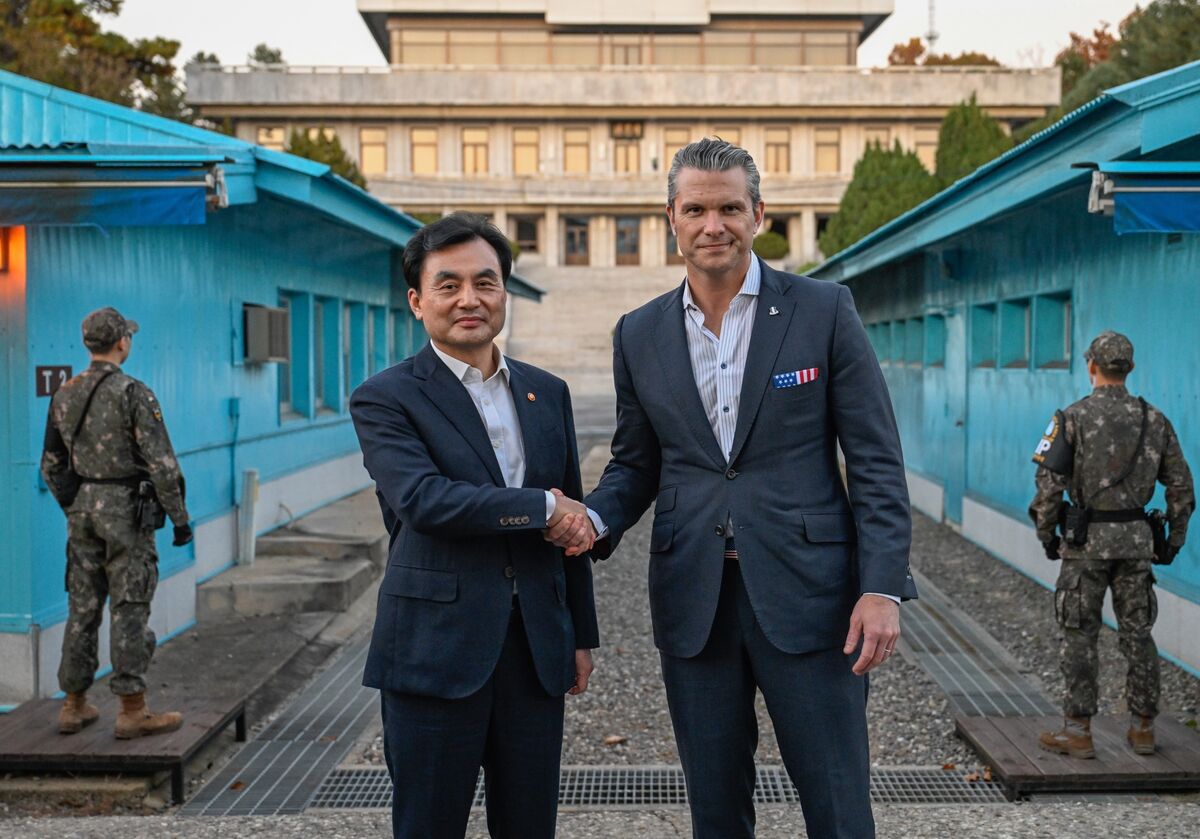
US Defense Secretary Pete Hegseth's visit to the Korean DMZ, concluding his Asia trip, underscores a strategic effort to deepen regional security ties with South Korea against China and reaffirm Washington's commitment to Seoul. This engagement, the first joint visit by defense chiefs since 2017, precedes key bilateral discussions on nuclear-powered submarine development and long-term defense cost sharing, signaling potential shifts in defense spending and opportunities for defense contractors amid rising geopolitical tensions.
US Defense Secretary Pete Hegseth's recent visit to the Korean DMZ, concluding his Asia tour, underscores a strategic push to deepen US-South Korea security ties. This engagement, the first joint visit by defense chiefs since 2017, aims to counter China's regional influence and reaffirm Washington's commitment to Seoul amidst rising geopolitical tensions. The timing highlights the escalating importance of alliances in the Indo-Pacific region.
The visit precedes a key bilateral defense meeting in Seoul, where discussions will focus on cooperation for nuclear-powered submarine development and long-term defense cost sharing. These initiatives signal potential shifts in defense spending and procurement strategies, emphasizing advanced military capabilities and potentially significant capital allocation towards naval assets.
While the general market sentiment remains neutral, the moderate market impact score of 0.45 suggests notable implications for the defense sector. The focus on "Geopolitics & War" and "Infrastructure & Defense" themes indicates potential opportunities for defense contractors specializing in naval systems and advanced military technology, as this development could drive increased demand and investment within the global defense industry.
AI-powered research, real-time alerts, and portfolio analytics for institutional investors.
Request DemoOverall Sentiment
neutral
Sentiment Score
0.00
