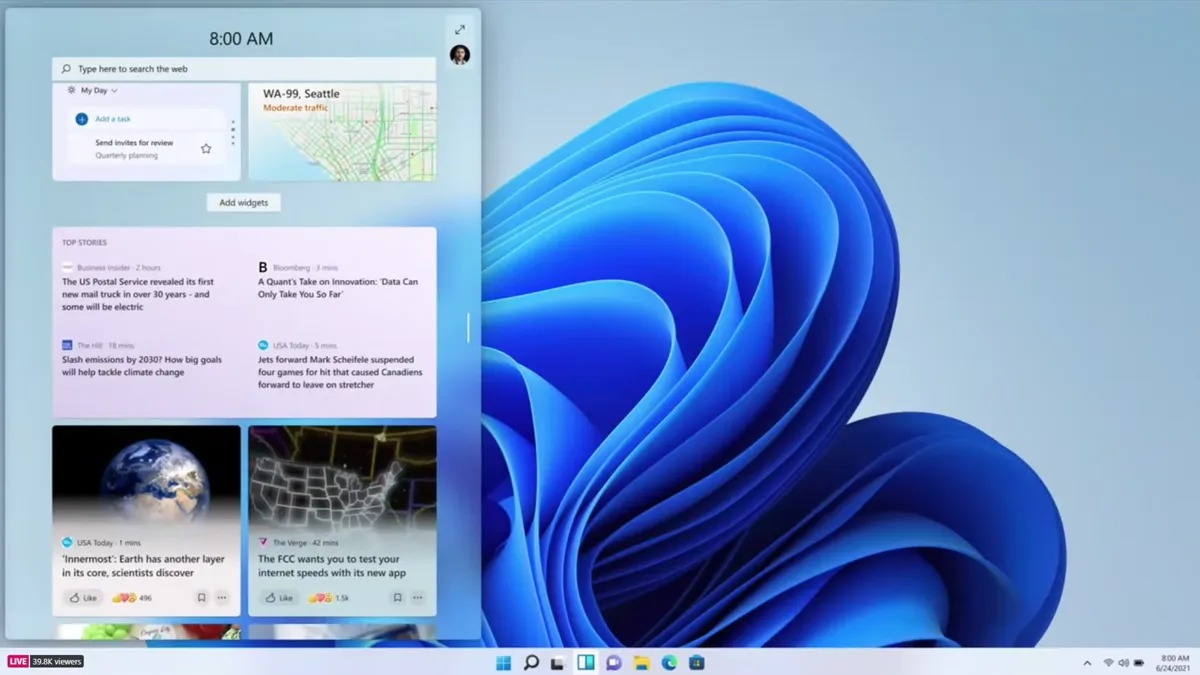
Microsoft confirmed it will build 100% native apps for Windows 11 and is assembling a new team led by Partner Architect Rudy Huyn to focus on Windows apps. Fully native WinUI apps should improve performance, responsiveness and memory use versus current WebView/PWA hybrids (e.g., Clipchamp), potentially improving user experience. Execution risk remains given past unfulfilled promises and no details yet on which apps or timing will be rebuilt.
Rebuilding core client apps to be truly native is an ecosystem-level lever that primarily increases product defensibility rather than driving immediate revenue. Expect user-perceived performance and memory footprints to improve measurably on lower-end hardware, which raises average engagement per device and improves conversion economics for paid features and the Store over a 12–36 month horizon. The competitive payoff is asymmetric: marginal improvement in engagement across hundreds of millions of Windows endpoints compounds into higher lifetime value for software and services, but the upfront cost is engineering hours and developer incentives that will compress near-term margins for groups owning the rebuild effort.
Second-order supply effects are mixed. Better native clients extend device useful life by reducing perceived sluggishness, which can delay corporate refresh cycles by 6–12 months and temper OEM unit growth — a negative for high-volume PC vendors but a positive for subscription-led monetization (Office, Game Pass, Store). Conversely, vendors of cross-platform runtimes and Chromium-based app toolchains could see a demand shock if Microsoft makes WinUI adoption materially more attractive through tooling, funding, or distribution advantages. Market share shifts will be gradual: convincing third-party maintainers to rip out well-tested cross-platform stacks is costly, so meaningful adoption will likely trail any Microsoft marketing push by 12–24 months.
Key risks are execution and stickiness. The plan’s value requires high-quality developer tooling, clear migration paths, and sustained investment; absent that, most vendors will prioritize time-to-market over native fidelity. Watch for concrete developer metrics (WinUI adoption rates, Store conversion lift, developer tooling downloads) and corporate guidance on Store/service monetization as the earliest objective catalysts that could re-rate expectations within the next 2–4 quarters.
AI-powered research, real-time alerts, and portfolio analytics for institutional investors.
Request DemoOverall Sentiment
mildly positive
Sentiment Score
0.25
Ticker Sentiment
