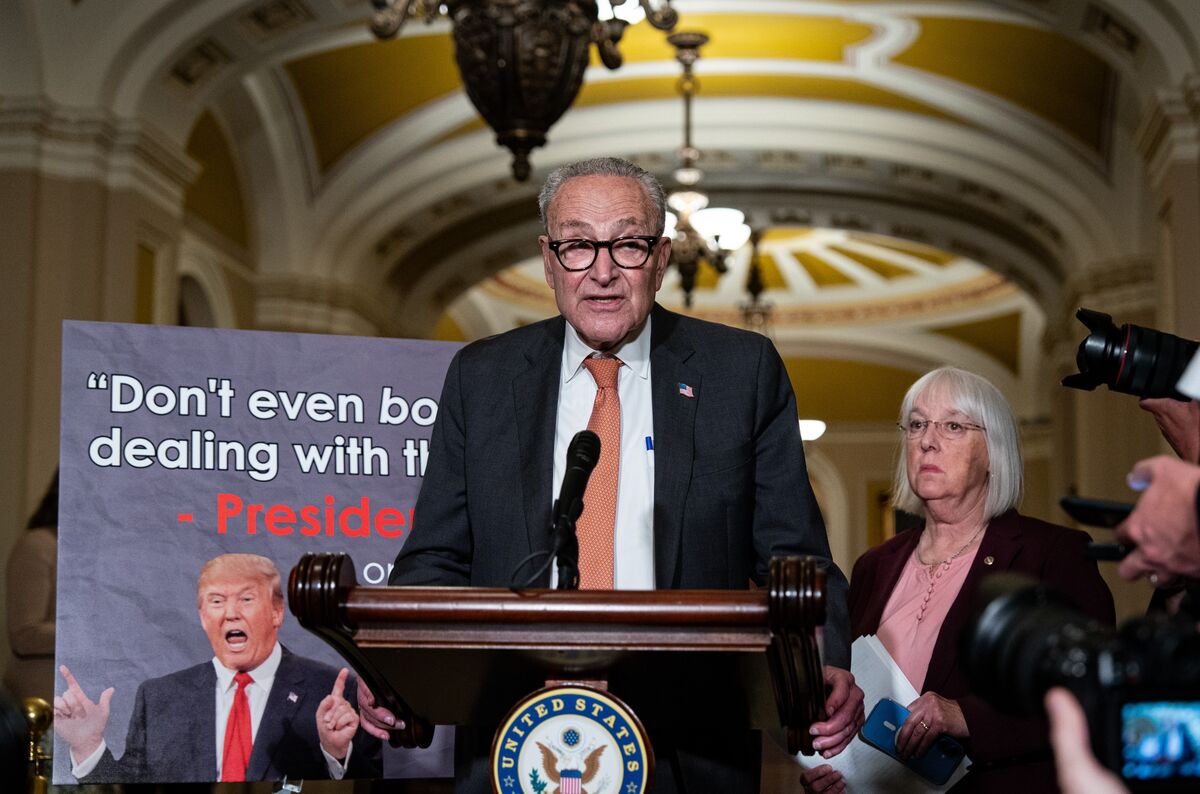
Senate Minority Leader Chuck Schumer and House Minority Leader Hakeem Jeffries are adopting a firm stance against a potential government shutdown, leveraging the upcoming expiration of Affordable Care Act tax credits as a key negotiating point. This unified Democratic strategy aims to pressure Republicans, who are facing negative polling on healthcare, to engage in negotiations rather than risk a shutdown. The move signals increased political leverage for Democrats and could force a bipartisan resolution on critical fiscal matters.
A significant shift in Democratic strategy has elevated the risk of a U.S. government shutdown, creating a key source of political and fiscal uncertainty for markets. Congressional Democrats, under the unified leadership of Chuck Schumer and Hakeem Jeffries, are now leveraging the impending expiration of Affordable Care Act (ACA) tax credits as a central negotiating point. This approach marks a more assertive stance compared to six months prior and is designed to pressure Republicans, who are reportedly weakened by negative polling on their healthcare proposals. The situation introduces moderate potential market impact, reflected by a score of 0.5, as the standoff intertwines critical themes of fiscal policy, tax legislation, and healthcare regulation. While the article speculates this pressure could force a bipartisan deal, the immediate outcome remains uncertain, positioning a government shutdown as a tangible tail risk for investors.
AI-powered research, real-time alerts, and portfolio analytics for institutional investors.
Request DemoOverall Sentiment
mixed
Sentiment Score
0.00
