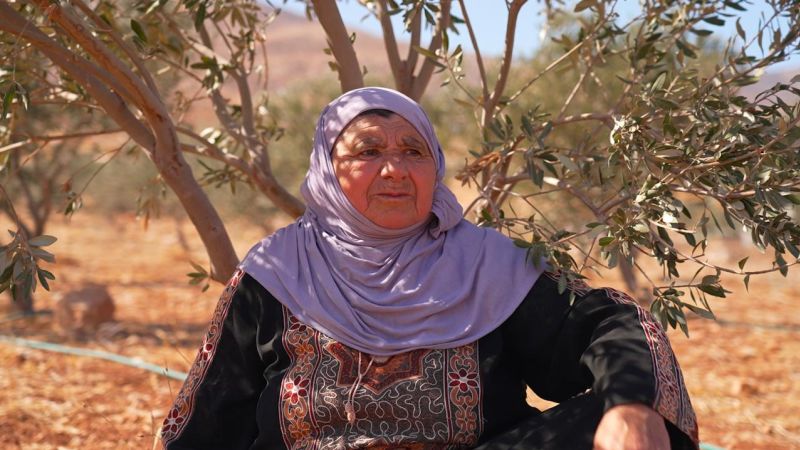
Escalating settler violence and Israeli military restrictions in the West Bank are severely disrupting the critical Palestinian olive harvest, which serves as the economic backbone for up to 100,000 families. UN data indicates a 13% increase in settler attacks in H1 2025, resulting in widespread property damage, including over 4,000 vandalized olive trees, and significant financial losses for farmers, exemplified by one family's reported $25,000 loss over two years. This escalating conflict is viewed as part of an "accelerated Israeli land grab" and de-facto annexation, raising concerns about regional stability and the long-term economic viability of Palestinian agriculture, despite international condemnation and calls for accountability.
The escalating settler violence and Israeli military restrictions in the West Bank are severely disrupting the Palestinian olive harvest, a critical economic backbone for up to 100,000 families. UN data indicates a 13% increase in settler attacks in H1 2025, resulting in over 4,000 vandalized olive trees and significant financial losses, with one family reporting a $25,000 loss over two years. This systematic disruption directly undermines agricultural livelihoods and regional economic stability.
This situation is framed within an "accelerated Israeli land grab" and de-facto annexation, with Prime Minister Netanyahu confirming a doubling of Jewish settlements in the West Bank. The UN has condemned the failure to prevent or punish such attacks, highlighting inconsistencies with international law and the operational challenges posed by a two-tiered legal system. The IDF's acknowledgment of misconduct in some instances, alongside its stated aim to "prevent friction" by restricting access, underscores the complex and volatile security environment.
Despite the absence of specific corporate tickers, the "extremely negative" sentiment and "moderate to high" market impact score suggest broader implications. The disruption of a key agricultural commodity like olives, coupled with heightened geopolitical tensions, introduces significant supply chain and operational risks for entities with exposure to the broader Middle East agricultural sector. This scenario signals an elevated risk premium for investments in politically sensitive agricultural regions.
AI-powered research, real-time alerts, and portfolio analytics for institutional investors.
Request DemoOverall Sentiment
extremely negative
Sentiment Score
-0.90
