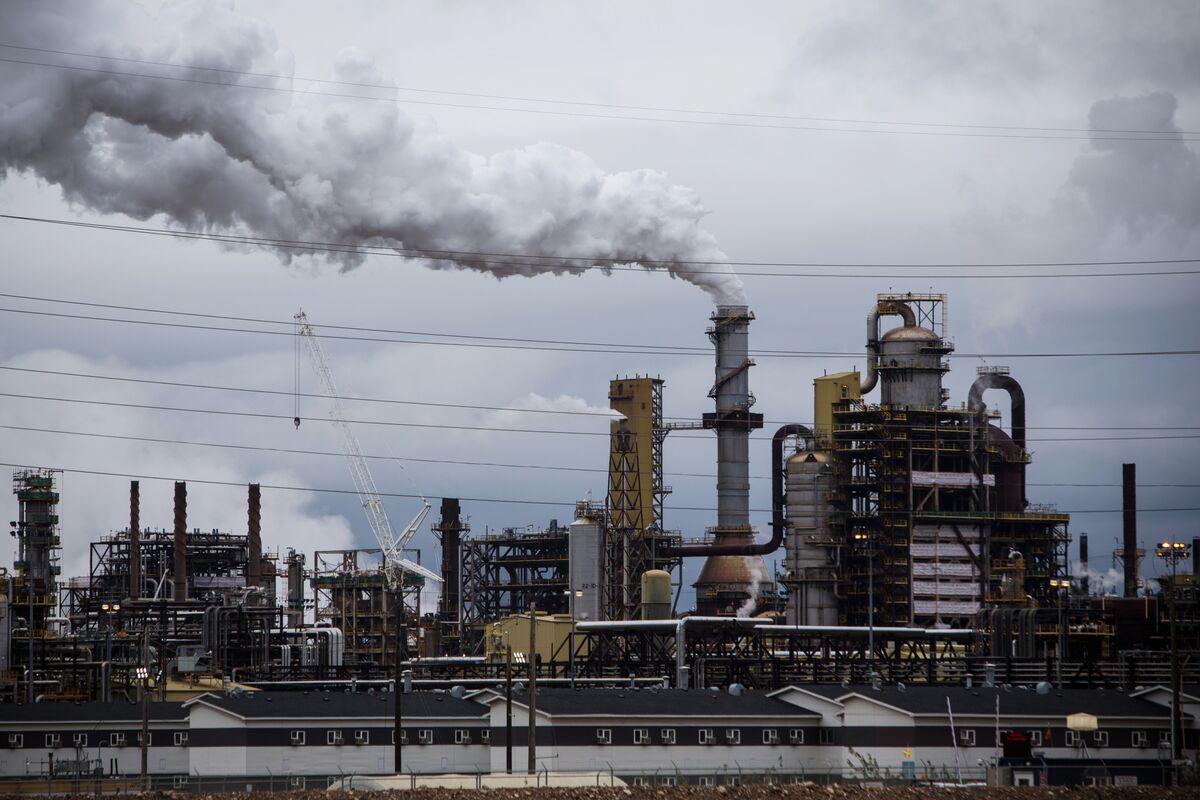
Alberta government data indicates Canada's oil sands industry reduced its overall emissions intensity for the sixth consecutive year in 2023, reaching 0.399 metric tons of carbon dioxide equivalent per cubic meter of bitumen, down from 0.404 in 2022; this improvement was driven by efficiencies at oil sands mines, while in situ operations experienced an increase in emissions per barrel.
Alberta government data indicates a continued, albeit marginal, improvement in the environmental performance of Canada’s oil sands industry, with overall emissions intensity falling for the sixth consecutive year in 2023 to 0.399 metric tons of carbon dioxide equivalent per cubic meter of bitumen, a decrease from 0.404 in 2022. This positive trend is primarily driven by advancements and efficiencies at oil sands mining sites. However, a notable counter-trend exists within in situ oil sands operations, which employ well-based extraction techniques similar to traditional oil production, where emissions per barrel actually increased. This divergence highlights differing operational dynamics and technological challenges within the broader oil sands sector. While the aggregate reduction is a mildly positive signal for the industry's efforts to mitigate its carbon footprint, the increasing emissions intensity in the in situ segment, a growing part of production, warrants careful monitoring as it could temper overall environmental progress and affect investor perception concerning ESG & Climate Policy.
AI-powered research, real-time alerts, and portfolio analytics for institutional investors.
Request DemoOverall Sentiment
mildly positive
Sentiment Score
0.25
