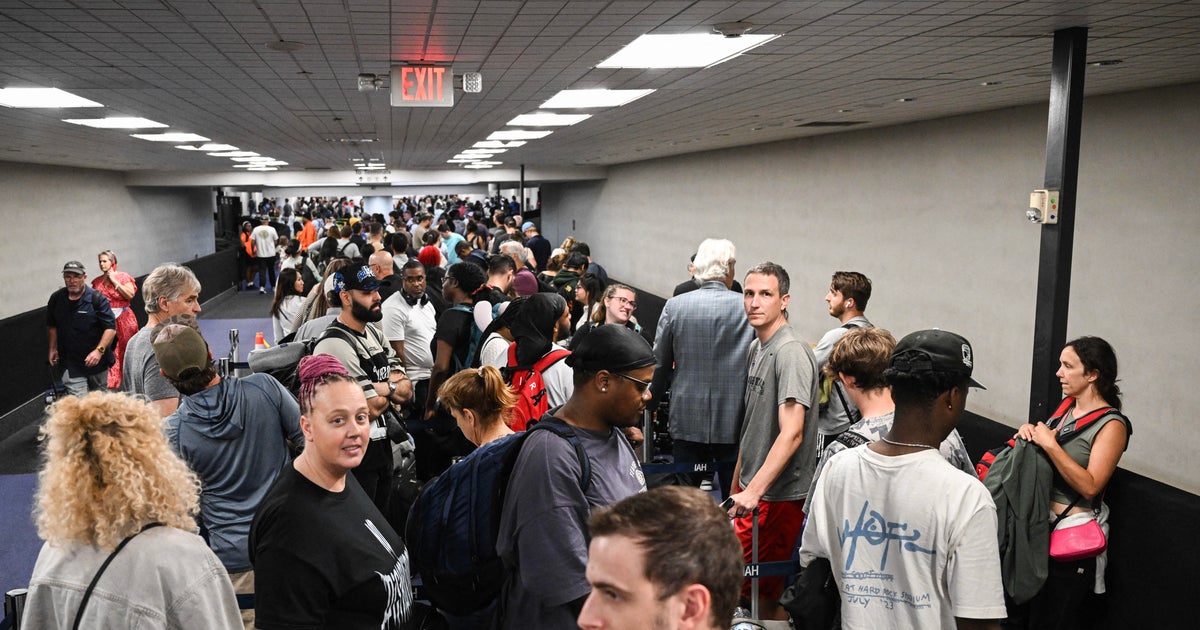
Up to six-hour TSA wait times reported as ICE and other DHS agents were deployed to 14 airports amid a partial government shutdown. More than 3,400 TSA officers — nearly 12% of those scheduled Sunday — called out, producing severe staffing shortages and major delays at hubs including Houston and Atlanta. The deployment and comments from President Trump (no masks; potential National Guard backstop) heighten political risk as Senate negotiations stall, creating short-term operational disruption for travel and airport operations.
Operational fragility at a few critical nodes can produce outsized, persistent earnings slippage through two mechanisms: throughput loss (fewer passengers processed per hour) and labor/irregular-ops cost inflation (rebooking, hotels, crew repositioning). Airlines and airport vendors have thin unit economics on short-haul flows; a sustained increase in irregular ops of even a few percentage points converts recurring ancillaries into net losses because of reissue fees, vouchers, and disrupted connectivity chains.
Customer behavior shifts matter more than a single headline: increased probability of last-minute cancellations, higher demand for refundable fares, and a transient move away from small-connection itineraries compress yields and drive up distribution costs (call-center load, manual reissues). These flow changes favor firms with high direct-booking penetration and generous change policies, and punish legacy carriers with complex interline flows and high regional feed exposure.
The political/regulatory axis is the dominant catalyst: a funding patch within 1–3 weeks would normalize operational staffing and should produce a fast mean reversion in sentiment; a protracted impasse (months) materially raises the chance of temporary federal augmentation that increases operating friction and legal/regulatory risk for carriers. This bifurcation creates profitable binary outcomes for options and event-driven capital.
Net implication: the market should treat current dislocation as an event-driven liquidity window rather than a structural demand hit — opportunities exist on both sides for short-duration volatility plays and medium-term idiosyncratic shorts where operational leverage is highest.
AI-powered research, real-time alerts, and portfolio analytics for institutional investors.
Request DemoOverall Sentiment
mildly negative
Sentiment Score
-0.30
