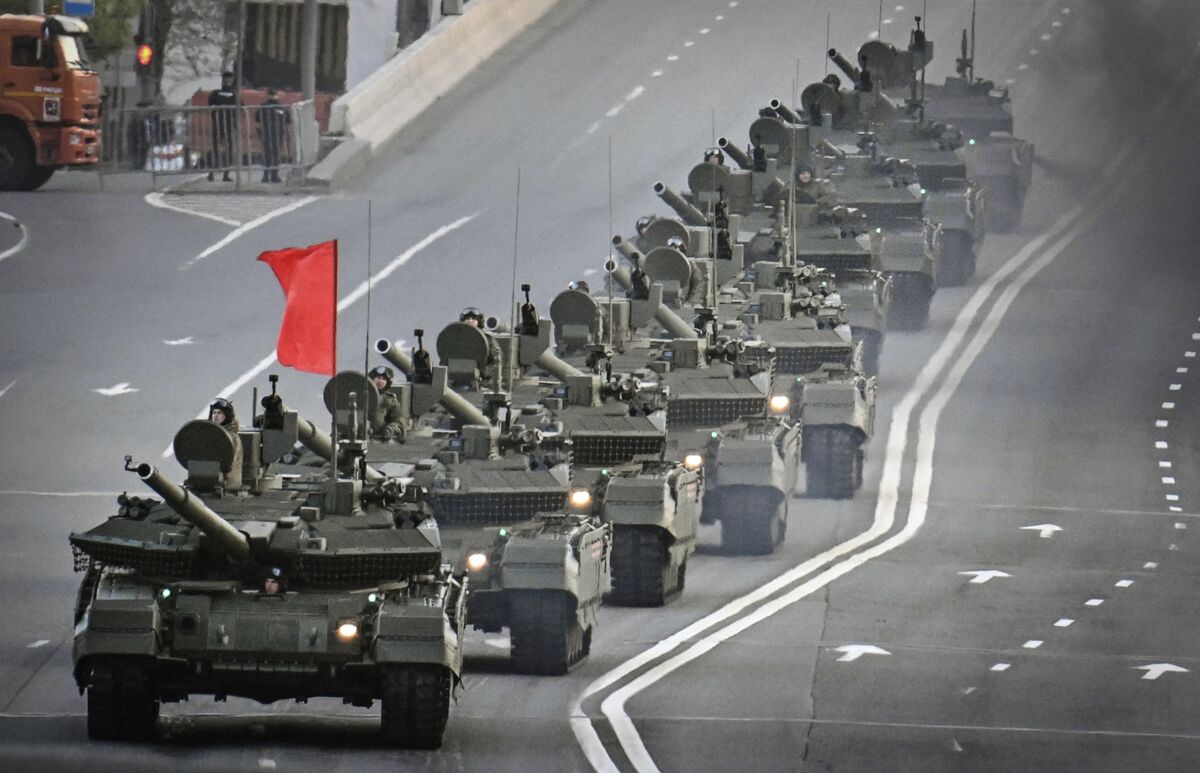
Russia plans to maintain robust defense spending over the next three years, signaling a prolonged military commitment rather than an imminent end to the war in Ukraine. Interfax reports projected outlays of 12.6 trillion rubles ($151 billion) in 2025, increasing to 13.6 trillion rubles in 2027, and 13.05 trillion rubles in 2028, effectively sustaining current high levels.
Russia's draft budget for the next three years signals a clear commitment to maintaining high levels of military expenditure, directly undermining expectations of a near-term conclusion to the war in Ukraine. The plan, as reported by Interfax, outlines defense spending of 12.6 trillion rubles ($151 billion) for 2025, which, despite being a slight trim, is followed by a rise to 13.6 trillion rubles in 2027—a figure that roughly matches this year's peak levels. This fiscal trajectory indicates that the Kremlin is provisioning for a prolonged conflict or a sustained state of heightened military readiness, rather than a de-escalation. The multi-year forecast solidifies military spending as a core, non-negotiable component of Russia's national budget, reinforcing the geopolitical and macroeconomic risks associated with the ongoing conflict.
AI-powered research, real-time alerts, and portfolio analytics for institutional investors.
Request DemoOverall Sentiment
moderately negative
Sentiment Score
-0.50
