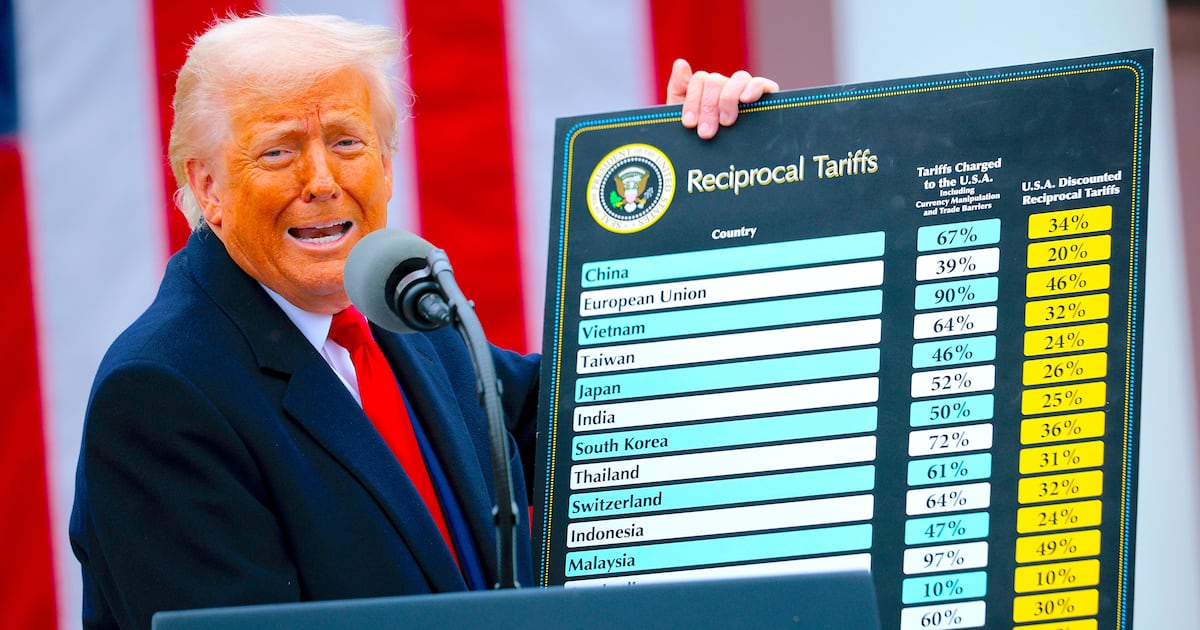
A wide range of U.S. companies are raising prices after President Trump’s import tariffs pushed input and tariff-related costs higher, with firms citing high single-digit price increases (Columbia Sportswear), item-specific hikes (Levi’s jeans +$10 to $108 and +$5 to $84.50), and McCormick reporting $70M in gross tariff costs in 2025 and $50M of incremental costs this year. Structural Systems expects to lift prices ~10–15% after a ~10% steel price increase last year, while Stanley Black & Decker noted last year’s price increases reduced U.S. sales for lower-priced items. The moves coincide with Adobe’s Digital Price Index showing the largest monthly online-price rise in over a decade and Fed Chair Powell warning tariffs will further push goods prices, signaling renewed downside pressure on consumer demand and corporate margins.
Market structure: Tariffs are a targeted supply shock that benefits domestic input producers (U.S. steel, some commodity growers) while compressing margins for import-reliant consumer brands (LEVI, COLM) and price-sensitive segments (Stanley Black & Decker lower-end tools). Expect a 5–15% pass-through into retail prices over 3–9 months; winners are firms with >50% gross-margin pass-through contracts or vertically integrated supply, losers are high-volume low-margin SKUs and private-label competitors that cannot reprice.
Risk assessment: Tail risks include tariff escalation/retaliation, a Fed forced to hike on higher CPI (triggering a shallow consumer recession), or a sudden policy rollback that re-compresses domestic supplier margins. Immediate (days–weeks) risks: earnings guidance revisions and inventory re-ordering; short-term (3–12 months): volume declines of 3–10% in discretionary categories; long-term (12–36 months): supply-chain reshoring and capex reallocation that permanently raise breakevens for domestic producers.
Trade implications: Tactical opportunities—short low-margin hardware/retailers and pair long domestic commodity/steel names vs short discretionary apparel; use 3–12 month horizons and volatility overlays. Options: buy 3–6 month OTM puts on structurally exposed names (SWK, LEVI) and sell covered calls on stable pass-through staples (MKC) to capture elevated IV and funding. Cross-asset: higher tariffs push 5–10 bp higher on 5y breakevens and widen credit spreads in retail (watch IG retail CDS).
Contrarian angles: Consensus assumes permanent margin erosion; historically (2018 tariffs) many branded staples preserved margins via targeted raises and recovered volumes in 6–12 months. Mispricings likely in well-branded staples (MKC) that are oversold relative to cyclical apparel (LEVI) — a 6–12 month re-rating is plausible if CPI softens or firms demonstrate sustained pass-through.
AI-powered research, real-time alerts, and portfolio analytics for institutional investors.
Request DemoOverall Sentiment
moderately negative
Sentiment Score
-0.55
Ticker Sentiment
