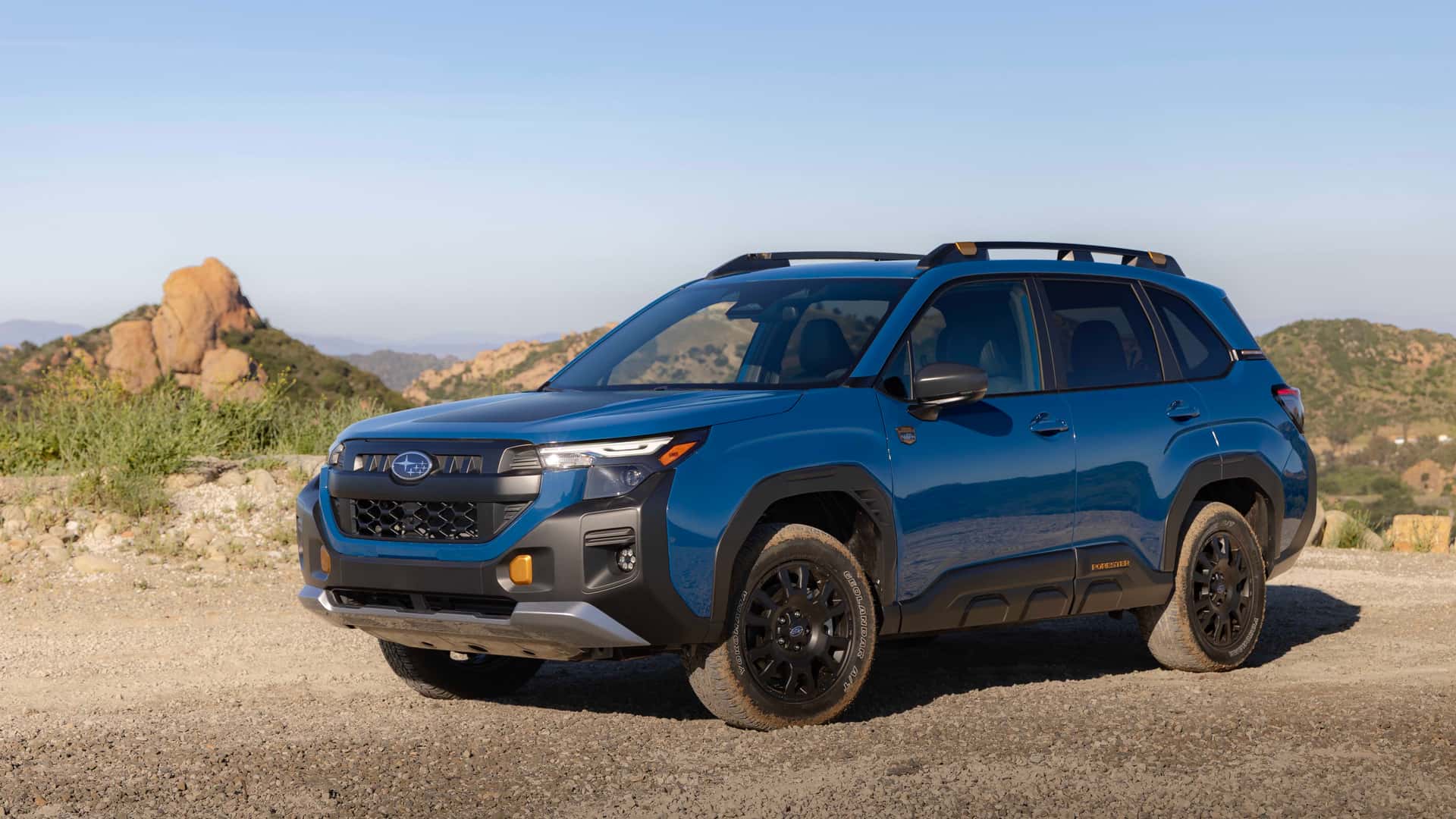
Subaru claims a 25% fuel-efficiency improvement for the 2027 Forester Wilderness Hybrid versus the non-hybrid Wilderness (implied ~35 mpg highway / ~31+ mpg city from a 28/25 mpg baseline). Power rises to 194 hp from 180 hp (+14 hp) with improved low-end torque, 9.3 inches of ground clearance, all-terrain tires, upgraded roof rails and premium interior tech (11.6" center display, 12.3" driver display, Harman Kardon); price is not yet announced and on-sale is slated for late 2026. Product should modestly boost demand for Subaru's Wilderness lineup but is unlikely to have a material near-term impact on the equity beyond a modest positive sentiment shift.
Subaru pushing its off-road “Wilderness” badge into hybrid powertrains is a margin and portfolio-management move more than just an efficiency play — it lets Subaru upsell a higher-ASP variant to its most loyal customers while preserving the lifestyle positioning that reduces price elasticity. Expect higher option attach, elevated service revenue (battery check/conditioning, hybrid-specific maintenance), and longer owner retention windows that incrementally lift LTV per vehicle by a few hundred to low-thousand dollars over ICE peers.
On the supply side this increases near-term demand for modest-capacity battery modules, e-motors, inverters and software integration rather than utility-scale cells — a different supplier cohort than full-EV buildouts. That should benefit Tier-1 electrification specialists (power electronics, integration software) and OEMs that license hybrid tech, while rare bottlenecks in modules or inverters could create 3–9 month fulfillment slippage and force dealers to take higher financing incentives.
Competitively, ICE-first off-road nameplates (mid-cycle Bronco, Wrangler derivatives, RAV4/TRD) face pressured mix unless they introduce hybrid variants quickly; brands that can’t economically hybridize will either concede share or compress incentives. Second-order winners include aftermarket tent/roof-rail suppliers and outdoor-focused subscription services; losers include high-turn used-car aggregators — hybrids lengthen holding periods and reduce off-lease supply, tightening acquisitive pipelines.
Key catalysts to watch: Subaru’s pricing announcement (late 2026) and early EPA/real-world fuel-economy splits over the first 6–12 months, Tier-1 supplier backlog reports in the next 3 quarters, and dealer trade-in/turn metrics that will reveal whether retention materially increases. Principal tail risks are rapid battery-cost deflation that favors full EV off-road entrants within 2–4 years or supply-chain shocks that delay deliveries and force discounting.
AI-powered research, real-time alerts, and portfolio analytics for institutional investors.
Request DemoOverall Sentiment
moderately positive
Sentiment Score
0.35
Ticker Sentiment
