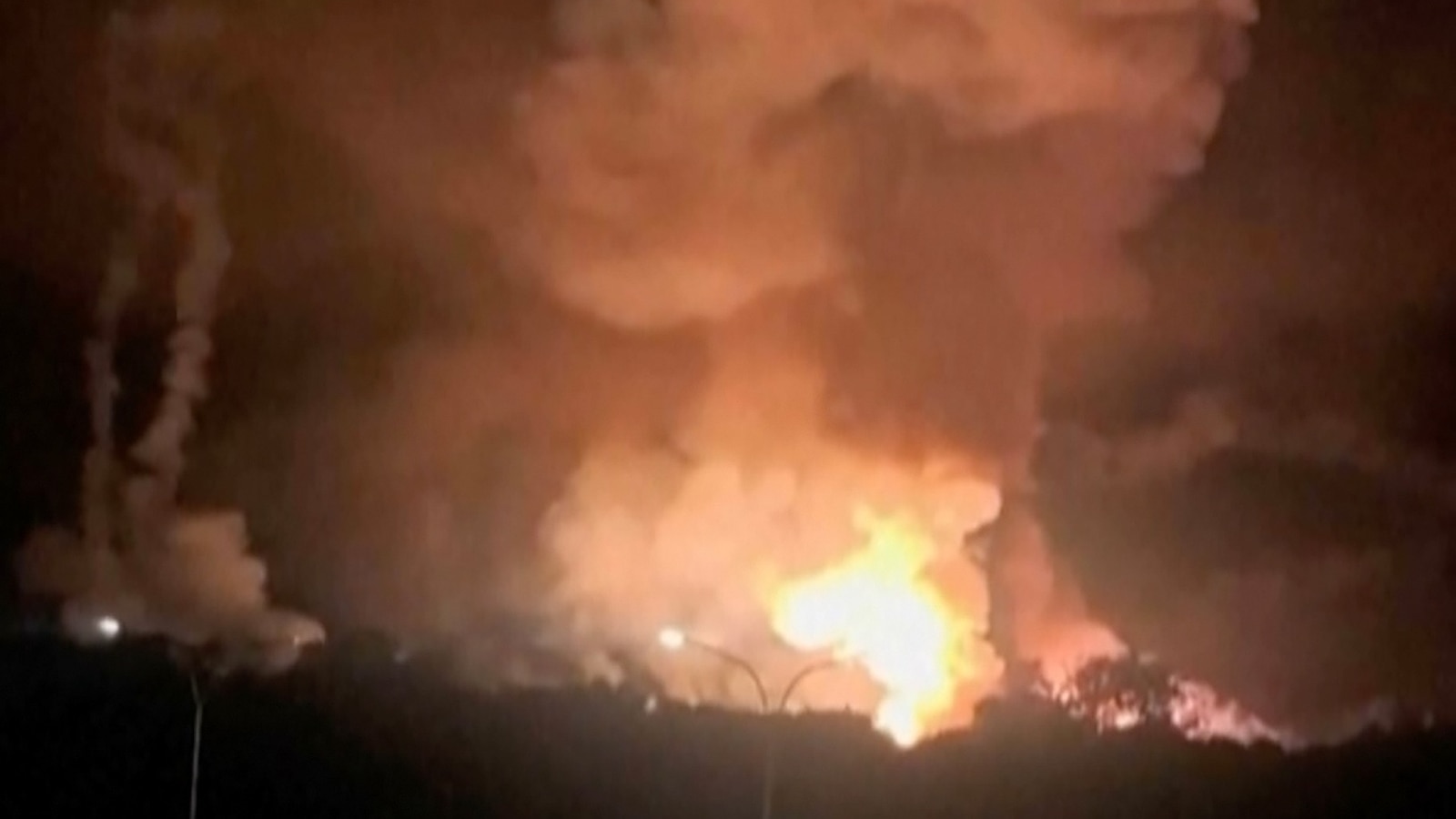
U.S. forces conducted a complex early‑morning operation across northern Venezuela aimed at detaining President Nicolás Maduro, striking multiple military and communications sites including Russian‑supplied BUK surface‑to‑air missile systems, communications antenna complexes, depots, airbases (including La Carlota) and facilities around the Fuerte Tiuna military complex. Satellite imagery and video show destroyed buildings, a runway crater and billowing smoke; Gen. Dan Caine said the mission involved more than 150 aircraft. The strikes materially degrade Venezuelan air‑defense and communications capabilities and raise regional geopolitical risk, with potential second‑order implications for logistics and energy markets if the situation escalates.
Market structure: Immediate winners are U.S. and NATO-aligned defense primes (Lockheed LMT, Raytheon/RTX, Northrop NOC, L3Harris LHX) via potential incremental IR&D and expedited procurement windows; expect 3–8% upside to consensus 3‑month forward EPS revisions if US policy broadens, with spike trading in options. Losers are Venezuela-linked logistics, regional shippers and local infrastructure owners (small caps/illiquids) and EM local-currency sovereigns; short-term port/airfield disruptions compress Venezuelan crude + refined flows by an estimated 0.1–0.4 mb/d, tightening near-term oil balances.
Risk assessment: Tail risks include escalation to wider regional conflict or cyber retaliation (5–15% probability over 30 days) that could push Brent >$90 (+$15–25 from current) and spike VIX >40; opposite tail—quick regime resolution—would compress defense rerating and oil back toward prior levels within 30–90 days. Hidden dependencies: Russian equipment on Venezuelan soil creates asymmetric escalation vectors and sanction cliffs; catalysts are Maduro capture/retaliation, Russian response, or confirmed prolonged port closure—watch 7–30 day cadence.
Trade implications: Direct plays—establish modest exposure to LMT/RTX/NOC (aggregate 3–6% portfolio) with staggered entries over 3–10 trading days; buy 3‑month call spreads on LMT (e.g., 5–10% OTM) to capture re-rating with defined risk. Commodity/FX—initiate 1–2% tactical long in XOM/CVX if Brent >+$5 within 10 trading days; hedge EM downside by shorting EEM (1–2%) or buying USD longs if regional contagion appears. Macro hedges—buy 0.5–1% GLD or 2–5 year TLT exposure if VIX >25.
Contrarian angles: Consensus may overpay for a permanent defense boost—historical parallels (2011 Libya) show 6–12 week oil/defense knee-jerk moves that partially mean-revert; Venezuela’s max realistic sustained crude hit is small (<0.5 mb/d), so oil spikes are likely transient. Unintended consequence: elevated cyber risk and insurance losses—consider selective long exposure to cyber names (PANW, CRWD) as an asymmetric hedge if geopolitical cyber incidents rise within 90 days.
AI-powered research, real-time alerts, and portfolio analytics for institutional investors.
Request DemoOverall Sentiment
moderately negative
Sentiment Score
-0.45
