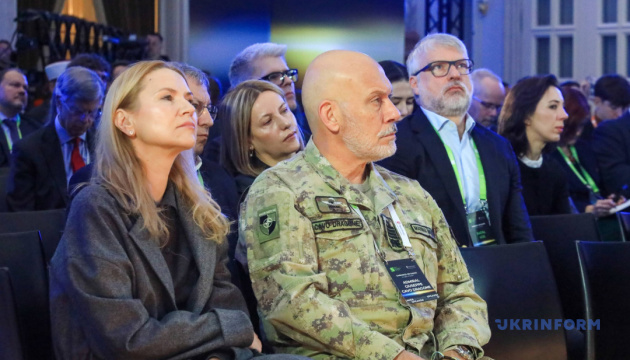
Ukraine’s military chief said allied support discussions with NATO and EU commanders focused on urgent defense needs, with air defense remaining the top priority. Syrskyi said Ukrainian strikes have inflicted about $25.5 billion in direct and indirect damage on Russia’s military-industrial base and infrastructure, while Ukraine’s unmanned systems units have outpaced Russian mobilization in personnel losses for four straight months. The article is strategically important for defense markets and geopolitics, but it does not contain direct corporate or macro market-moving data.
The market implication is not a broad “war gets worse” trade; it is a continued shift toward a protracted, attritional conflict where the binding constraint is air defense and sustainment capacity, not frontline will. That matters because the marginal beneficiary set is increasingly concentrated in Western interception, sensors, electronic warfare, C4ISR, and logistics rather than in pure-play munitions alone. The second-order read-through is a persistent inventory draw on NATO stocks, which supports a multi-quarter procurement cycle even if headline aid headlines fade.
The more interesting signal is the institutionalization of support. Coordinated aid frameworks and training pipelines reduce execution risk for future deliveries, which lowers the probability of a sudden stop in flows and increases visibility for defense prime order books over the next 12-24 months. This favors names with exposure to integrated air defense, battlefield networking, and sustainment services; it is less positive for suppliers dependent on a single “surge” phase that may already be priced in.
A contrarian point: escalation risk is not symmetric with equity upside. If Ukraine’s ability to inflict damage on Russian military infrastructure continues to rise, Russia may respond by intensifying asymmetric attacks on energy and transport nodes in Europe, which would create temporary volatility in insurers, European utilities, and rail/logistics capacity without necessarily improving the top-line outlook for defense contractors beyond current expectations. The setup is therefore better expressed as a relative-value defense basket rather than an outright geopolitical beta long, because the consensus is already leaning on “more spending” while underappreciating the timing mismatch between procurement approvals and revenue realization.
AI-powered research, real-time alerts, and portfolio analytics for institutional investors.
Request TrialOverall Sentiment
neutral
Sentiment Score
0.05
