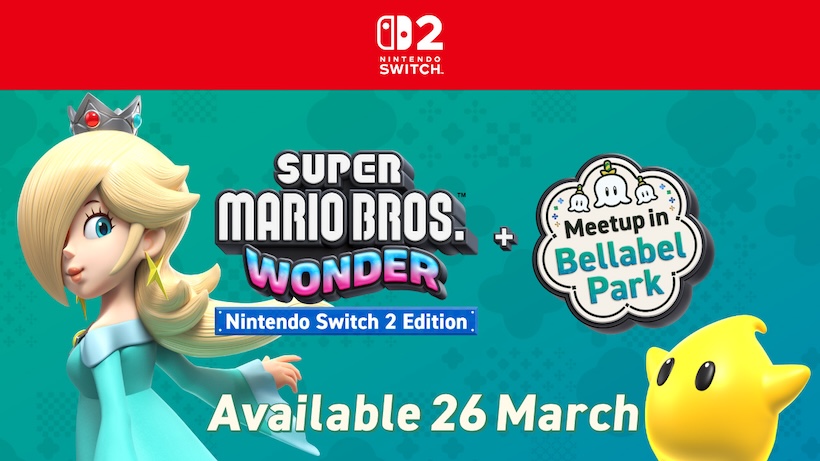
Nintendo will launch Super Mario Bros. Wonder – Nintendo Switch 2 Edition + Meetup in Bellabel Park on 26 March, introducing new local and online multiplayer plazas, GameShare functionality, and up to 12-player attractions, with an upgrade pack available for existing Super Mario Bros. Wonder owners. The release is accompanied by three new amiibo figures and a consumer Talking Flower accessory launching in spring, which could modestly support Switch 2 software attach rates and ancillary merchandise sales but is unlikely to materially move Nintendo’s near-term financials.
Market structure: Nintendo (7974.T / NTDOY) is the clear direct beneficiary — new first-party Mario content, amiibo SKUs and a physical Talking Flower peripheral can lift Q2–Q3 revenue and increase Switch 2 attach rates by an estimated 5–15% vs baseline if sell-through is healthy. Third-party publishers selling multiplatform titles are the relative losers for consumer discretionary spend share; GameShare and upgrade-pack pricing may compress full-copy unit growth but increase average revenue per user (ARPU) if upgrade-pack uptake >10% in first month. Cross-asset effects are modest: a positive surprise should support JPY strength and risk-on flows that push 2–5bp wider on global IG spreads while boosting implied vol on Nintendo equity options around late-March–April expiries.
Risks: Tail risks include major launch QA/server failures, supply-chain shortages for Switch 2 (chipset/component constraints) or product returns for the Talking Flower toy — any of which could erase upside in 30–90 days. Near-term (days–weeks) moves will be driven by preorders and marketing cadence; short-term (weeks–months) by first 2–4 week sell-through and upgrade-pack attach rates; long-term (quarters) depends on sustained pipeline of first-party releases. Hidden dependencies: upgrade-pack uptake rate, how GameShare affects repeat full-copy sales, and retail channel inventory policies. Catalysts to monitor: March 26 launch sell-through, April firmware/online stability, and Nintendo earnings commentary in next quarterly report.
Trade implications: For equities, favor a tactical overweight in Nintendo into the March launch and scale on positive first-week sell-through; protect with options rather than all-equity exposure. Consider a long 6-month call spread to cap downside while keeping upside to the expected 15–25% range; implied vol will likely spike around launch. Rotate modestly toward Consumer Discretionary/Gaming and suppliers like TSMC (TSM) if supply ramps, and hedge cyclicality with fixed-income protection if consumer datapoints disappoint.
Contrarian view: The market may underappreciate cannibalization risk from GameShare — full-copy software unit sales could be 5–10% lower vs a modern baseline, which would cap upside from software but raise high-margin upgrade-pack revenue. Historical parallels: Nintendo’s content-driven hardware surges (eg. Switch launch cycles) show strong initial spikes but require follow-up titles to sustain multiple quarters; lack of follow-up or poor accessory reception (Talking Flower) can flip sentiment quickly. Watch three thresholds: upgrade-pack attach <10%, two-week sell-through <60% in core markets, or >5% return rates for physical accessories — any will be a sell/hedge trigger.
AI-powered research, real-time alerts, and portfolio analytics for institutional investors.
Request DemoOverall Sentiment
mildly positive
Sentiment Score
0.25
