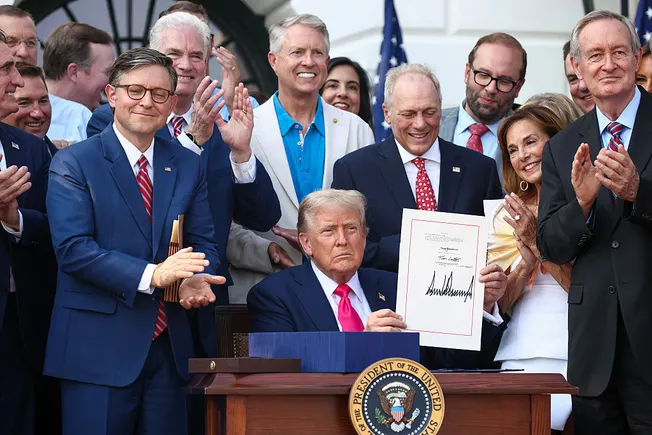
The recently enacted “One Big Beautiful Bill Act” is poised to significantly enhance U.S. M&A dealmaking by extending key tax provisions from the 2017 Tax Cuts and Jobs Act, including permanent 100% bonus depreciation and more generous business interest expense deductions. This legislation provides critical tax certainty and tools, such as increased debt capacity and tax shields, which analysts expect will drive increased activity, particularly in asset-heavy sectors like energy, financial services, and manufacturing. While the bill introduces some complexities like potential higher penalties for certain foreign investors, it largely aims to foster domestic M&A through clear tax incentives and deregulation, despite broader economic uncertainties and concerns over its long-term debt implications.
The newly enacted “One Big Beautiful Bill Act” is set to provide a significant tailwind for U.S. merger and acquisition activity by re-establishing key pro-deal tax policies from the 2017 Tax Cuts and Jobs Act. The legislation delivers critical policy certainty by making 100% bonus depreciation for qualified assets permanent and restoring a more generous business interest expense deduction, effectively enhancing tax shields and increasing debt capacity for corporate acquirers. This is particularly relevant given the flat M&A volume observed in the first half of the year, with 4,535 deals nearly unchanged from 4,515 in the prior-year period, a stagnation analysts attributed to a lack of policy clarity. The bill is expected to particularly boost valuations and activity for asset-heavy domestic companies, with analysts from EY and PwC highlighting energy, financial services, and manufacturing as key beneficiaries. While the overall outlook is positive, potential headwinds remain; these include ongoing geopolitical tensions, tariff negotiations, and specific provisions within the 870-page bill, such as higher penalty taxes of 5%-20% for certain foreign investors, which could deter cross-border deals. Furthermore, long-term concerns exist that the government debt incurred to fund these measures could eventually weigh on corporate valuations.
AI-powered research, real-time alerts, and portfolio analytics for institutional investors.
Overall Sentiment
strongly positive
Sentiment Score
0.70
