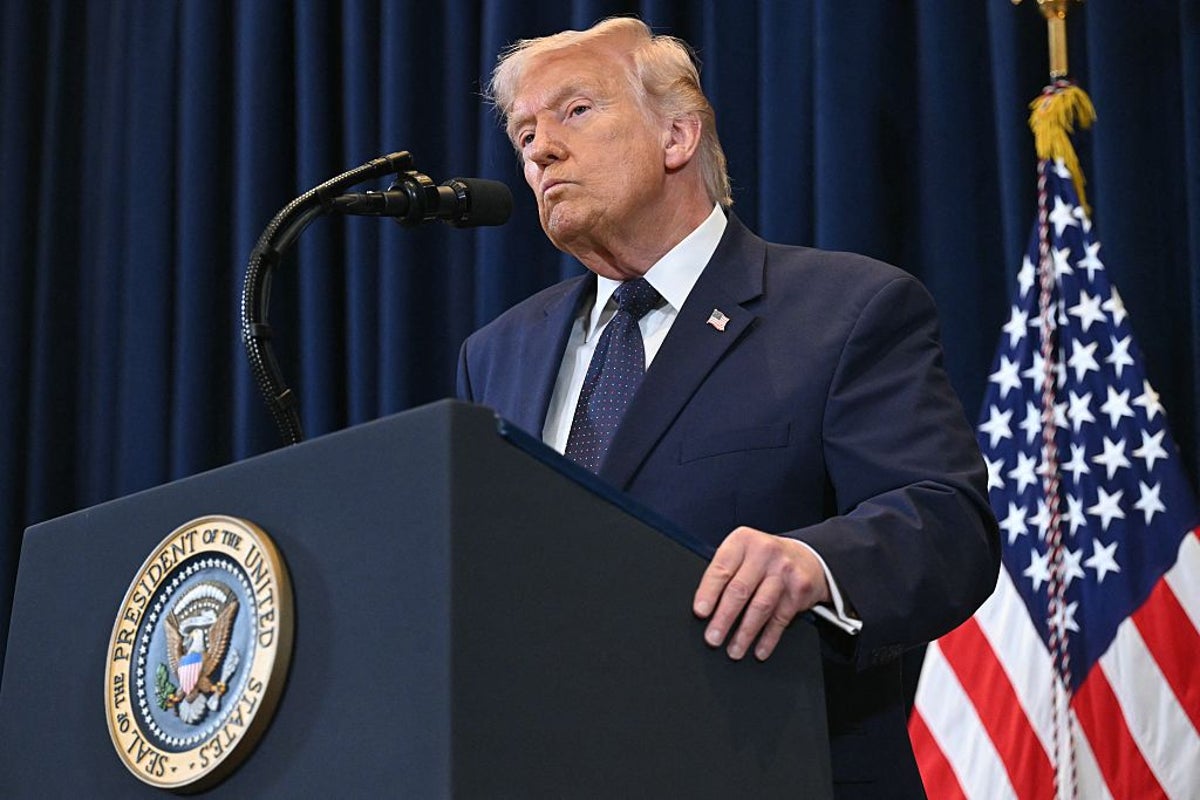
Reuters identified at least four suspicious trades including a $500 million oil futures wager placed minutes before a Trump announcement that pushed crude sharply lower, options bets that made millions before a tariffs pause, and roughly $1.2M combined profit (plus a separate ~$400k payout) on Polymarket prediction bets tied to geopolitical events. Legal experts urge investigation into potential information leaks and market abuse, while regulators (CFTC) say they monitor flagged trades and the SEC/DOJ gave limited comment; enforcement in commodities and prediction markets remains legally untested, creating regulatory uncertainty.
The core market effect is a structural rise in idiosyncratic event-risk premia across futures/options/prediction-venue ladders: liquidity providers will widen spreads and pull back from one-touch, binary inventory, raising short-dated implied vols 20–50% around geopolitical windows and increasing transaction costs for directional macro players. That repricing is immediate (days–weeks around announcements) but becomes persistent (months) if enforcement or exchange-led surveillance materially increases compliance friction and listing cadence for new products.
Exchanges face a bifurcated outcome: near-term revenue is protected by higher volumes and elevated option premiums, but a credible regulation/enforcement episode (3–12 month horizon) could shave 1–3% off annual trading revenue and force one-time compliance costs (tens to low hundreds of millions). Competitors and adjacent vendors — trade surveillance/screening SaaS and ICE as an alternative central limit venue — are second-order beneficiaries if market participants shift venues or buy surveillance as a service.
The consensus that this remains an anecdotal problem understates two durable mechanics: (1) prediction-market regulatory tightening can permanently reduce a low-friction liquidity source, concentrating event flow back into regulated exchanges and raising volatility term-structures; (2) exchanges that quickly commercialize surveillance (fee-for-service or data products sold to brokers/regulators) can convert reputational risk into a new revenue stream, limiting downside to equity valuations if executed within 6–18 months.
AI-powered research, real-time alerts, and portfolio analytics for institutional investors.
Request DemoOverall Sentiment
moderately negative
Sentiment Score
-0.45
Ticker Sentiment
