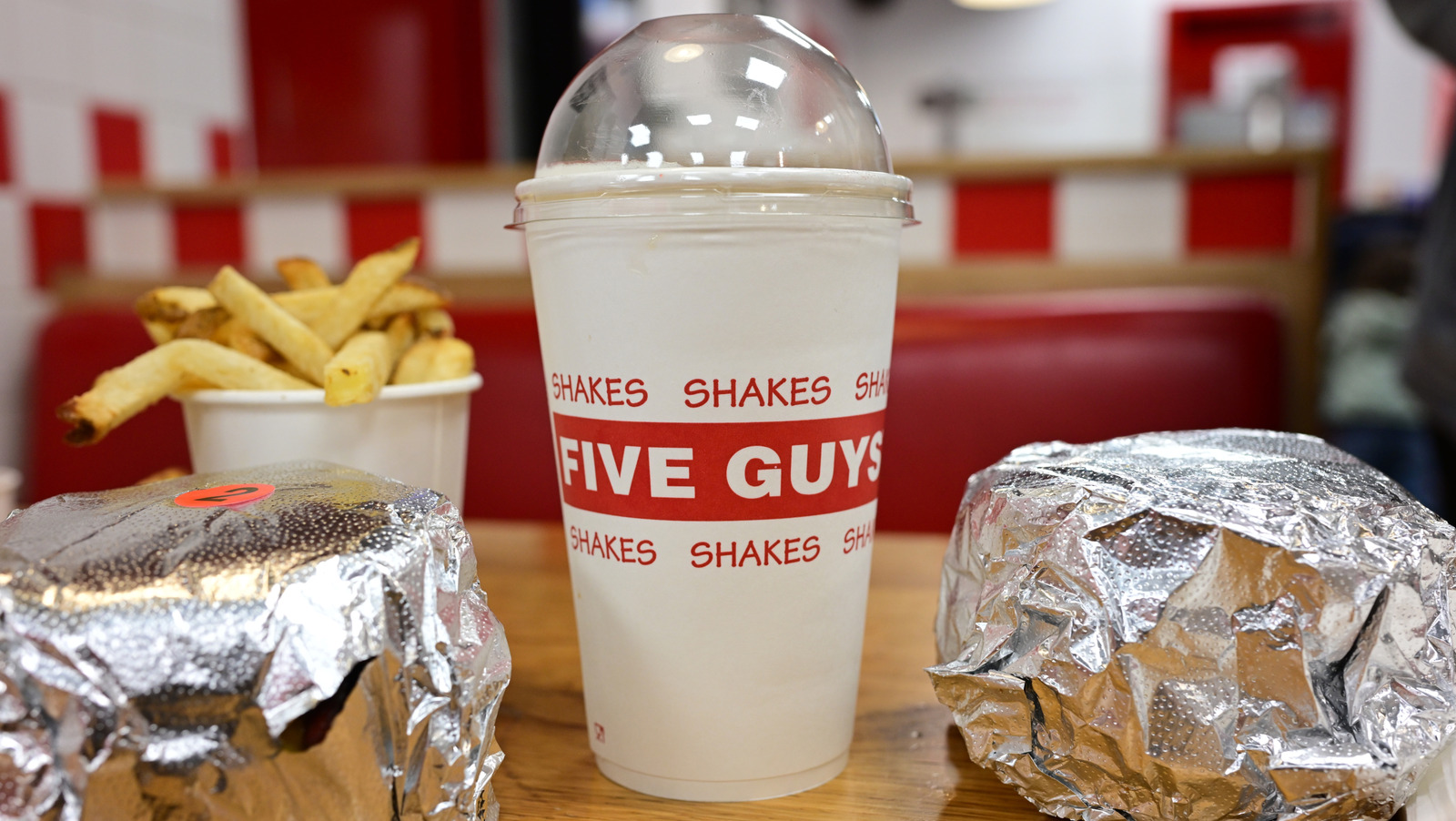
Five Guys will permanently close 4 California restaurants between May and July 2026, affecting Whittier, City of Industry, Merced, and Hanford locations. About 55 workers are expected to be laid off, with no transfers to other stores. The closures reflect rising labor and operating costs, including California's $20 minimum wage for fast food workers, and broader consumer pullback on dining out.
The immediate loser is not just one burger chain, but the entire premium-fast-casual middle of the market. When labor, rent, and commodity inflation all stay sticky, brands that sit above value menus but below true dine-in premium lose the ability to defend traffic: consumers trade down to cheaper national chains or trade up selectively, leaving the middle with the worst elasticity. That dynamic is especially punitive in California, where wage regulation acts as a margin tax and forces weaker-unit economics to surface first.
The second-order effect is competitive share migration, not category contraction. Value-led operators with dense footprints and stronger procurement leverage should capture the wallet share that mid-priced concepts lose, while burger specialists with sharper price architecture can defend better than premium “ingredient-led” incumbents. For suppliers, closures are mildly negative for local distributors and franchise service vendors, but the larger risk is a broader pause in new unit development as operators re-underwrite returns using higher wage assumptions.
Catalyst-wise, this is a months-to-years story rather than a one-week trade. The near-term risk is a slow bleed: more closures, weaker franchisee sentiment, and downward revisions to same-store sales assumptions if consumers keep prioritizing convenience and value. What would reverse it is either a sharp consumer income rebound or a meaningful menu redesign that restores traffic without forcing a visible quality compromise; absent that, the model becomes increasingly brittle as fixed costs rise faster than check growth.
The consensus likely understates how much this pressures the entire premium burger cohort, not just the named chain. The market often treats these as differentiated brands, but in a value-constrained consumer environment they compete on the same occasion and often the same daypart. That makes the downside broader than single-operator headlines imply, especially if investors have been assuming pricing power can offset wage inflation indefinitely.
AI-powered research, real-time alerts, and portfolio analytics for institutional investors.
Request DemoOverall Sentiment
moderately negative
Sentiment Score
-0.45
