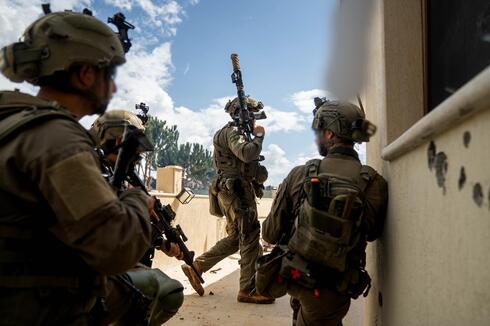
Israeli forces have surrounded dozens of Hezbollah operatives in the Bint Jbeil pocket in southern Lebanon, with several dozen reportedly killed and some filming surrender. The battle is intensifying in a dense urban area, increasing risks to Israeli troops despite heavy ground and air fire support. The stalled ceasefire effort underscores continued escalation in the Israel-Lebanon conflict, a significant geopolitical and defense-related risk event.
This is a near-term escalation asymmetry trade: the battlefield mechanics favor the stronger ISR/air-support side in the next days, but the urban/close-quarters setting raises the probability of a sudden casualty shock that can force political pauses. The key second-order effect is not just more military consumption; it is a higher realized value of precision munitions, loitering weapons, ISR platforms, and counter-UAS systems as dense terrain rewards target identification over volume fire. That tends to benefit suppliers with replenishment exposure and short-cycle procurement, while punishing any names levered to a quick de-escalation narrative.
The more interesting medium-term implication is infrastructure risk across southern Lebanon and border-adjacent logistics. Even if Beirut remains insulated for now, repeated strikes on launcher networks and command nodes increase the odds of secondary disruption to power, telecom, and transport contractors tied to reconstruction or humanitarian logistics. If the trapped-unit narrative hardens into a symbol of humiliation, the group may respond with sporadic cross-border fire rather than a negotiated exit, extending volatility for weeks even without a broader regional war. Conversely, a ceasefire that extracts trapped fighters would likely be seen as an operational win for Hezbollah, which could compress the conflict premium abruptly.
The market is likely underpricing the option value of an embedded ceasefire failure: consensus may assume negotiations eventually reduce intensity, but the article suggests each passing day increases the cost of any political compromise. That means the base case is not a clean trend but a jagged path with repeated headline gaps. The tradeable insight is to favor defense and cyber/ISR exposure on weakness, while fading any knee-jerk relief rally tied to talks until there is visible evidence of force disengagement, not just rhetoric.
AI-powered research, real-time alerts, and portfolio analytics for institutional investors.
Request TrialOverall Sentiment
strongly negative
Sentiment Score
-0.75
