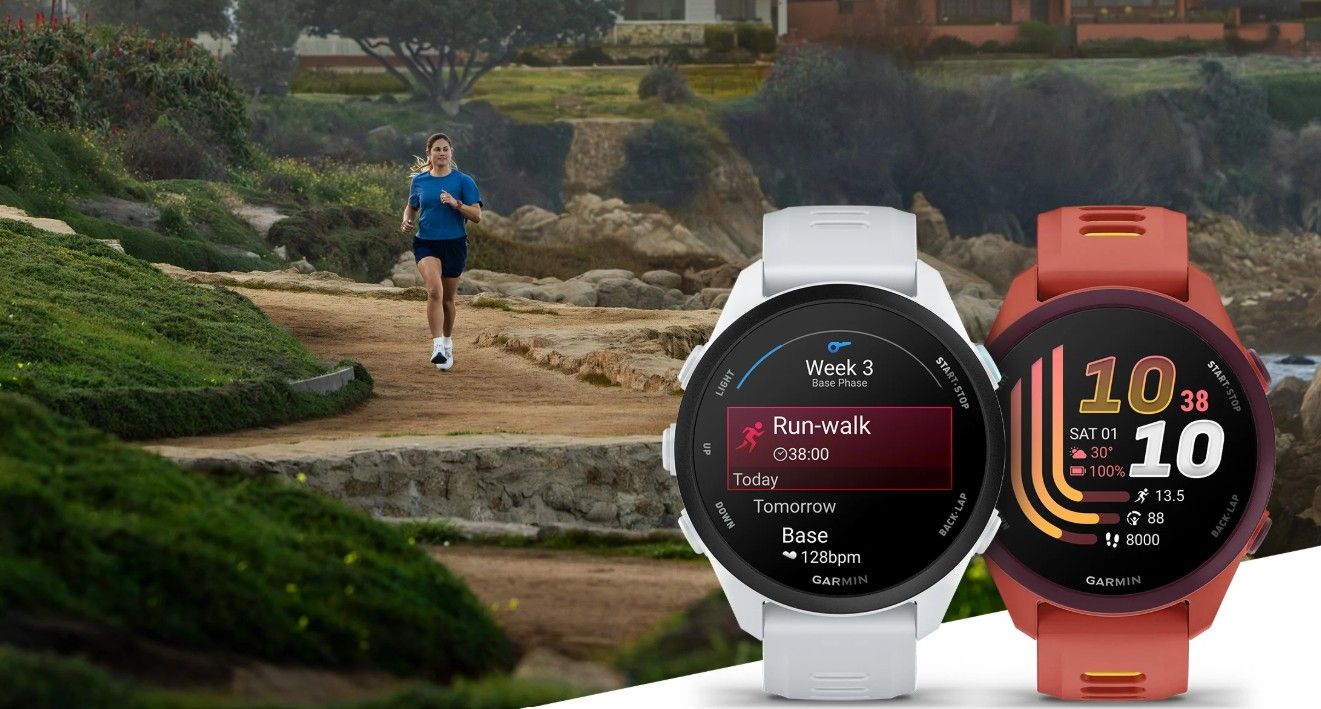
Garmin launched three new budget-oriented running watches — the Forerunner 70, 170 and 170 Music — starting at £219.99, £259.99 and £299.99, respectively, with pre-orders open now and release set for May 15. The lineup adds a 1.2-inch AMOLED display, up to 13 days of battery life on the Forerunner 70, up to 10 days on the 170 series, and features like Garmin Pay, Training Readiness and wrist-based Running Power. The launch broadens Garmin’s entry-level wearable range and may support consumer demand, but the article is primarily product news with limited immediate financial impact.
This is less about a single watch launch than Garmin using software features to push its lower-priced line up the value chain without collapsing premium margins. The key signal is feature parity creep: by moving training-readiness and running-dynamics-style metrics into an entry tier, Garmin is trying to defend ecosystem lock-in against both Apple’s health stack and lower-cost Chinese wearables. That usually supports attach rates to Garmin Connect and accessories, but it also makes the product stack more internally competitive, which can cap upsell unless the premium tier retains clear hardware advantages. The second-order issue is channel mix. Budget-friendly AMOLED running watches should widen TAM among first-time runners and gift buyers, but the incremental gross margin may be diluted if promotional intensity rises into the holiday build. Garmin’s risk is not demand destruction; it is cannibalization of its own older mid-tier units and slower inventory turns if retailers over-order the new line assuming broader appeal than the market can absorb. Near term, the biggest catalyst is review quality and sensor accuracy. If the cheaper models ship with the older HR sensor generation, the launch could still win on simplicity while underwhelming serious runners, which would make the stock’s near-term upside limited to modest unit expansion rather than a true multiple re-rate. Over 3-6 months, the real upside comes if this launch proves Garmin can keep premium users in its ecosystem while taking share from Apple Watch SE and budget Amazfit/Xiaomi devices. The contrarian view is that the market may be overestimating how much incremental growth a lower-priced watch can generate in a category where watch replacement cycles are long and feature differentiation is quickly commoditized.
AI-powered research, real-time alerts, and portfolio analytics for institutional investors.
Overall Sentiment
mildly positive
Sentiment Score
0.25
Ticker Sentiment
