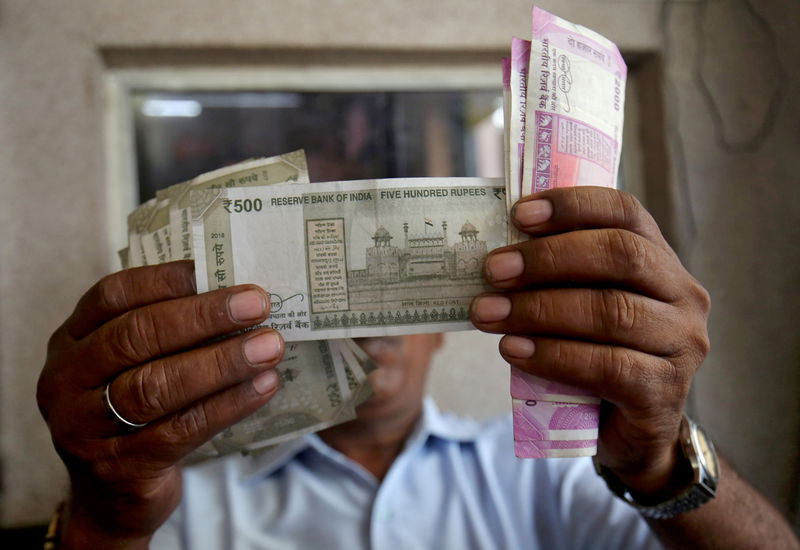
The Indian rupee plunged to a record low of 88.102 against the dollar, driven by President Trump's escalated threats of substantial tariffs on India over its Russian oil purchases, which underscores economic exposure given India's $44 billion trade surplus with the U.S. Concurrently, the dollar stabilized in Asian trade despite market expectations for a September Fed rate cut surging to 91.4% following weaker U.S. nonfarm payrolls data. Attention also remains on the Reserve Bank of India's upcoming meeting, where further rate cuts are widely anticipated.
The Indian rupee has depreciated to a record low, with the USDINR pair reaching 88.102, driven by explicit threats from U.S. President Trump to substantially increase tariffs over India's procurement of Russian oil. This geopolitical pressure significantly elevates risk for the Indian economy, which holds considerable exposure to the U.S. as a key export market, underscored by its $44 billion trade surplus in 2024. The timing of this threat is critical as it precedes a Reserve Bank of India (RBI) meeting where a rate cut is already widely expected to address existing economic headwinds. This creates a policy dilemma for the RBI, which must now balance currency stabilization against its growth mandate. Concurrently, the U.S. dollar has steadied after recent losses fueled by weak July nonfarm payrolls data. That weak labor signal has solidified market expectations for monetary easing, with the probability of a September Federal Reserve rate cut surging to 91.4% from 61.7% in the prior week. While the article mentions Bank of India (BOI) in the context of a valuation analysis, the primary institutional focus remains on the central bank's (RBI) impending policy decision.
AI-powered research, real-time alerts, and portfolio analytics for institutional investors.
Overall Sentiment
moderately negative
Sentiment Score
-0.35
Ticker Sentiment
