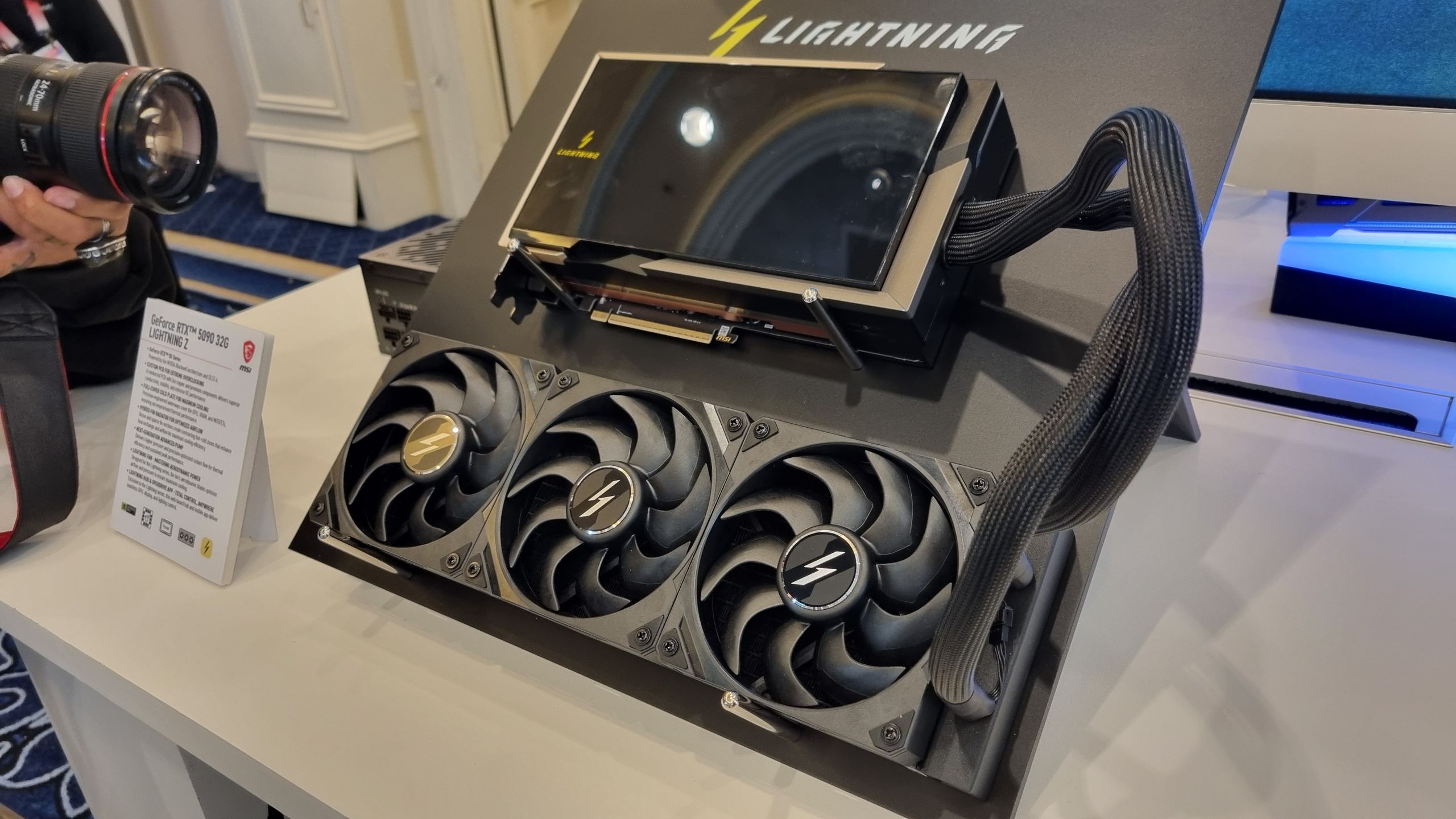
MSI unveiled the limited-run GeForce RTX 5090 32G Lightning Z, a water-cooled, collector-oriented GPU boasting an 8-inch on-card display, external 360 mm radiator, dual 16‑pin power inputs, 40‑phase VRMs and a stock boost clock of 2,775 MHz. The card supports an 800 W and a 1000 W BIOS (MSI recommends a 1,600 W PSU) and an extreme 2,500 W+ BIOS for LN2 overclocking; only 1,300 units will be produced and pricing has not been disclosed. For investors, the launch signals a high-end branding/halo product targeted at ultra-enthusiast buyers with negligible near-term impact on MSI’s broader financials or market moves but could support margin enhancement in a niche segment if demand materializes.
Market structure: This MSI RTX 5090 Lightning Z is a branding/ASP play more than a volume driver — 1,300 units cap means negligible direct revs but a meaningful halo for NVDA (licensor of the GPU IP) and AIB partners that can justify 20–40% premium SKUs. Direct winners: NVDA (brand/pricing leverage), high-end AIBs and boutique cooling/PSU vendors; losers: mass-market OEMs if halo pricing pushes consumer expectation and compresses mid-tier demand. Competitive Dynamics: The product signals AIBs will continue skimming margins on extreme SKUs, which can lift average selling prices (ASPs) for flagship GPUs by ~5–10% across cycles if sell-through proves healthy, but market share shifts are marginal absent performance delta versus AMD/INTC offerings.
Supply/demand & cross-asset: Tight supply is unlikely — constrained items are specialized pumps, 16‑pin cables and 40‑phase VRMs, affecting niche suppliers only; mainstream GPU supply/demand remains driven by data center and gaming cycles. Cross-asset effects: expect modest uptick in NVDA options IV around launches, negligible macro impact on rates or FX; commodity impact limited to copper and specialty components (sub-1% demand shock).
Risk assessment: Tail risks include regulatory/safety scrutiny over ultra-high power cards (standards, PSU fires), retailer returns, and reputational backlash — low probability but high impact within 3–12 months. Hidden dependencies: ecosystem readiness (1600W PSUs in consumer base), warranty exposure for AIBs, and NVDA’s firmware/BIOS control; catalysts to watch: pre-order velocity (first 2–4 weeks), NVDA/AMD quarterlies, and retail sell-through metrics.
Trade & contrarian view: Consensus may overstate revenue impact and understate ASP signaling: small-volume collector SKUs rarely move fundamentals but do accelerate premium stratification. If premium SKU adoption rises, NVDA wins; if backlash/regulation occurs, AIBs bear costs. Historical parallel: 2018 extreme AIB SKUs boosted ASPs but didn’t change market share; expect similar here.
AI-powered research, real-time alerts, and portfolio analytics for institutional investors.
Request DemoOverall Sentiment
neutral
Sentiment Score
0.10
Ticker Sentiment
