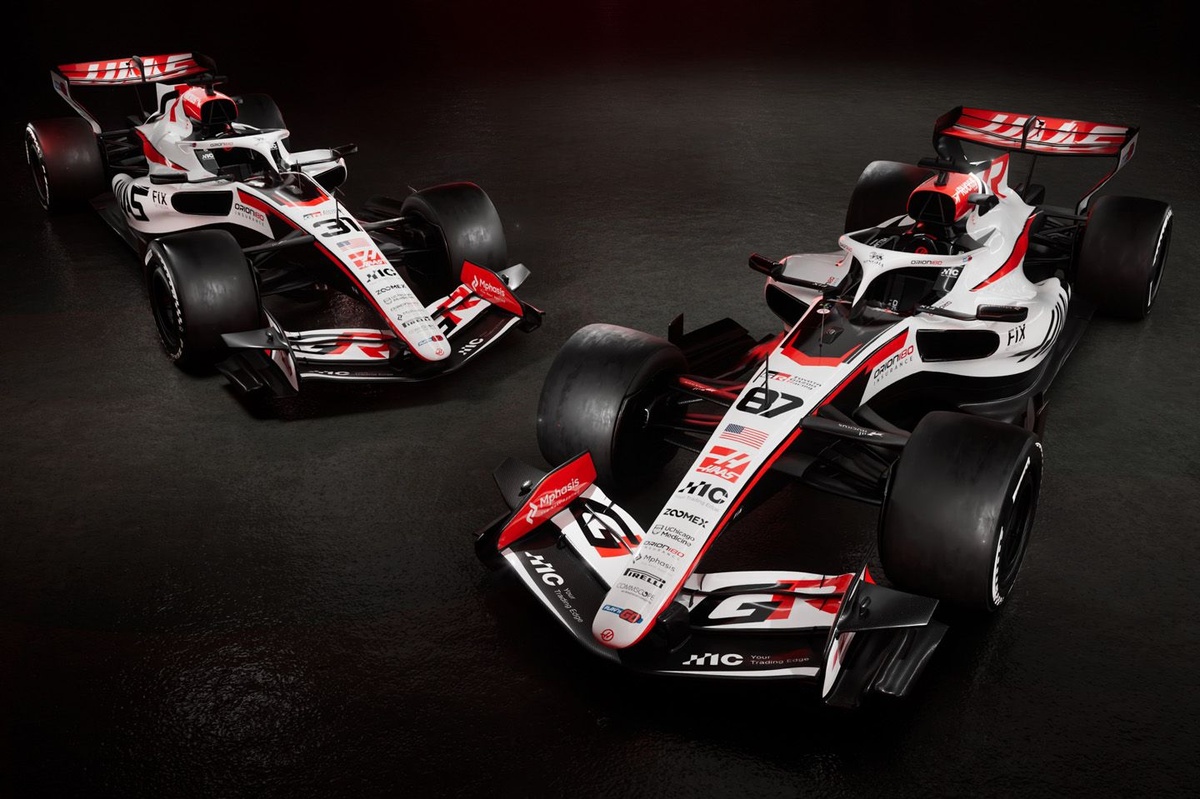
Haas announced its 2026 Formula 1 livery as Toyota Gazoo Racing becomes the team’s title sponsor and the entry is rebranded ‘TGR Haas F1 Team’, reflecting expanded Toyota branding across the car. The move strengthens a technical partnership struck in late 2024; Haas retains drivers Oliver Bearman and Esteban Ocon after finishing eighth with 79 points in last season — its best tally since 2018. The team emphasized continuity in personnel while preparing new-regulation cars and shakedown/testing programs in Barcelona and Bahrain ahead of the season opener in Melbourne.
Market structure: Toyota’s title-sponsorship of Haas (brand + technical tie) is a positive for Toyota Motor Corp (TM) and for Formula One’s monetization (Liberty/Formula One Group — FWONK/FWONA) via sponsorship and merchandise uplifts; expect a modest revenue/visibility tailwind concentrated over 12–24 months. Direct winners: TM (brand halo, tech transfer), Liberty/F1 (sponsorship inventory pricing power), select automotive suppliers with F1 exposure; losers: smaller independent teams and sponsors with weaker OEM links. Cross-asset: equity moves small but event-driven (tests/races); FX: TM ADR sensitive to JPY moves; options vols on FWONK/TM likely to rise into Barcelona tests (Jan 26–30) and Melbourne (Mar 6–8).
Risk assessment: Tail risks include Toyota underdelivering on technical integration or regulatory shifts that negate Haas gains (low-probability but value-destructive), or a reputational/financial shock if Toyota withdraws — model a 10–20% downside for sponsor-related equity re-rating in that scenario. Timing: immediate (days) — market reaction at livery launch minimal; short-term (weeks/months) — volatility around Barcelona/Bahrain tests and first race; long-term (quarters) — true P&L impact dependent on on-track results and sponsor renewals over 2026–2028. Hidden dependency: value to TM hinges on measurable performance transfer (lap-time gains), not branding alone; Liberty's upside depends on incremental viewership/sponsorship, not one team’s livery. Catalysts: Barcelona private tests (Jan 26–30), Australia GP (Mar 6–8), Toyota quarterly results (next 2–3 quarters).
Trade implications: Tactical longs: establish 1–2% position in TM (NYSE: TM) with 12-month horizon, stop-loss 8% and target 12–18% upside if tech/marketing KPIs materialize; establish 1–1.5% long in FWONK/FWONA (Formula One Group) for exposure to sponsorship re-pricing, target +15% in 12 months, stop 7%. Options: buy 9–12 month call spreads on FWONK (e.g., 12/24-month tenor) to cap cost; pair trade: long TM 1.5% / short Ford Motor Co (F) 0.75% to express relative hybrid/brand execution advantage.
Contrarian angles: Consensus may overstate branding value and underweight on-track performance risk — real commercial upside requires top-10 competitiveness; the market may underprice Liberty’s optionality if multiple OEMs deepen ties, creating sustained sponsorship inflation (historical parallel: manufacturer returns to F1 have produced 10–30% multi-year media revenue lifts for the series). Unintended consequence: concentrated OEM sponsorship can concentrate commercial risk — if Toyota centralizes tech, Haas becomes less independent, raising governance/renewal risk that could compress equity multiple for both team partners.
AI-powered research, real-time alerts, and portfolio analytics for institutional investors.
Request DemoOverall Sentiment
mildly positive
Sentiment Score
0.25
