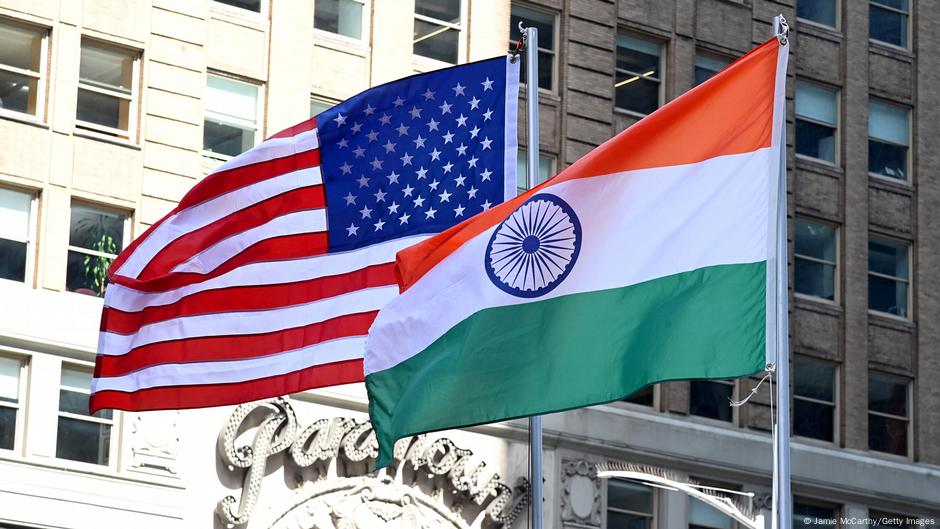
US-India trade relations have sharply deteriorated, with the US imposing a 50% tariff on most Indian goods and an additional 25% over Russian oil purchases. This is projected to reduce India's exports to its largest partner, the US, by over 40% to $50 billion by 2026, severely impacting key sectors and hindering India's manufacturing initiatives. For the US, these tariffs jeopardize efforts to diversify manufacturing away from China via India and present significant geopolitical risks by potentially undermining Indo-Pacific stability and pushing India towards China. Despite the economic and strategic fallout, a resolution remains possible given India's reported eagerness for a deal and the mutual interest in countering China's regional influence.
A severe deterioration in US-India trade relations has culminated in the US imposing a 50% tariff on most Indian goods, supplemented by a 25% tariff over India's Russian oil purchases. This action threatens to significantly impact India's economy, as the US is its largest trade partner. Projections from the Global Trade Research Initiative indicate that India's exports to the US could fall by over 40%, from $87 billion in 2024 to approximately $50 billion by 2026. This downturn directly endangers key export sectors such as textiles and jewellery and undermines Prime Minister Modi's 'Make in India' manufacturing agenda at a critical juncture. While manufacturing constitutes a relatively small share of India's GDP at 14%, potentially limiting the broader economic fallout, the stifling of this strategic growth area is a major setback. For the United States, the direct economic costs are lower, with exports to India totaling $42 billion. However, the strategic consequences are substantial. The tariffs jeopardize long-term US plans to diversify manufacturing supply chains away from China by utilizing India as an alternative hub, a move now deemed "unlikely." Furthermore, the primary risk for the US is geopolitical; alienating a key strategic partner could undermine regional stability and potentially push India toward a closer alignment with China, a development described as "geopolitically very detrimental" to US interests. Despite the pessimistic outlook, analysts believe a resolution is possible, driven by India's reported desire for a deal and the mutual strategic imperative for both nations to counter China's influence.
AI-powered research, real-time alerts, and portfolio analytics for institutional investors.
Request DemoOverall Sentiment
strongly negative
Sentiment Score
-0.75
Ticker Sentiment
