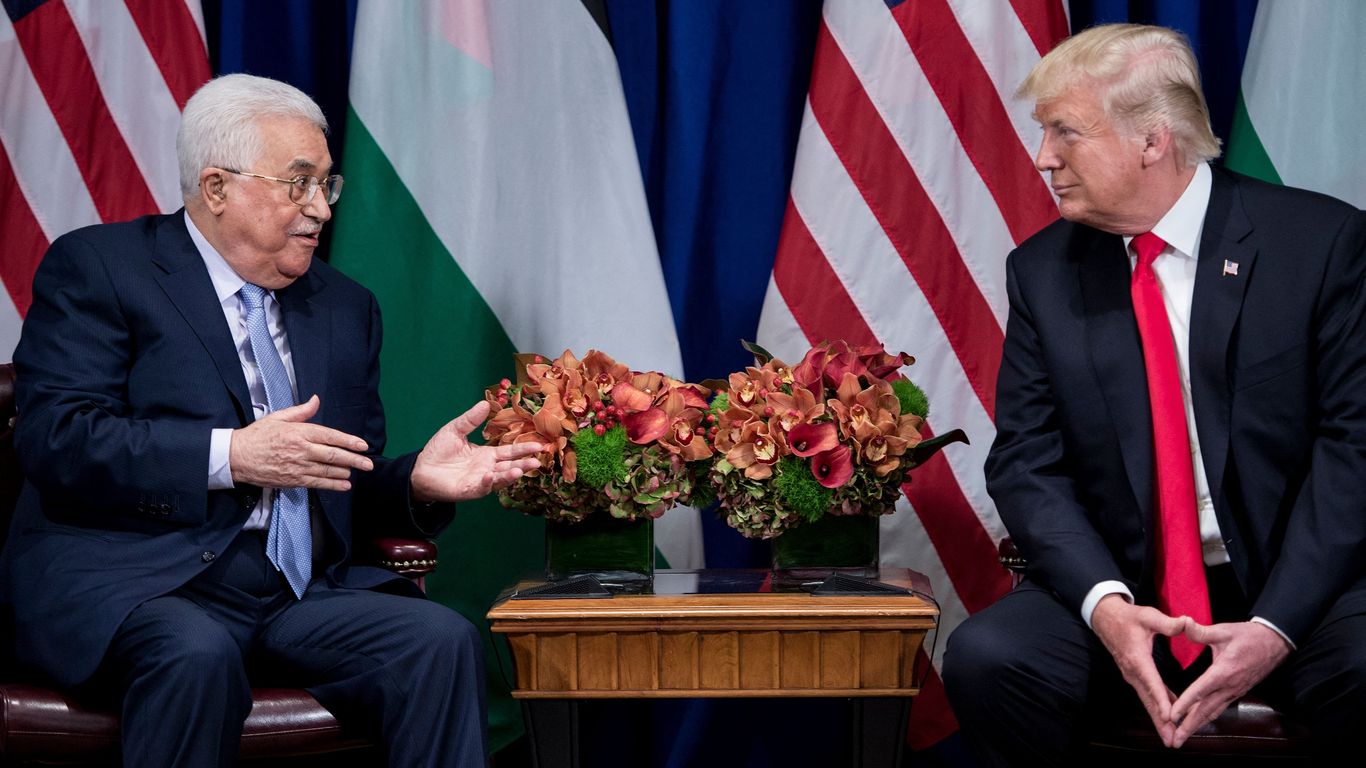
The Trump administration will deny visas for senior Palestinian officials, including President Mahmoud Abbas, to attend the upcoming UN General Assembly, an unprecedented move confirmed for approximately 80 officials. This decision, prompted by planned Western country recognition of a Palestinian state and the Palestinian Authority's alleged post-October 7th actions and 'lawfare' against Israel, underscores a significant divergence in international policy. The action aims to deter a potential Palestinian declaration of independence and is expected to intensify the debate over Palestinian statehood at the UNGA, signaling heightened geopolitical friction.
The Trump administration has taken the unprecedented step of denying visas to approximately 80 senior Palestinian officials, including President Mahmoud Abbas, effectively barring them from the upcoming UN General Assembly. This action is a direct response to a planned initiative by key Western allies, including France and the U.K., to recognize a Palestinian state during the assembly. The U.S. State Department officially justifies the decision by citing the Palestinian Authority's alleged failure to condemn the October 7th attack, supposed incitement in its education system, and its pursuit of 'lawfare' against Israel in international courts. This move represents a significant escalation in U.S. policy, aiming to deter a potential Palestinian 'declaration of independence' at the UN and underscoring a deep diplomatic rift between the U.S./Israel and much of the international community. While past U.S. actions have restricted the movement of foreign officials during the UNGA, a complete visa denial for a delegation of this stature is a rare event, historically prompting the UN to relocate meetings, as seen in the 1980s with Yasser Arafat's visa refusal.
AI-powered research, real-time alerts, and portfolio analytics for institutional investors.
Request DemoOverall Sentiment
moderately negative
Sentiment Score
-0.50
