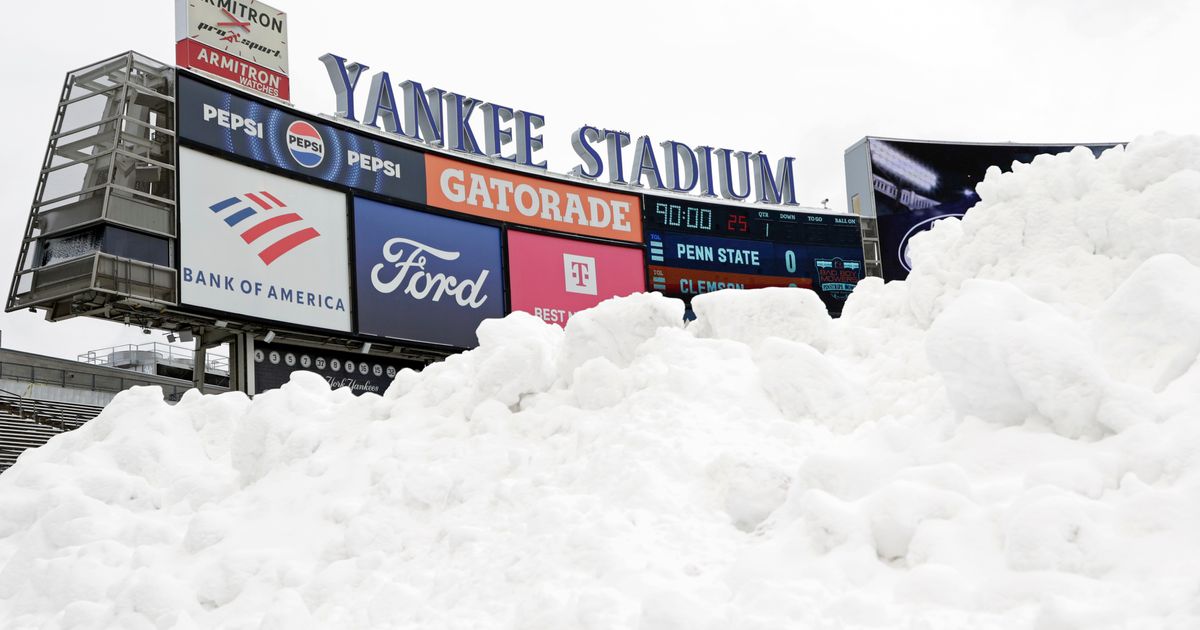
A winter storm across the Northeast and Great Lakes during the holiday travel period produced roughly 4 inches of snow in New York City (up to 10 inches in the Catskills and over 6 inches in parts of Long Island) and prompted at least 1,500 flight cancellations from Friday night, according to FlightAware; JFK, LaGuardia and Newark posted snow warnings and New York and New Jersey declared states of emergency. The event created localized disruptions to airlines, ground transportation and raised risks of tree damage and power outages, though authorities reported roads and skies beginning to clear by morning, suggesting operational impacts are acute but likely limited in duration and broader market significance.
Market structure: The immediate winners are road-salt/de-icing/materials suppliers (Compass Minerals CMP) and local utilities/energy suppliers from higher heating demand; the losers are airlines (AAL, DAL, UAL, LUV), online travel agencies (EXPE, BKNG) and airports because of direct refunds, crew re‑positioning costs and lost ancillaries. Competitive dynamics favor suppliers with concentrated production capacity (CMP) who can lift prices if inventories tighten; airlines with tight schedules and hub dependence incur outsized market-share losses short-term as recovery favors carriers with spare aircraft and crew flexibility.
Risk assessment: Tail risks include an extended cold snap or multi‑storm December–January stretch that pushes cancellations >2% of US scheduled flights for >7 days, creating meaningful revenue hit and potential regulatory fines; another tail is grid or runway infrastructure damage requiring capex. Time horizons: immediate (0–7 days) operational disruption and P&L noise, short-term (1–3 months) higher opex for airlines and elevated commodity sales for salt/gas, long-term (quarters) possible re-pricing of airline capacity and higher working‑capital for suppliers. Hidden dependencies: de-icing chemical inventories, crew rest rules, and FAA staffing levels; any of these can amplify effects.
Trade implications: Tactical: establish a 1–2% long position in CMP (ticker CMP) for 1–3 months to capture seasonal demand; establish a 0.5–1% hedge via buying 1‑month ATM puts on AAL or UAL (buy 1–3 delta puts or 10–15% OTM puts) entered within 3 trading days. Pair trade: long CMP + short AAL (equal USD notional) to isolate weather vs industry risk. Options strategy: sell 1–2 week call spreads against short airline equity shorts to monetize elevated IV, and buy longer‑dated (2–3 month) puts while selling 1‑week puts to play calendar decay if implied vol front month > long month by >3 vol points.
Contrarian angles: The market often overprices airline damage from isolated storms — historical parallels (2018–2019 winter storms) show airline equities rebound within 7–14 days, so avoid buying deep short‑dated puts; instead use calendar/vertical structures to avoid IV traps. CMP upside is capped if inventories are >30 days of normal sales — verify CMP inventory-to-sales within next earnings release (threshold >30 days reduces thesis). Unintended consequences: overweighting de‑icing exposure risks muted returns if warm snap follows; cap positions to 2% and set stop-loss at 20% adverse move or fundamental trigger breaches.
AI-powered research, real-time alerts, and portfolio analytics for institutional investors.
Request DemoOverall Sentiment
mildly negative
Sentiment Score
-0.30
