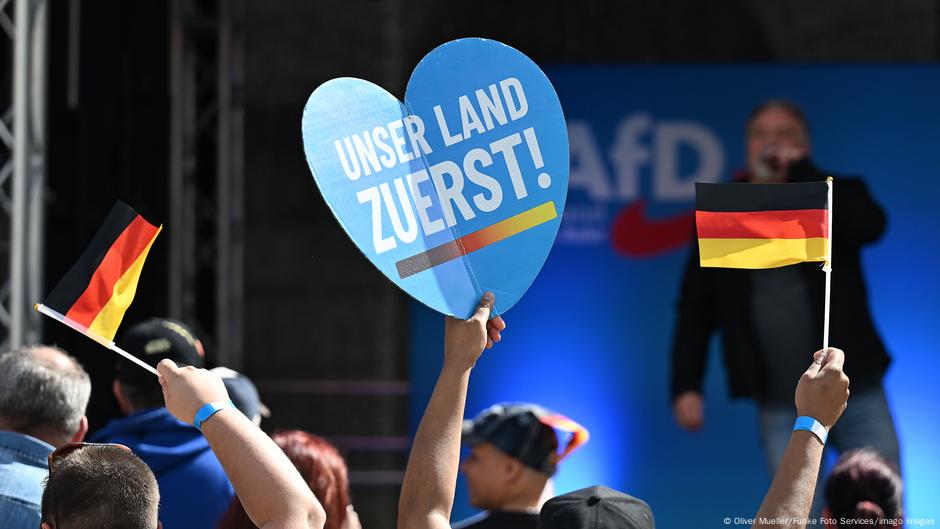
Germany's recent state elections in North Rhine-Westphalia saw the far-right AfD make significant gains, nearly tripling its vote share to 14.5%, while the Greens suffered substantial losses. The conservative CDU emerged as the largest party with 33.3%, followed by the SPD with 22.1%. This outcome, viewed as a protest vote reflecting public discontent over issues like migration, economic stability, and security, represents the first major public opinion test for Germany's new federal coalition government and indicates a notable shift in the political sentiment that could influence future policy directions.
The state election in North Rhine-Westphalia, Germany's most populous state, reveals a significant shift in the political landscape and serves as a critical barometer of public sentiment for the new federal coalition. The far-right Alternative for Germany (AfD) emerged as the primary victor in terms of momentum, nearly tripling its vote share from five years ago to 14.5%, thereby overtaking the Greens, who fell to 13.5% and were the clear losers. While the conservative CDU won the election with 33.3%, the result is overshadowed by the AfD's surge, which is being interpreted by political leaders, including the state's own Minister President, as a significant "protest vote." This outcome is attributed to widespread public uncertainty driven by unresolved domestic issues such as housing shortages and asylum policy, compounded by external shocks like the war in Ukraine and the lingering economic and social impact of the 2021 floods. The erosion of support for traditional parties in former industrial strongholds like Gelsenkirchen underscores a deep-seated discontent, signaling potential policy instability and challenges for the governing coalition's agenda, a risk reflected in the moderately negative sentiment score (-0.4) associated with this event.
AI-powered research, real-time alerts, and portfolio analytics for institutional investors.
Request DemoOverall Sentiment
moderately negative
Sentiment Score
-0.40
