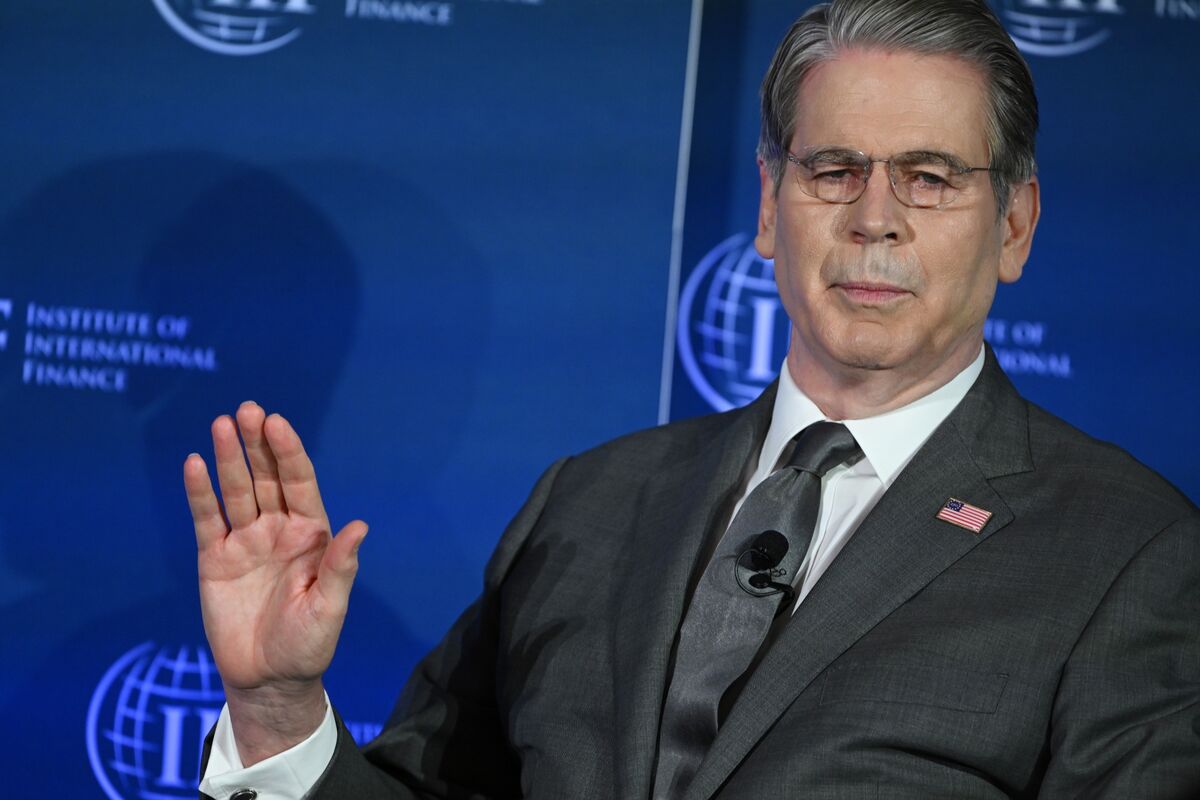
US Treasury Secretary Scott Bessent said the Iran war would be worth a "small bit of economic pain," signaling a willingness to tolerate short-term GDP costs for long-term security. His comments, made ahead of a likely tense meeting with UK Chancellor Rachel Reeves, underscore rising geopolitical risk and could weigh on global risk sentiment. The remarks also suggest policymakers may prioritize defense and security over near-term growth forecasts.
The market implication is less about the headline and more about regime shift: once policymakers frame geopolitical disruption as an acceptable input cost, risk assets need to price a higher probability of persistent energy/logistics volatility rather than a one-off shock. That tends to favor assets with embedded scarcity value and pricing power while pressuring rate-sensitive cyclicals, airlines, and consumer discretionary names that cannot pass through fuel and freight inflation quickly.
Second-order effects likely show up first in shipping insurance, defense procurement, and industrial input costs. Even without a direct commodity spike, a sustained premium for Middle East supply risk can tighten crack spreads, widen freight differentials, and raise working capital needs across inventories, which is a quiet earnings headwind over the next 1-2 quarters for import-dependent businesses.
The more interesting contrarian point is that the market may be overfocusing on the immediate war premium and underpricing policy divergence risk. If UK officials push back against overtly hawkish US rhetoric, transatlantic coordination on sanctions, shipping security, and defense procurement could become more fragmented, creating relative winners in European defense primes and beneficiaries of national-security industrial policy while weakening globally exposed defensives.
Catalyst path matters: the near-term move is driven by headline and positioning over days, but the bigger trade is whether this hardens expectations for sustained security spending and a higher structural risk premium over months. What reverses it is either a rapid de-escalation or evidence that the conflict does not impair physical supply, in which case the geopolitical beta decays quickly and the trade should be taken off.
AI-powered research, real-time alerts, and portfolio analytics for institutional investors.
Request TrialOverall Sentiment
mildly negative
Sentiment Score
-0.15
