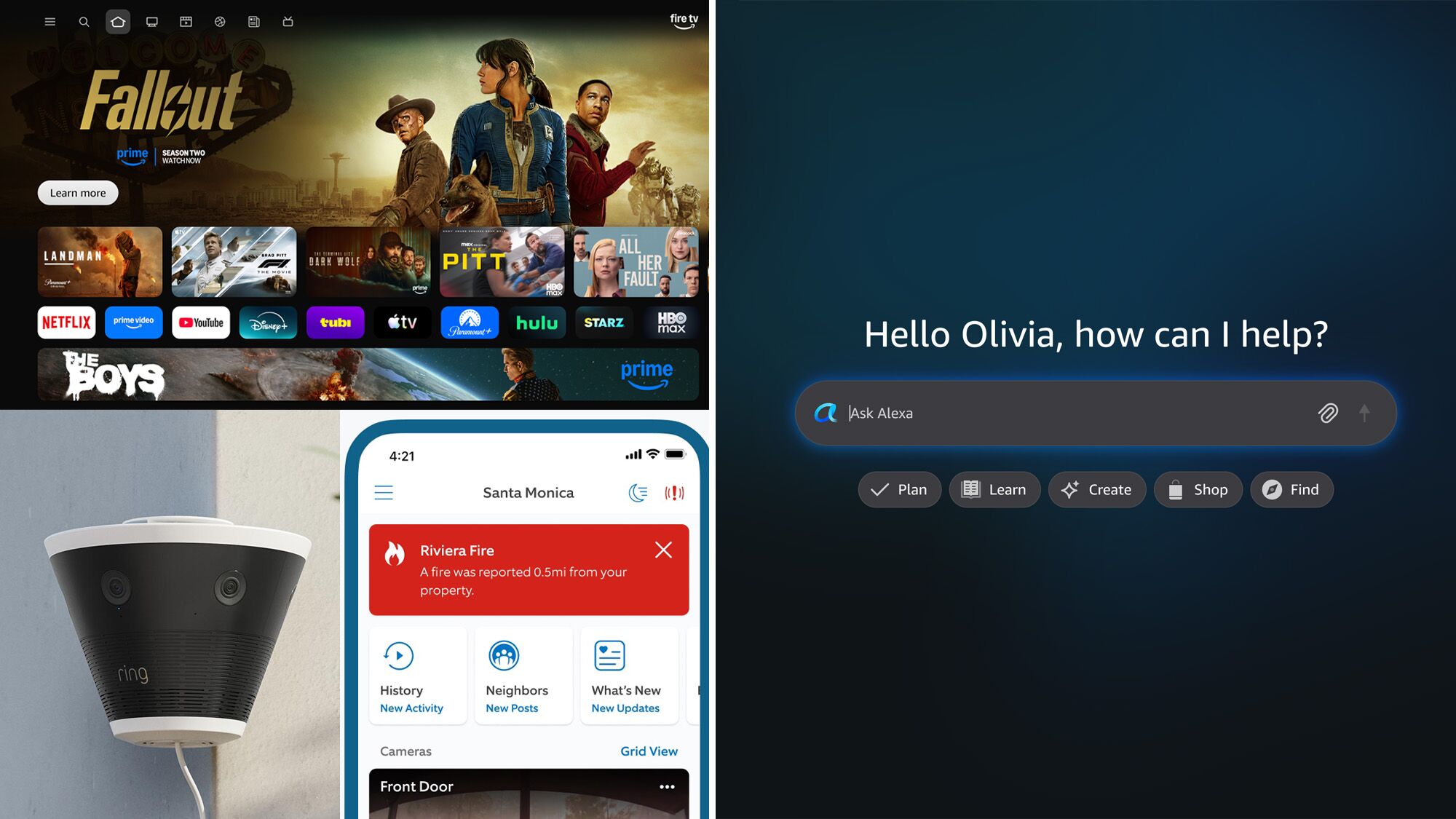
At CES 2026 Amazon unveiled a suite of AI-focused device and service updates aimed at increasing engagement and ecosystem stickiness, including a redesigned Fire TV interface advertised as up to 30% faster, the 4K QLED Ember Artline TV with access to over 2,000 pieces of free art, and a redesigned Fire TV mobile app. Alexa+ is expanding to the web via Alexa.com and to new OEM and automotive partners (BMW, Samsung, Bosch, Oura), with Amazon citing growth to tens of millions of users and metrics showing double the conversational engagement, threefold increase in purchases and fivefold increase in recipe requests. Ring announced Fire Watch, a Ring Appstore and Sidewalk‑based Ring Sensors to broaden security offerings, and the Bee wearable is adding productivity and insight features—moves that could incrementally boost device sales, service revenues and user monetization but are unlikely to drive immediate material changes to Amazon's near‑term financials.
Market structure: Amazon (AMZN) is extending platform control from commerce into living rooms, cars and wearables, which should raise lifetime value (LTV) and reduce customer acquisition costs versus pure-play streaming or smart‑home vendors. Direct winners: AMZN device ecosystem, AWS (inference/cloud), selected component suppliers for QLED panels and sensors; losers: independent smart‑home incumbents (e.g., ROKU as UI/OS commoditizes) and smaller AI assistants. Expect modest pricing power for Amazon services and transference of ad/commerce spend into Amazon channels over 12–36 months, with incremental capex pressure that could modestly widen cash conversion timing and affect short-term free cash flow.
Risk assessment: Tail risks include stringent privacy/regulatory action (EU/US fines or forced interoperability) or a major Ring security incident, any of which could reduce adoption and cost Amazon >$3–5bn over 12–24 months. Immediate effects (days) are limited to sentiment; short term (weeks–months) to device preorders and integration announcements; long term (quarters–years) to monetization via Alexa+ commerce and wearables. Hidden dependencies: Sidewalk network density, OEM partnerships (BMW, Samsung) and data-sharing agreements — loss of any key partner could slow rollout materially. Catalysts: CES product availability dates, quarterly results (next 1–3 quarters), and regulatory filings in the US/EU within 3–12 months.
Trade implications: Establish a 2–3% long position in AMZN within 2–6 weeks to capture ecosystem monetization, funded by a 1–1.5% short in ROKU (ROKU) as a secular UI threat; use a 6–12 month horizon. Buy AMZN Jan 2028 LEAPS (~12–15% OTM) sized 1% notional for asymmetric upside; finance with 3-month covered calls (5–10% OTM) to reduce cost if near-term IV compresses. Rotate modestly from pure streaming/media names into Consumer Tech (AMZN, selected panel suppliers) over the next 3–9 months.
Contrarian angles: Consensus assumes Amazon’s hardware is a loss leader; missing is the rapid purchase conversion datapoint — Alexa+ users already buy 3x more, implying 2–4ppt incremental CAGR to services if retention holds. Risk is underappreciated execution friction: device reliability, battery life for Bee and privacy backlash could delay revenue by 12–24 months, making near-term AMZN hardware enthusiasm overdone. Historical parallel: Google Assistant integrations grew reach but monetized slowly; if Amazon repeats that path, patient, option‑levered longs outperform immediate equity buys.
AI-powered research, real-time alerts, and portfolio analytics for institutional investors.
Request DemoOverall Sentiment
mildly positive
Sentiment Score
0.35
Ticker Sentiment
