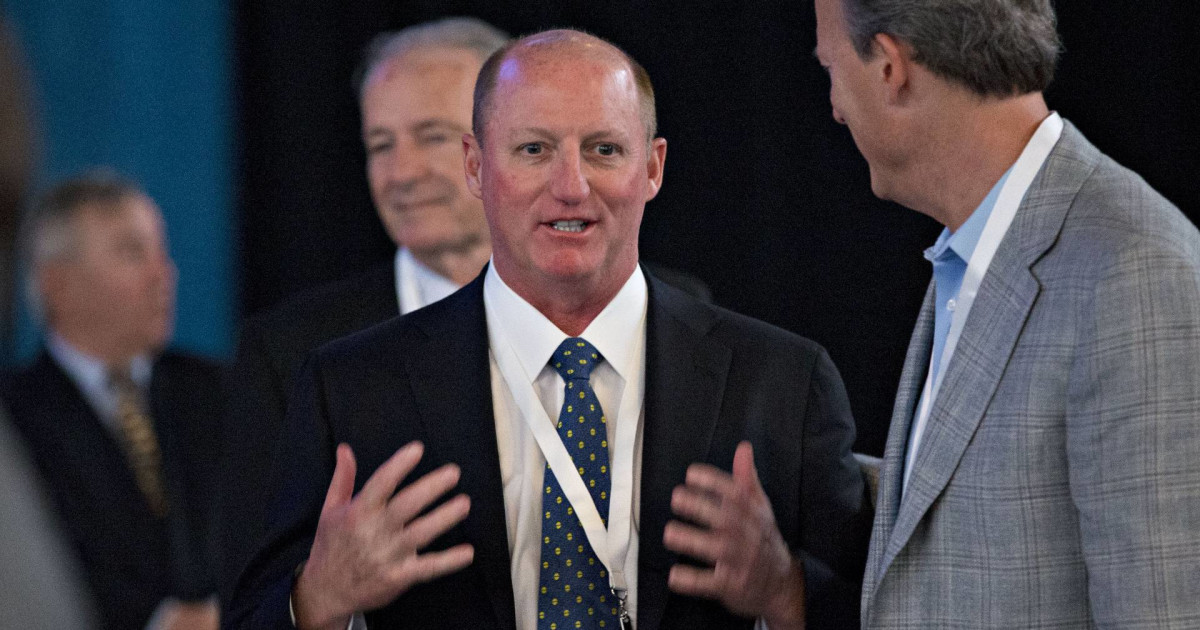
Q4 2025 operating earnings fell roughly 30% YoY to $10.2B, with insurance underwriting profits plunging 54% YoY to $1.56B; full-year operating earnings were $44.5B, down 6% from 2024. Berkshire ended 2025 with $373.3B in cash, resumed buybacks on March 4, and CEO Greg Abel purchased $15.3M of stock and will invest his after-tax salary annually, signaling capital deployment intent. Shares closed at $475.66 on March 26, down 0.11% that day and off more than 3.33% over a seven-session losing streak as investors weigh near-term headwinds from higher energy costs, weaker consumer spending, and rail/transportation margin pressure.
Abel’s early capital moves have more signaling value than immediate mechanical impact: when a manager restarts buybacks at a conglomerate-sized market cap, the psychology shift can compress valuation dispersion among value names even if the repurchase volume is small relative to market float. The real question for the next 3–12 months is whether buybacks and insider alignment are enough to offset cyclical earnings pressure that will play out across operating units and the investment book.
The operating stress is multi-layered and creates second-order winners and losers across supply chains. Elevated energy and freight cost shocks force OEMs and consumer brands to either absorb margin squeezes or cut volumes/capex, which in turn reduces demand for rail and industrial services — a feedback loop that hits pure-play transport and equipment names harder than diversified balance-sheet owners. Meanwhile, weaker underwriting reduces the growth rate of cheap, long-duration funding (the ‘‘float’’) and pushes the firm toward either deploying cash in public markets at lower yields or paying up for assets in private transactions.
Key catalysts to watch on a timeline: (1) a sustained drop in diesel/energy prices would materially relieve operating margins for freight and consumer exposure within 1–3 quarters; (2) a reversion to normalized underwriting results or meaningful M&A activity would reprice the conglomerate premium over 6–12 months; (3) a deeper macro slowdown would lengthen the pain and could force larger capital redeployments or more aggressive buybacks. Tail risks include prolonged high energy, broader risk-off flows away from value, and regulatory/insurance-loss surprises that force capital raises.
From a portfolio construction point of view, treat the name as a convex play on capital allocation and underwriting mean reversion rather than a pure cyclical exposure. Position size should reflect that management alignment lowers headline governance risk but does not eliminate macro sensitivity; use skewed option structures and relative-value pairs to isolate the capital-allocation call and hedge transport/cycle exposure accordingly.
AI-powered research, real-time alerts, and portfolio analytics for institutional investors.
Request DemoOverall Sentiment
strongly negative
Sentiment Score
-0.60
Ticker Sentiment
