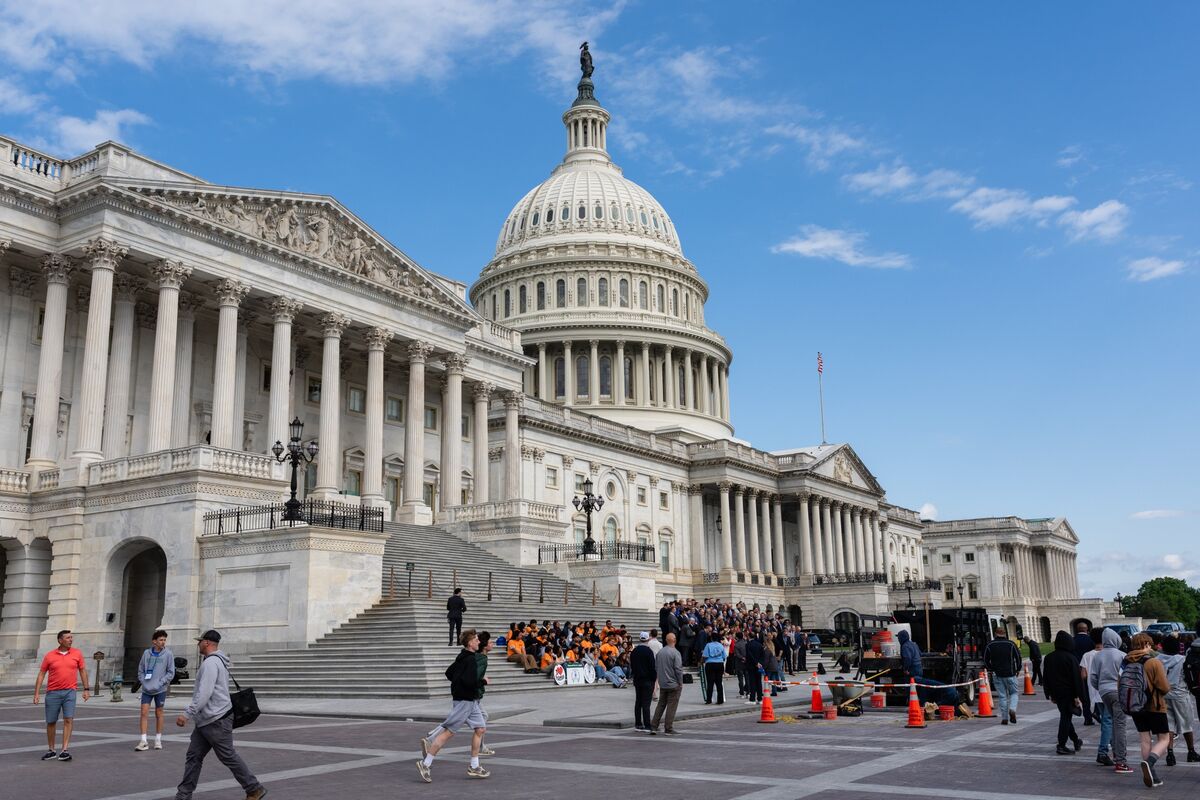
The Senate adopted S. Res. 526, which would withhold senators’ pay during future government shutdowns beginning after the midterm elections. The move is intended to deter funding lapses amid repeated shutdown threats in Congress. It is largely procedural and politically symbolic, with limited direct market impact.
This is less about immediate market impact than about changing the incentive structure around shutdown brinkmanship. The economic effect is negligible, but the political signal matters: by personalizing the cost of a lapse, it marginally raises the probability of earlier appropriations deals and lowers the odds of a prolonged standoff. The first-order winners are firms exposed to federal payment continuity—government contractors, defense names, and healthcare providers with Medicaid/Medicare timing sensitivity—because even a small reduction in shutdown odds is valuable for revenue visibility and working-capital planning. The second-order effect is on market perception of Washington risk premia. If lawmakers become more visibly exposed to shutdown costs, the tail risk of repeated 1-3 week funding interruptions should compress over the next 6-12 months, which could support a modest re-rating in small- and mid-cap government services names that have been discounted for budget volatility. However, the move can also be read as performative rather than binding; if it is easy to reverse, the deterrent value may fade after the next funding fight, leaving the probability of a larger year-end/quarter-end standoff largely intact. The contrarian angle is that this may slightly reduce the odds of a shutdown while increasing the odds of a more strategic, later-breaking funding showdown. If legislators believe they have addressed the optics, they may still use the threat as leverage, but with a somewhat higher willingness to let nonessential functions lapse because the pain is now more evenly distributed. That argues for treating any dip in shutdown-sensitive names as buyable only if the next appropriations deadline is still weeks away; near-term headlines can still create short, violent moves even if the medium-term path is marginally better. The cleanest trade is to own high-quality government contractors into periods of elevated budget tension and fade the volatility once a deal is in sight. The setup is asymmetric because downside from a brief lapse is often temporary, while upside from a reduced shutdown discount can persist through the next funding cycle. The main risk is that this legislation proves irrelevant in practice, and the next budget fight overwhelms the signaling effect.
AI-powered research, real-time alerts, and portfolio analytics for institutional investors.
Request DemoOverall Sentiment
neutral
Sentiment Score
-0.05
