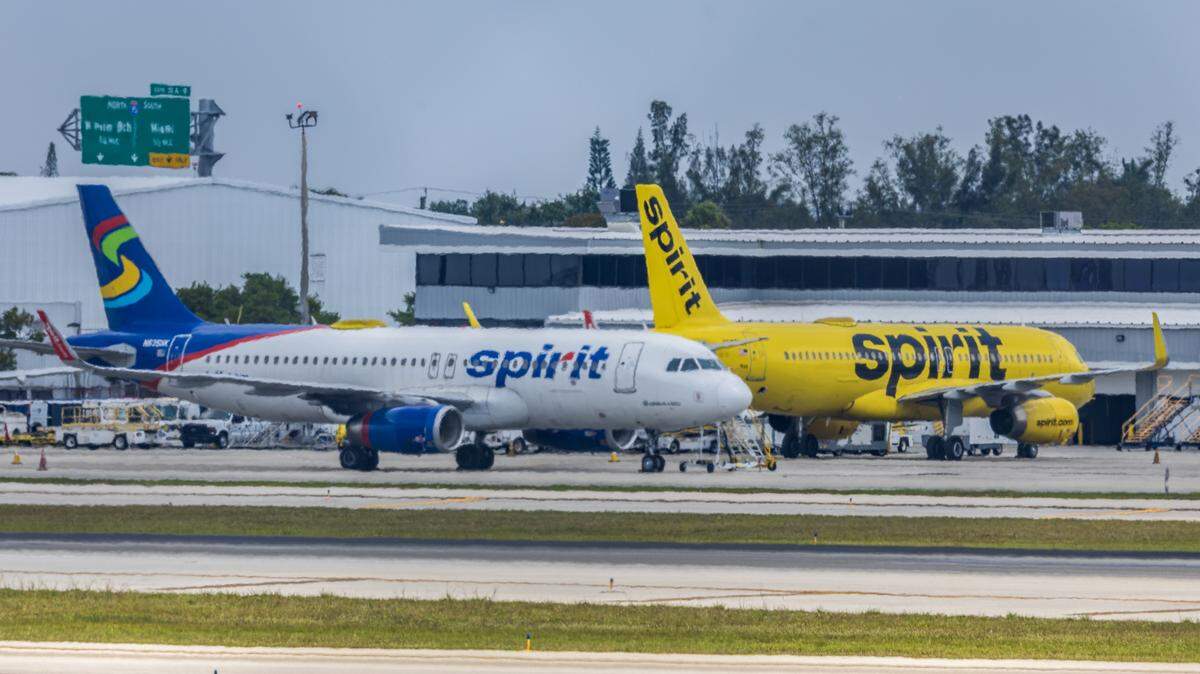
JetBlue is expanding at Fort Lauderdale-Hollywood International Airport with nearly 130 daily departures expected this summer, more than 75% above 2025 levels, after Spirit Airlines ceased operations. The carrier is also offering reduced "rescue" fares to capture stranded travelers and demand left by Spirit's wind-down. The news is modestly positive for JetBlue and highlights a rapid competitive response in South Florida aviation.
The immediate winner is not just JetBlue, but any carrier with the ability to rapidly redeploy narrowbody capacity into a distressed leisure market. The second-order effect is pricing power: once a major discount competitor exits, the surviving low-cost and hybrid carriers typically see both load-factor support and a faster-than-expected fare reset on overlapping routes, especially over the next 1-2 booking cycles. That creates a short window where unit revenue can improve faster than the market models, even if management publicly frames the move as opportunistic rather than structural. The bigger question is whether this is a one-off route grab or the start of a durable franchise expansion at FLL. If JetBlue can hold incremental frequency without diluting margins, this becomes a yield-positive network optimization story; if not, the added capacity risks becoming a low-fare trap once displaced demand normalizes and fare shoppers migrate back to price elasticity. Over 3-6 months, watch for competitive matching from legacy carriers and ultra-low-cost entrants, which can compress the implied pricing uplift well before traffic data fully reflects the Spirit collapse. The contrarian read is that the market may be underestimating the operational friction of absorbing stranded demand. In distressed airline events, the near-term winners often pick up more irregular operations, customer service burden, and schedule complexity than incremental profit, which can offset part of the revenue benefit for 1-2 quarters. The cleanest expression is to own the carrier with balance-sheet flexibility and avoid the names that are most exposed to promotional fares and lower ancillary revenue capture. From a broader travel lens, this is modestly bullish for Florida leisure demand and airport-linked vendors, but the highest-conviction impact is on airline relative performance rather than the entire travel basket. If Spirit’s exit proves lasting, the larger follow-on is a rationalization of ultra-low-cost capacity in the U.S., which would be a multi-quarter positive for industry pricing and margin normalization.
AI-powered research, real-time alerts, and portfolio analytics for institutional investors.
Request DemoOverall Sentiment
mildly positive
Sentiment Score
0.25
