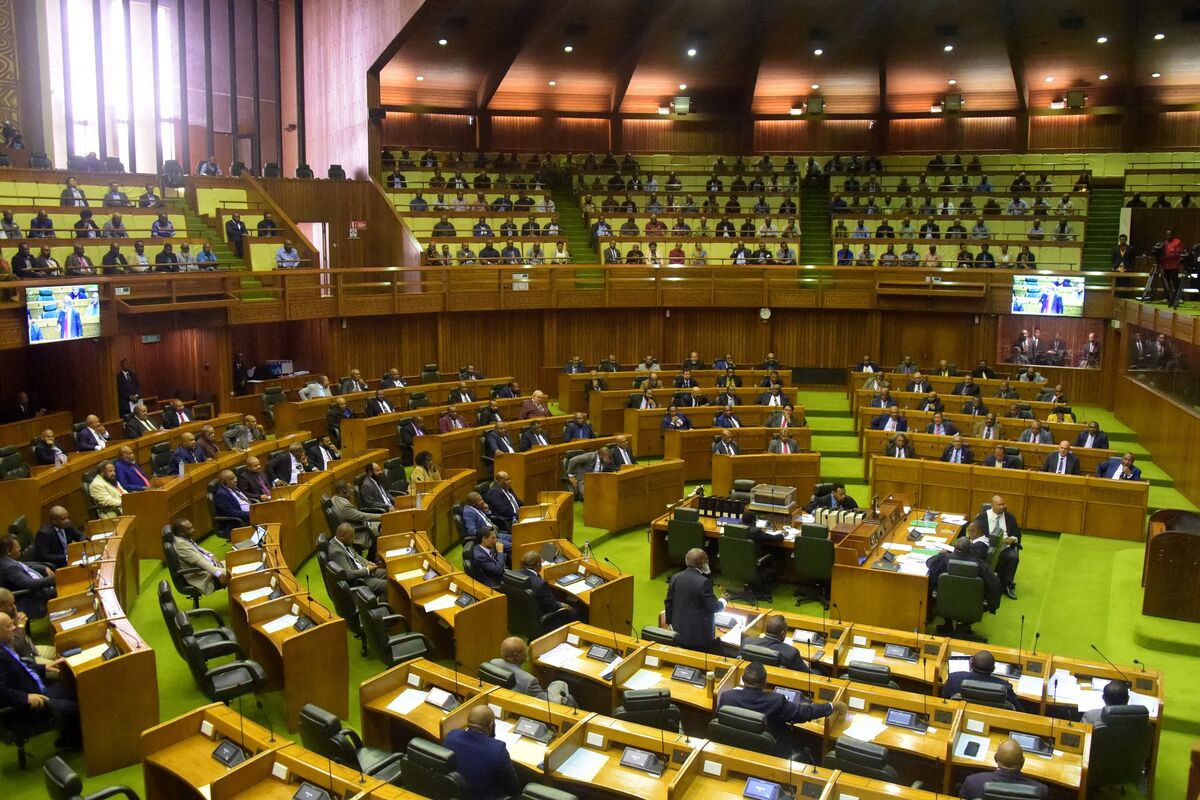
Guinea's interim parliament, the National Transitional Council, has proposed a constitutional amendment to extend the presidential term from five to seven years, while maintaining a two-term limit. This proposal, announced by Speaker Dansa Kourouma and slated for a September referendum, emerges months before scheduled elections following four years of military rule, introducing significant political uncertainty and potentially reshaping the nation's governance structure and long-term stability outlook for investors.
Guinea's political landscape faces heightened uncertainty following a proposal by the interim National Transitional Council to extend presidential terms from five to seven years. This move, which will be decided by a referendum in September, comes at a critical juncture just months before scheduled elections intended to conclude four years of military rule. While the proposal maintains a two-term limit, its introduction by an interim body significantly elevates the country's sovereign risk profile. For investors, particularly those in the resource sector, this signals potential for political instability and could be perceived as a maneuver to consolidate power, thereby delaying a smooth transition to civilian governance. The upcoming referendum now serves as a key event risk, with its outcome likely to influence policy continuity, contract stability, and the overall investment climate in the West African nation.
AI-powered research, real-time alerts, and portfolio analytics for institutional investors.
Request DemoOverall Sentiment
neutral
Sentiment Score
0.00
