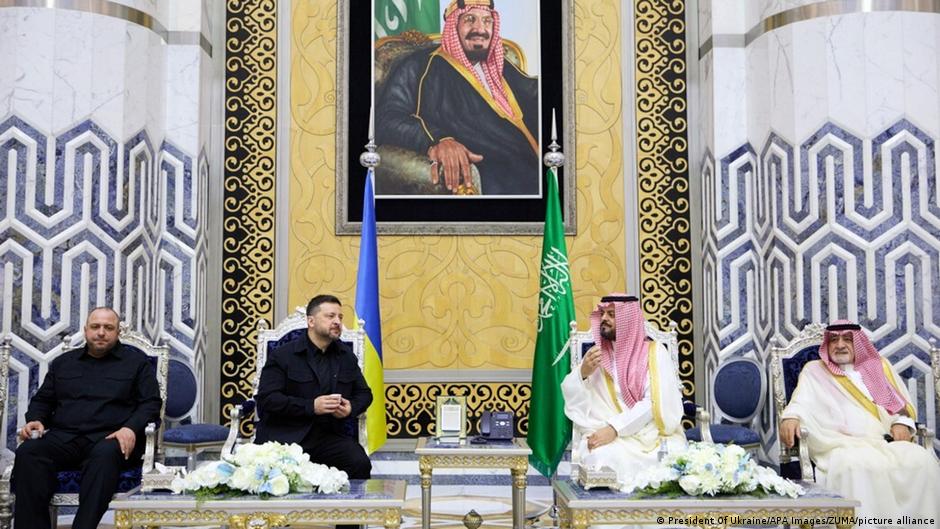
The article is dominated by geopolitical developments: Zelenskyy’s Saudi visit, U.S.-mediated Ukraine-Russia prisoner swaps, and Russia’s potential attendance at the G20 in Miami. On the economic side, Russia’s economy contracted 1.8% in the first two months of 2026, while the central bank cut rates by 50 bps to 14.5% amid still-elevated inflation just over 5%. The EU also approved a €90 billion loan to Kyiv, including funding for weapons and air defense, underscoring continued fiscal and defense support for Ukraine.
Ukraine is trying to convert battlefield know-how into diplomatic capital, and that matters because the scarce asset in the current conflict is not ideology but operational capability. Gulf states that face persistent drone/missile risk may increasingly buy Ukrainian counter-UAS expertise, sensors, and training, which is a quiet positive for European defense electronics, EW, and air-defense supply chains rather than broad defense primes alone. The second-order effect is that battlefield adaptation gets monetized faster, creating a feedback loop where Ukraine’s survivability improves even if headline Western aid slows.
The bigger macro signal is that Russia is being pushed into a harder funding mix just as growth is rolling over and policy rates are being cut from a weak starting point. That combination is usually toxic for currencies and bank balance sheets: lower rates can cushion activity, but if inflation stays sticky and oil-related disruption keeps raising logistics costs, the central bank is choosing between growth and price stability. The market implication is not an immediate sovereign stress event, but a slow grind higher in import costs, domestic funding pressure, and lower real incomes over the next 3-6 months.
The G20 attendance angle is more important for risk assets than for geopolitics: any visible Putin-Trump optics would be interpreted as a marginal easing of Russia’s isolation and a lower probability of further escalation in sanctions enforcement. That would be bearish for tactical oil volatility and bullish for duration-sensitive EM credit, but only if it is followed by concrete policy shifts. The contrarian read is that the market may be overpricing diplomatic de-escalation while underpricing continued infrastructure attrition in both Russia and Ukraine, which is a slower-burn bullish setup for defense and energy-security spending.
AI-powered research, real-time alerts, and portfolio analytics for institutional investors.
Request TrialOverall Sentiment
neutral
Sentiment Score
-0.10
