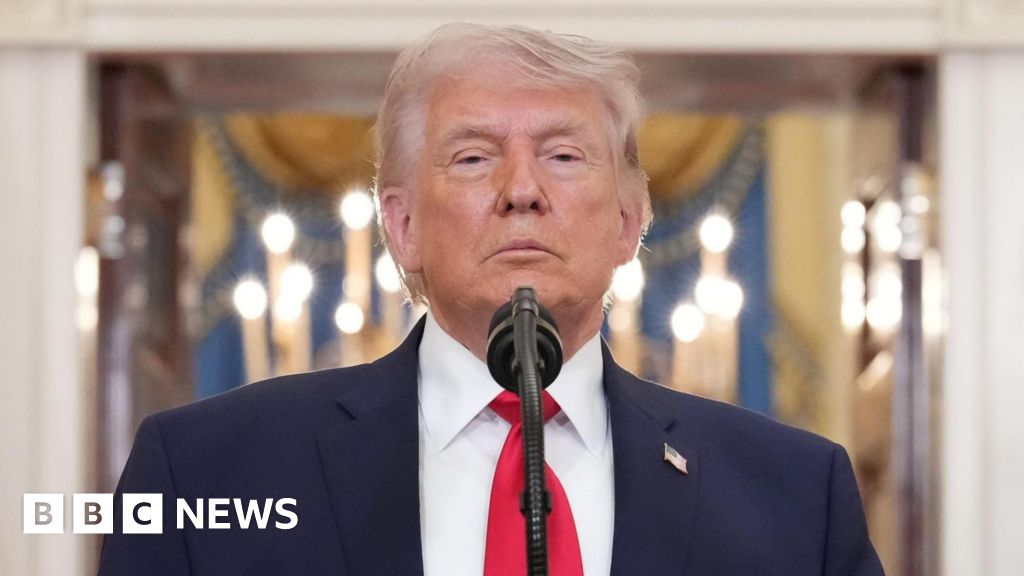
President Trump issued an expletive-laden ultimatum threatening to destroy Iranian power plants and bridges if the Strait of Hormuz is not reopened by his deadline (extended to Tuesday 8:00 PM ET). The strait's closure has already sent oil prices sharply higher and elevated global inflation risk; prolonged disruption would have market-wide effects on oil, shipping, and insurance costs. Regional strikes and retaliatory attacks — including damage to petrochemical and fuel infrastructure and the rescue of a downed US crew member — materially increase escalation risk and are likely to drive volatility in energy markets and safe-haven assets.
Immediate market mechanics favor energy and defense risk premia: disruption or prolonged threat to the Strait of Hormuz typically adds outsized insurance and tanker freight premia which translate into a prompt $5–$15/bbl transitory premium on Brent within days of escalatory headlines, and can feed through to refinery margins for light-sweet crude. Second-order winners include short-cycle US E&P (fast cashflow capture) and backlog-constrained petrochemical producers with pricing power; losers include regional refiners and chemical plants with single-source feedstocks, and logistics/airline operators facing higher jet fuel and re-routing costs.
Tail risks are asymmetric and time-staggered. Over the next 48–72 hours expect headline-driven spikes and liquidity stress in energy futures and shipping insurance; over 1–3 months the market will price in supply adjustments (charter re-routing, longer voyage cycles) and fiscal/aid flows into regional militaries; over 6–18 months the key reversals are diplomatic agreements or coordinated insurance corridors that can unwind risk premia quickly. Catalysts that would reverse the trade: credible US/Iran de-escalation, decisive neutral third-party mediation, or rapid capacity release from floating storage/SPRs.
Consensus is pricing a persistently closed chokepoint; that may be overdone if market participants assume a permanent physical cut in seaborne flows rather than episodic closures and insurance arbitrage. Tactical plays benefit from convex option structures around near-term headline windows while longer-term positions should be paired to hedge a fast diplomatic unwind — volatility will compress faster than physical supply readjusts, creating alpha for option sellers who scale into positions after the first 48-hour shock subsides.
AI-powered research, real-time alerts, and portfolio analytics for institutional investors.
Request DemoOverall Sentiment
strongly negative
Sentiment Score
-0.80
