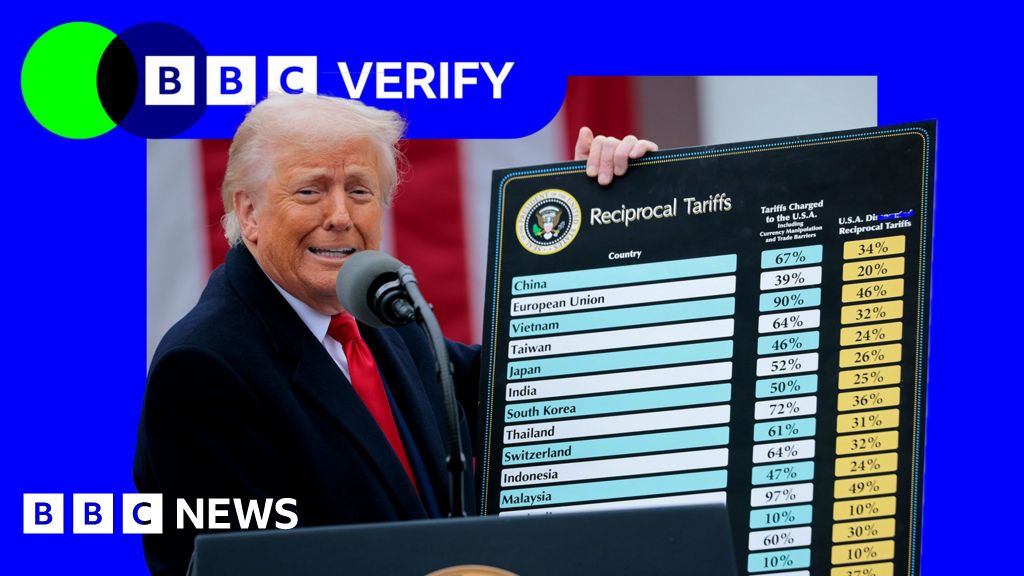
Donald Trump's latest tariff imposition has driven the average US tariff rate to 18.2%, its highest in nearly a century, significantly impacting the US and global economies. While generating substantial government revenue, projected to reduce borrowing by $2.5 trillion over a decade, the Congressional Budget Office warns these gains will be offset by tax cuts and a projected shrinkage of the US economy. Contrary to stated goals, the US goods trade deficit has widened, reaching a record $162 billion in March, while Chinese exports to the US have declined, with increased exports to other regions suggesting supply chain diversification. Critically, these tariffs are now feeding into US consumer prices, contributing to June's 2.7% inflation and marked price increases for specific imported goods.
The imposition of new tariffs has driven the average effective US tariff rate to 18.2%, its highest level since 1934, creating significant fiscal and economic crosscurrents. While tariff revenues tripled to $28 billion in June 2025 and are projected by the Congressional Budget Office (CBO) to reduce government borrowing by $2.5 trillion over the next decade, this fiscal benefit is projected to be negated by concurrent tax cuts and an overall contraction in the size of the US economy. Contrary to stated policy goals, the US goods trade deficit has widened, hitting a record $162 billion in March 2025, driven in part by firms stockpiling imports to pre-empt duties. The policy is also triggering a significant realignment of global trade flows; Chinese exports to the US fell 11% in the first half of 2025, while its exports to the EU, UK, and ASEAN nations saw respective increases of 7%, 8%, and 13%, suggesting supply chain diversification and potential tariff circumvention. Crucially, inflationary effects are now materializing, with the headline US inflation rate rising to 2.7% in June and specific data showing marked price increases for tariff-affected imported goods such as appliances and computers, indicating that costs are beginning to be passed on to US consumers.
AI-powered research, real-time alerts, and portfolio analytics for institutional investors.
Overall Sentiment
strongly negative
Sentiment Score
-0.65
