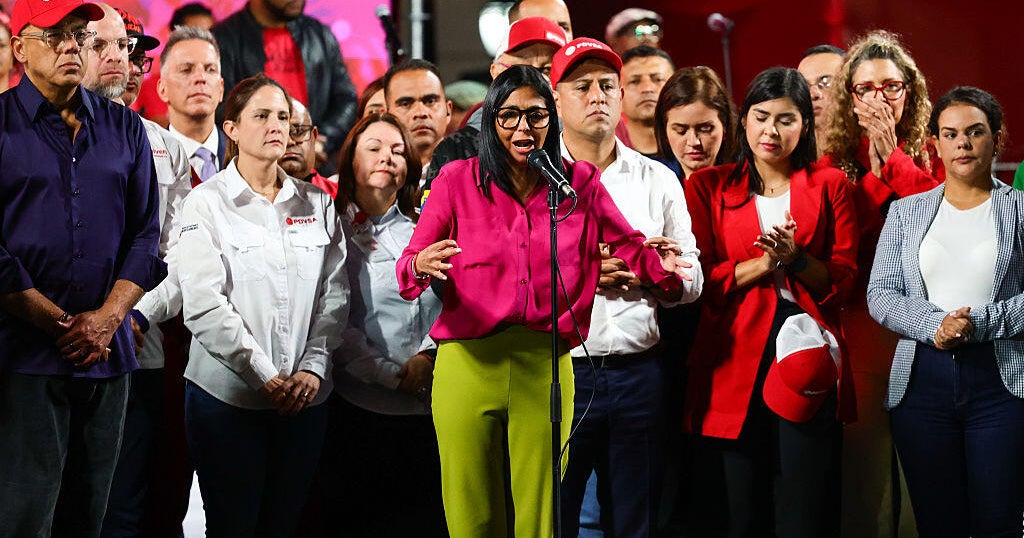
Acting President Delcy Rodríguez announced a general amnesty bill that could free hundreds of political prisoners detained for activities dating from 1999 to the present, while excluding those convicted of murder, drug trafficking, corruption or human rights abuses; the government did not publish the bill text. The announcement coincides with the reported release of all known U.S. citizens detained in Venezuela, steps toward reopening a U.S. diplomatic presence and the planned closure and repurposing of the Helicoide prison; Foro Penal estimates 711 political detainees with 302 released since Jan. 8. For investors, these measures signal a modest reduction in acute political risk and a possible opening for diplomatic normalization, but lack of legislative detail and ongoing human-rights concerns leave significant uncertainty about the pace and breadth of reforms.
Market structure: A political thaw that leads to sanction relief would primarily benefit Venezuelan hydrocarbon exports (potential +0.5–1.0 mb/d over 6–18 months if investment/technical access is restored), PDVSA counterparties, regional shipping and service firms, and Latin American equities that would re-rate on reduced geopolitical risk. Direct losers: marginal high‑cost oil producers and oil price bulls — a 0.5 mb/d supply re‑entry could mechanically shave 3–8% off Brent/WTI in 3–12 months and tighten EM sovereign spreads by 50–150bps as perceived sovereign risk falls.
Risk assessment: Tail risks include a regime reversal, reimposition of sanctions driven by U.S. domestic politics, or that released prisoners/PR steps prove superficial — each could trigger >30% moves in distressed Venezuelan assets and a re-widening of EM credit spreads. Time horizons split: immediate (days) — limited market reaction; short (weeks–months) — price moves on legal/text publication and embassy reopening; long (6–24 months) — material credit and oil flow effects contingent on investment and debt restructuring. Hidden dependency: meaningful production requires capital/technology and legal certainty; without that, announcements are largely sentimental.
Trade implications: Tactical opportunities are asymmetric: short 3–6 month oil exposure via put spreads sized 0.5–1% AUM to hedge downside from potential supply return, and selectively overweight Latin America equities (ILF) 1–2% AUM on 6–12 month horizon to capture de‑risking. Conditional credit play: prepare to buy Venezuelan sovereign/distressed PDVSA bonds (or CDS) with a 2–3% AUM allocation only after clear OFAC guidance lifting sanctions; target 30–100% IRR over 12–36 months. Use pair trades (long ILF, short EEM) to isolate LATAM re‑rating.
Contrarian angles: Consensus treats prisoner releases as PR; the market may underprice the speed with which oil can return if sanctions, banking access and foreign contractors are restored — but it also underestimates implementation friction (years not months) which could make oil shorts overdone. Historical parallel: Iran 2015 showed quick headline reaction but slow physical supply ramp; unintended consequences include OPEC+ cutbacks to defend price, or renewed capital flight if legal guarantees are weak — both would upend simple long-Venezuela/short-oil trades.
AI-powered research, real-time alerts, and portfolio analytics for institutional investors.
Request DemoOverall Sentiment
mildly positive
Sentiment Score
0.25
