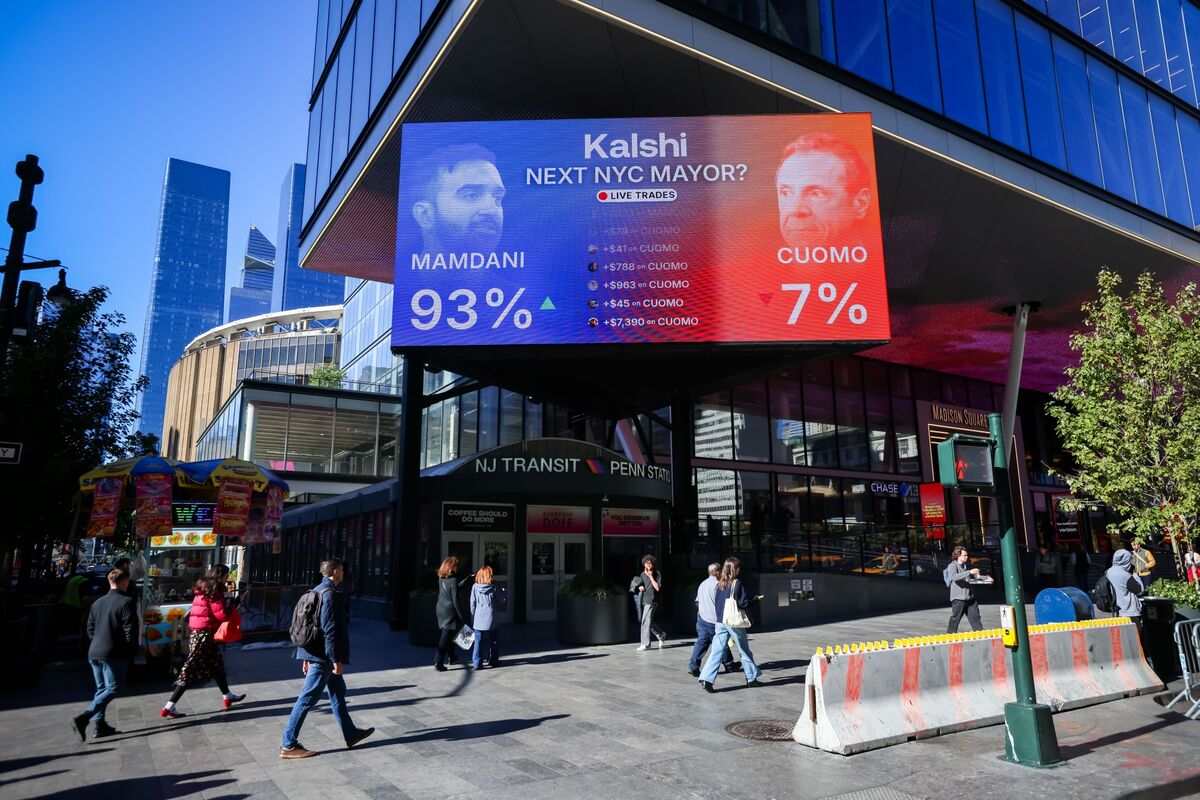
A federal appeals court issued a 2-1 decision upholding a preliminary injunction that the Commodity Futures Trading Commission (CFTC) — not New Jersey state regulators — has authority to regulate Kalshi's prediction markets. The ruling provides regulatory clarity that reduces state-level compliance risk and supports Kalshi's case for federal oversight, improving its prospects for national operation and growth. This is a sector-level regulatory development likely to benefit Kalshi and similar fintech derivatives platforms; monitor further appeals and CFTC guidance for broader market implications.
Federal-level regulatory clarity for event/prediction markets materially changes the economics of building regulated derivatives products: it reduces compliance friction for national distribution, which should meaningfully lower the marginal cost of onboarding institutional counterparties and clearing members. Expect 6–18 months for visible product rollouts and 12–36 months for those products to contribute to exchange and clearinghouse revenue lines via increased notional, clearing fees and data-licensing.
Incumbent infrastructure (exchanges, listed derivatives venues, clearinghouses, and wholesale market-makers) is the primary beneficiary because they monetize flow through fees, clearing and market-making rather than platform P&L. Smaller retail brokers that monetize via customer order flow and payment-for-order-flow face a bifurcation: either they embed event markets and keep flow, or they cede higher-margin derivatives flow to centralized venues, compressing their economics over 1–2 years.
Key risks: a reversal can come from adverse higher-court rulings, aggressive state statutes or a rapid political/consumer backlash if controversial contracts attract negative headlines — any one of these could re-impose fragmentation within 3–12 months. Liquidity risk is underappreciated: without predictable maker incentives event contracts will remain a niche product, capping revenue and valuation upside for infrastructure players in the first 12 months.
Monitor cadence: 0–3 months for product and clearing announcements from incumbents; 3–12 months for partner integrations and maker incentive programs; 12–36 months for measurable fee and data revenue. Trade sizing should reflect a staged rollout view — overweight infrastructure on optionality, not permanent re-rating.
AI-powered research, real-time alerts, and portfolio analytics for institutional investors.
Request DemoOverall Sentiment
moderately positive
Sentiment Score
0.35
