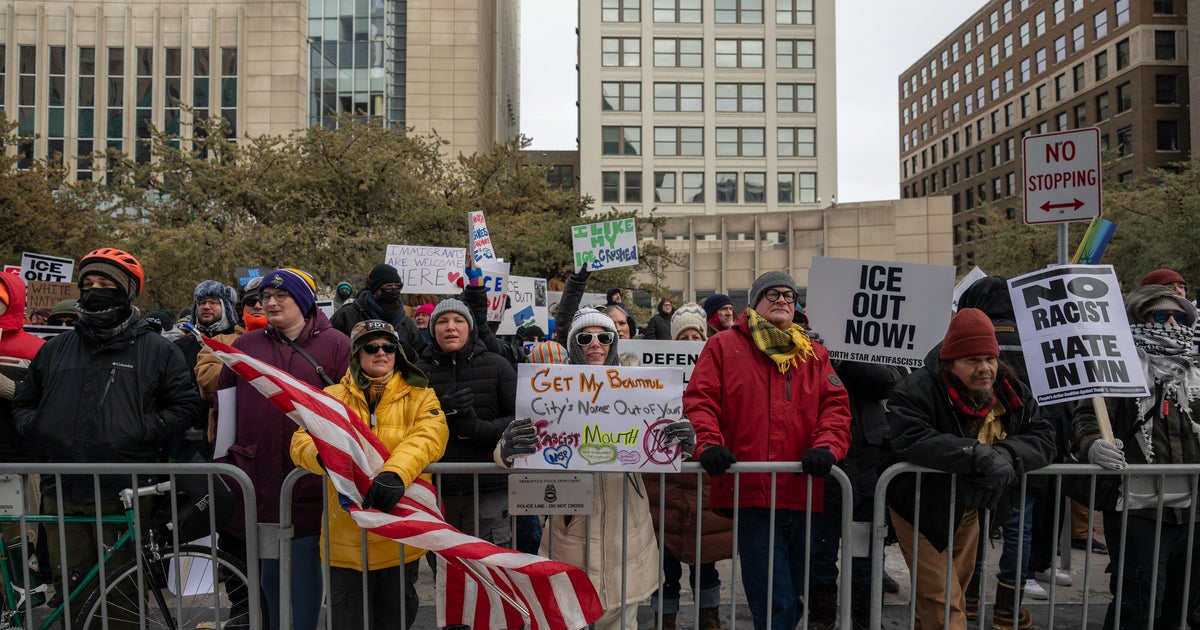
Minnesota has mobilized its National Guard at Gov. Tim Walz's direction amid sustained demonstrations and physical clashes in downtown Minneapolis over an ICE enforcement surge; troops are on standby but have not been deployed to city streets. Concurrently, the Justice Department is investigating Walz and Minneapolis Mayor Jacob Frey over alleged efforts to impede federal immigration agents, with subpoenas likely and a federal judge already limiting federal tactics — a development that raises political and operational uncertainty locally but is unlikely to move broad financial markets.
Market structure: Localized civil unrest and a National Guard mobilization are incremental positives for public-safety hardware and analytics vendors (e.g., Motorola Solutions MSI, Palantir PLTR) as municipalities and federal agencies refresh comms, surveillance and data tools; expect modest procurement demand in the low tens-to-low hundreds of millions over 3–12 months. Losers are downtown retail and regional mall REITs (proxied by VNQ/MAC) from reduced foot traffic; municipal credit spreads for Hennepin/Minneapolis-linked paper could widen 3–15 bps if protests persist beyond a week. Cross-asset: expect a short-lived risk-off bid to U.S. Treasuries (2–5 bps move), a 10–30% relative rise in implied vol for public-safety names, and small muni/Treasury ratio deterioration in affected counties.
Risk assessment: Tail risks include escalation to multi-week unrest causing >20% monthly foot-traffic drops and meaningful revenue hits to downtown retail/hotels, or a DOJ prosecution that materially alters federal/state cooperation and grant flows; probability low (<15%) but impact high. Time horizons: immediate (days) = headline volatility; short-term (weeks–months) = procurement RFPs and union-led work stoppages (SPFE Day of Action); long-term (quarters) = potential reallocation of state/federal budgets. Hidden dependencies: upcoming subpoenas, local elections, and union actions can amplify or dampen outcomes; catalyst watch: DOJ subpoenas, further officer-involved incidents, or National Guard street deployment.
Trade implications: Direct: establish a 1–2% tactical long in MSI for 3–6 months to capture municipal comms procurement (buy 3‑month ATM calls if IV <30% premium to historical). Add a 0.5–1% asymmetric long in PLTR (6–12 month view) to capture analytics/ICE contract upside. Defensive short: 0.5–1% short of VNQ or targeted mall REIT MAC for 1–3 months to express downtown retail risk; pair trade: long MSI (1%) / short VNQ (1%) to isolate security-spend vs. property risk. Options: consider 3‑month protective collars on REIT shorts if headlines spike; size conservatively (not >3% portfolio).
Contrarian angles: Consensus overweights the political shock — historically (post‑2020 unrest) downtown activity rebounded within 3–12 months, so a durable hit is not the base case; security and defense spend could be front‑loaded and already priced into MSI/PLTR, making near-term rallies crowded. The DOJ probe could paradoxically reduce federal tactical deployments (court limits), lowering incremental procurement — risk to long public‑safety longs if subpoenas lead to de‑escalation. Watch for >5 consecutive days of major downtown closures or a formal state deployment order as a trigger to materially increase defensive positioning.
AI-powered research, real-time alerts, and portfolio analytics for institutional investors.
Request DemoOverall Sentiment
moderately negative
Sentiment Score
-0.30
