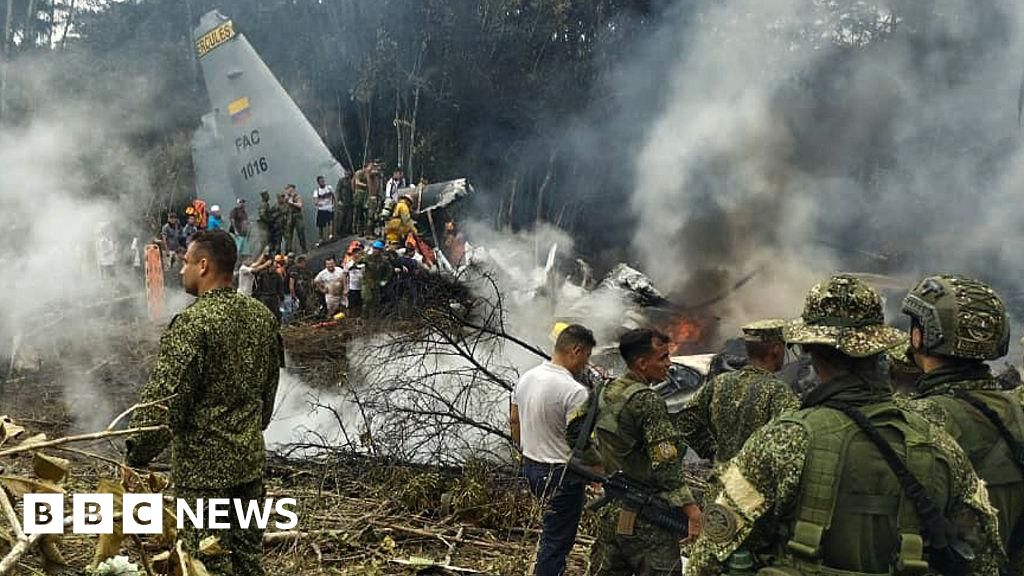
A Colombian Air Force C-130 Hercules crashed near Puerto Leguízamo with 125 people on board (114 passengers, 11 crew); 48 people have been recovered injured and hospitalized and fatalities remain unconfirmed. Emergency teams are combing the wreckage while President Gustavo Petro and the Defence Minister signaled possible equipment shortfalls and blamed bureaucratic delays in modernization. For portfolios, the incident has limited direct market impact but could increase near-term political pressure for accelerated defense procurement and scrutiny of military transport operations.
This incident is a catalytic accelerant for near-term demand in aftermarket MRO, avionics retrofits, and life-extension programs for legacy turboprop transports across Latin America; expect procurement decisions and emergency contracts to materialize in the 1–12 month window as militaries seek quick capacity replacement. Insurers and reinsurers with concentrated Latin American aviation portfolios will likely announce rate increases and tighter terms within 30–90 days, raising operating costs for regional carriers and government flight ops and creating a secondary credit stress channel for domestically exposed insurers and transportation firms. Politically, the administration’s public emphasis on equipment modernisation increases the probability of fast-tracked procurement (30–180 days) but also heightens corruption and audit risk, which could translate into stop-start budget flows — a two-way liquidity shock for suppliers and local contractors.
Operationally, one plausible regulatory response is temporary grounding or intensified inspections of similar airframes in the region; an Airworthiness Directive or fleet-wide checks could take effect within days and cascade into month-long capacity shortfalls that benefit rapid MRO providers and short-lead-time OEMs. Conversely, if investigations point to crew or infrastructure errors, the market reaction will concentrate on local logistics and airport safety names rather than defense OEMs; that bifurcation is the key driver of dispersion between global suppliers (beneficiaries) and Colombian EM-cyclical assets (losers). Tail risks include an extended political crisis leading to FX volatility and sovereign spread widening — material within 1–3 months if fatalities and public outcry trigger protests or budget re-prioritisation.
The consensus knee-jerk is to sell Colombian risk broadly; the less-appreciated read-through is a multi-quarter boost to aftermarket revenues for avionics and MRO specialists and a permanent repricing of Latin America aviation insurance. That divergence creates a structured pair opportunity: long specialty aerospace/MRO exposure vs short concentrated Colombian equity/FX exposure, timeboxable to the 3–12 month window around investigation milestones, budget announcements, and any AD issuance. Monitor three catalysts closely — official investigation findings (days–weeks), any fleet inspection mandates (days–weeks), and the government’s procurement funding decision (30–180 days) — to scale positions and set stops.
AI-powered research, real-time alerts, and portfolio analytics for institutional investors.
Request DemoOverall Sentiment
strongly negative
Sentiment Score
-0.80
