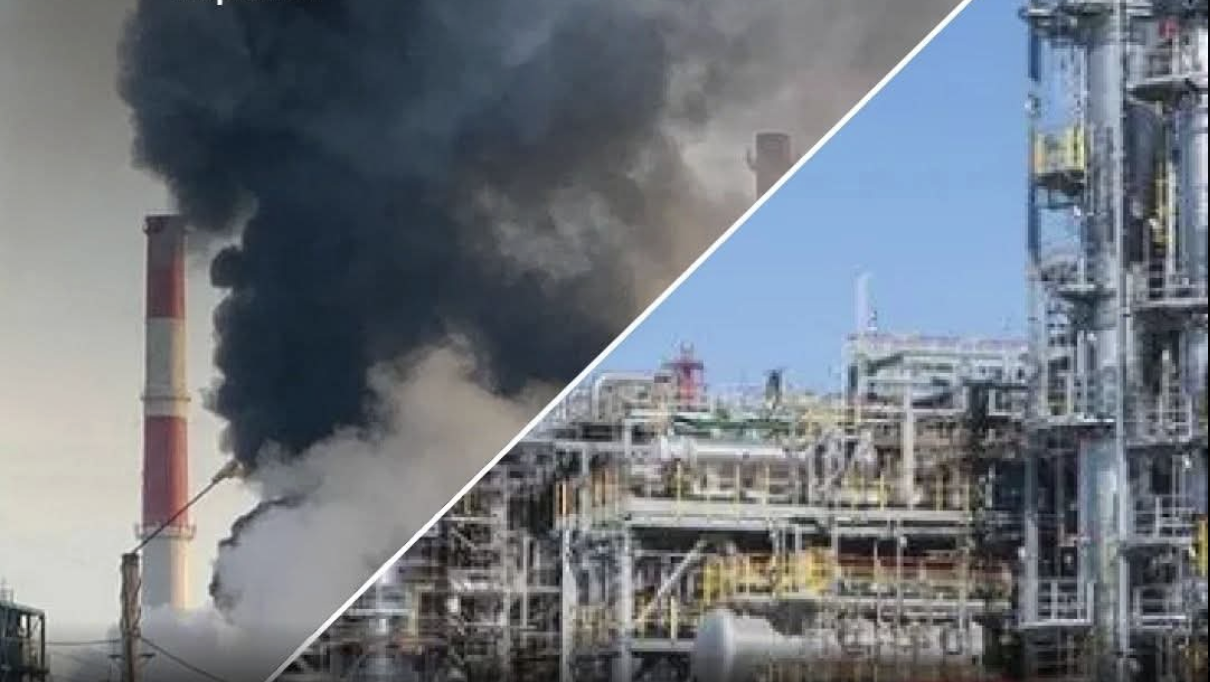
Ukraine said it struck the Lukoil-Nizhegorodnefteorgsintez refinery in Kstovo, one of Russia's largest, with 17 million tons of annual processing capacity, and an oil pumping station in Yaroslavl Oblast, while Russia intensified attacks on Ukraine, killing 5 and injuring at least 33. The report also highlights China’s alleged covert training of about 200 Russian soldiers, Russia’s launch of large-scale nuclear drills involving more than 64,000 personnel and 7,800 pieces of equipment, and mounting strain on Russian military hospitals from battlefield casualties. The overall tone is sharply risk-off due to escalatory war developments and potential implications for energy infrastructure.
The market implication is less about headline escalation and more about cumulative degradation of Russian logistics. Repeated refinery and pumping-station disruption raises the probability that Russia has to reroute crude, lean on lower-quality product imports, or sacrifice export volumes to protect domestic fuel availability; that is a margin and cash-flow problem before it becomes a headline gasoline-price problem. The second-order winner is not just crude bulls, but non-Russian refined-product exporters and firms exposed to tighter global middle-distillate balances.
The cross-border strike pattern suggests Ukraine is widening the target set from symbolic infrastructure to throughput chokepoints, which compounds quickly because refinery downtime is nonlinear: a few days of unit outages can create weeks of reduced operating rates if catalyst, power, or tankage are damaged. That increases tail risk for regional diesel spreads over the next 1-3 months, especially if Russia prioritizes military supply and crowds out civilian demand. On the other side, persistent attacks on Ukraine’s cities keep the war risk premium alive and raise the probability of intermittent shipping, insurance, and energy infrastructure disruption across the Black Sea corridor.
The China-training disclosure is strategically more important than tactically price-moving: it supports a longer-duration thesis that Russia is absorbing external military-industrial know-how despite sanctions, which makes the conflict more durable and raises the odds of a drawn-out attritional war. Nuclear drills are likely messaging, but they reinforce escalation asymmetry and should keep European defense spending expectations bid on any dip. The hospital capacity strain is another late-cycle indicator that Russia’s force regeneration is becoming a bottleneck, which may eventually limit offensive intensity even if mobilization continues.
Contrarianly, the consensus may be overestimating the immediate macro spillover from nuclear signaling and underestimating the slower burn from refinery attrition. If this is a maintenance-cycle rather than permanent capacity hit, the energy impulse fades in days; if it becomes a repeated pattern, the trade shifts toward product cracks and European defense over broad oil beta.
AI-powered research, real-time alerts, and portfolio analytics for institutional investors.
Request DemoOverall Sentiment
strongly negative
Sentiment Score
-0.60
