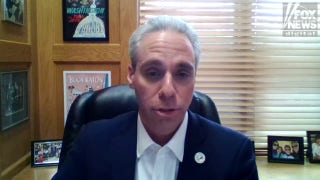
Mayor Brandon Johnson has threatened to veto Chicago’s council-passed 2026 budget — which omits his preferred $33-per-employee-per-month head tax — a move that could produce the city’s first municipal shutdown if an agreement is not reached before Dec. 30. The council-approved plan (passed 30-18) includes measures such as legalized video-gambling at eateries and Midway, a raised shopping-bag tax and a proposed $0.50-per-active-user social-media levy (expected to yield ~$31 million); the city faces a projected $1.2 billion shortfall for 2026. The dispute is a factional Democratic clash with potential political fallout and localized economic disruption, though broader market impact is likely limited.
Market structure: Short-term winners include gaming-machine suppliers (Light & Wonder LNW, Scientific Games SGMS) and local gambling operators if video-gambling and airport concessions clear; per-employee head-tax ($33/mo = $396/yr) creates a predictable marginal cost that penalizes labor-heavy downtown employers (e.g., United UAL has thousands of Chicago staff). Losers are Chicago-centric corporates, downtown hotels/office landlords and regional banks (Wintrust WTFC) that underwrite local CRE; expect localized credit spread widening of 50–150bps on Chicago munis if conflict persists beyond 2–4 weeks.
Risk assessment: Tail risks: a mayoral veto leading to a municipal shutdown or an S&P/Moody’s downgrade (10–30% probability) could force multi-week disruptions and >150bps muni spread shock. Timing: immediate (days) = headline-driven muni selloff and idiosyncratic equity moves; short-term (weeks–months) = council override vote and potential legal/state intervention; long-term (1–3 years) = persistent business relocation risk if policies become precedent. Hidden dependencies: state support from Gov. Pritzker, federal relief, and corporate lobbying can rapidly reverse outcomes; rating-agency commentary is the near-term catalyst to watch.
Trade implications: Tactical plays include short WTFC (2–3% book) via 3–6 month put spreads and a paired long in LNW/SGMS (1–2% via 3–6 month call spreads) to capture regulatory upside from legalized video-gaming. Defensive moves: trim Chicago/IL muni exposure by 30–50% within 7 days and reallocate to short-duration muni ETFs (PIMCO MINT) to avoid >100bps downside on longer-duration names. If municipal spreads breach +100bps vs. AAA within 14 days, scale shorts and add concentrated Chicago GO bond shorts if available.
Contrarian angles: The market may overprice permanence — historical precedents (1980s mayoral vetoes) show last-minute deals are likely; assign only short-dated positions and avoid long-dated structural shorts unless rating downgrades occur. Mispricings to exploit: buy selective downtown REIT/hotel exposure on >20–30% realized drawdown (12–18 month horizon) because talent, airports and corporate demand are sticky; conversely, avoid large-cap social media shorts—the $31M proposed tax is immaterial to META/SNAP at scale.
AI-powered research, real-time alerts, and portfolio analytics for institutional investors.
Request DemoOverall Sentiment
moderately negative
Sentiment Score
-0.45
Ticker Sentiment
