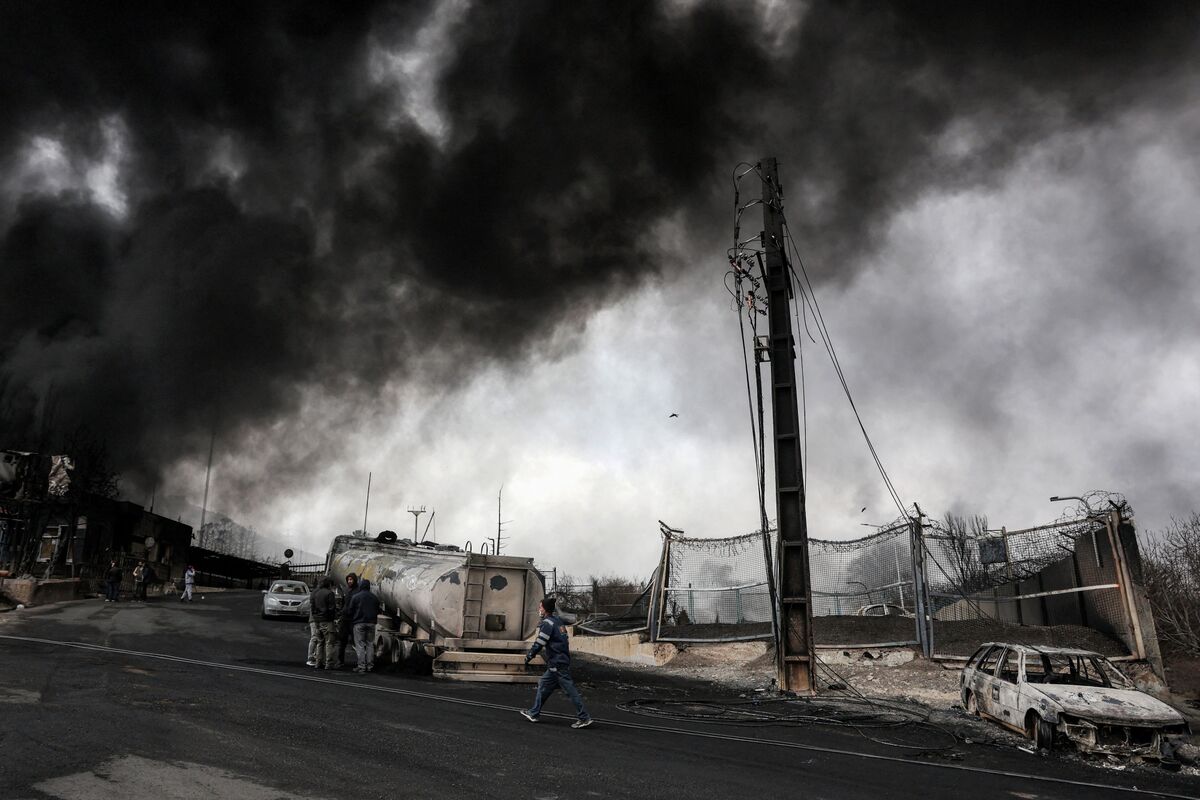
The war with Iran, now in its fourth week, is threatening energy companies' longer-term expansion plans even as they benefit from a recent surge in crude and natural gas prices; this raises near-term volatility for the sector ahead of CERAWeek in Houston. Policies and actions under the Trump administration (e.g., rollbacks on methane regulation, moves on Venezuela) initially favored fossil-fuel expansion, but the conflict increases geopolitical and sanction risks that could derail those strategies.
A geopolitically-driven supply shock will show up first as a rise in delivered crude and LNG costs, not just spot crude. Insurers and tanker owners price war risk into freight and hull premiums within days, which can add the equivalent of $0.50–$1.50/bbl to delivered oil for cargoes that must reroute or take longer transit lanes, mechanically tightening regional product and feedstock margins even if Brent moves modestly.
Higher short-term prices improve upstream free cash flow immediately, but they also raise the marginal cost of new supply: EPC contractors, FPSO yards and specialty tubular suppliers will reprice lead times and require higher deposits, pushing large projects into 6–18 month delays and creating a bottleneck for any deliberate capex ramp. By contrast, US tight oil can scale in ~3–9 months, so any sustained price impulse beyond 6 months will increasingly be supply-led rather than purely risk-premium driven.
Sanctions and payment-route disruption create durable winners in freight, trading houses and non-sanctioned storage hubs; expect basis shifts and arbitrage windows between major hubs as cargoes are rerouted. Over a multi-year horizon, the policy and investor response matters: if capital markets demand buybacks over long-cycle projects, majors will convert temporary windfalls into returns rather than new barrels, compressing future supply growth even after prices normalize.
Key catalysts and reversals: immediate spikes from tactical incidents (days), insurance/re-routing effects and project deferrals (months), and strategic capital reallocation decisions (quarters–years). Tail risks that would blow out these dynamics include broader regional escalation, closure of key chokepoints, large SPR coordination, or an unexpectedly fast shale supply response that collapses the premium.
AI-powered research, real-time alerts, and portfolio analytics for institutional investors.
Request DemoOverall Sentiment
mildly negative
Sentiment Score
-0.30
