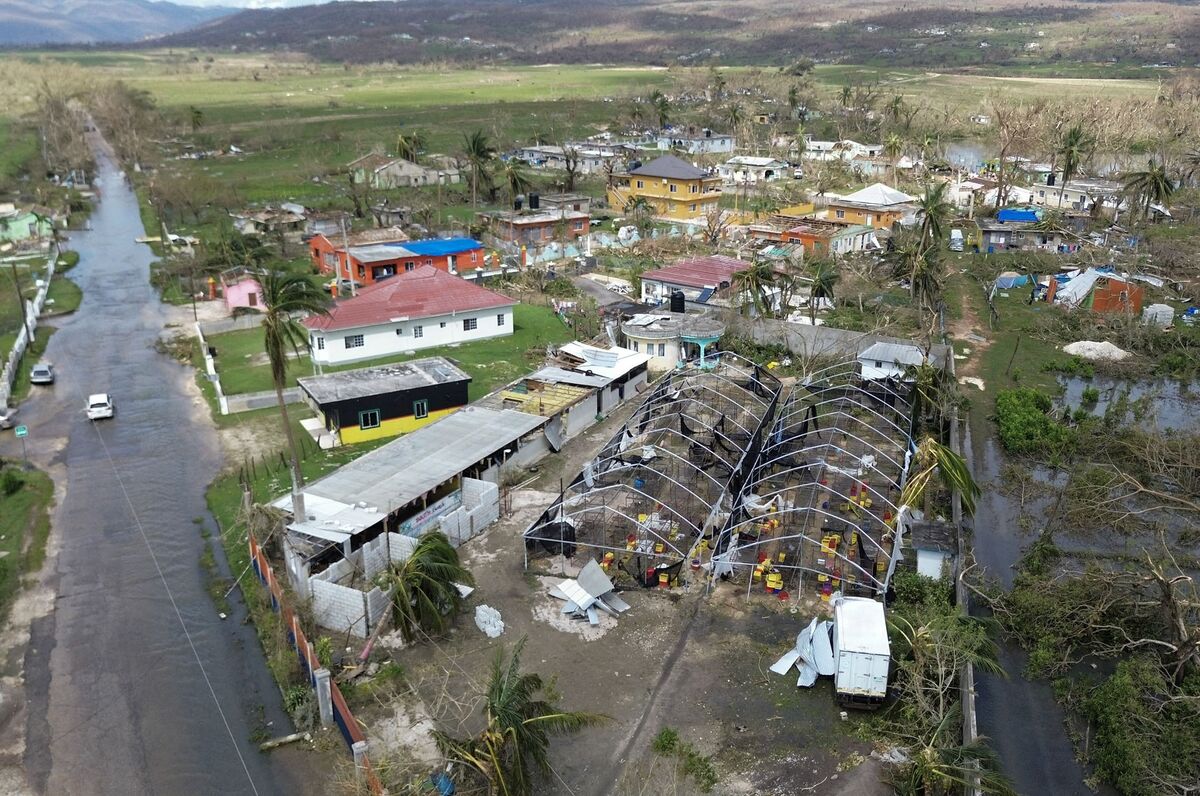
Jamaica secured a three-year financing package totaling $6.7 billion from multilateral lenders — the Development Bank of Latin America and the Caribbean, the Caribbean Development Bank, the Inter-American Development Bank Group, the IMF and the World Bank Group — to rebuild after a hurricane that damaged key infrastructure, industry and homes. The package should ease near-term fiscal financing pressures, accelerate reconstruction spending and bear on the sovereign's funding needs and credit profile over the medium term.
Market structure: The $6.7bn package (≈40% of Jamaica’s ~US$16–17bn GDP) is a large demand shock for construction, engineering and materials over 12–36 months. Immediate winners are construction/materials suppliers and equipment OEMs that can service fast-turn rebuilds (cement, steel, heavy equipment); losers are short‑term liquidity-constrained local businesses and re/insurers facing near-term claims volatility. Capital flows should tilt toward USD‑denominated Jamaican bonds and regional banking exposures as sovereign risk is backstopped by multilaterals.
Risk assessment: Short-term (days–weeks) expect FX stability or modest JMD strength and sovereign spread tightening if tranches are announced; medium (3–12 months) execution risk (procurement delays, cost overruns) can push overruns of 20–50% on projects and reintroduce contingent liabilities. Tail risks: another hurricane within 12 months, tranche conditionality withheld, or corruption investigations that stall disbursements — any raises default/FX stress. Key hidden dependency is tranche timing: true demand stimulus only materializes on disbursement (monitor next 90 days).
Trade implications: Tactical plays favor global materials (CRH, CX), equipment (CAT) and EM sovereign exposure (EMB) with 6–18 month holding periods; prioritize liquid equities/options for asymmetric upside while using sovereign bond pick‑ups only if YTM compensates for execution risk (>~7.0% on Jamaica USD paper). Use call spreads to express commodity/construction exposure and relative-value pairs to short reinsurance cyclicals if cat bond spreads remain muted. Rebalance as disbursement milestones are met (trim on 75–150bp spread compression).
Contrarian angles: Consensus underestimates inflationary input‑price spikes and crowding-out of private local projects —materials may rally more than sovereign bonds. Historical parallels (Puerto Rico) show large multilateral pledges often disburse slowly; if disbursement lags >120 days, construction equities may already price in growth and become vulnerable. Unintended consequence: improved sovereign credit optics could tighten spreads too quickly, creating short-term alpha in CDS or longer-duration local paper for opportunistic sellers.
AI-powered research, real-time alerts, and portfolio analytics for institutional investors.
Request DemoOverall Sentiment
mildly positive
Sentiment Score
0.28
