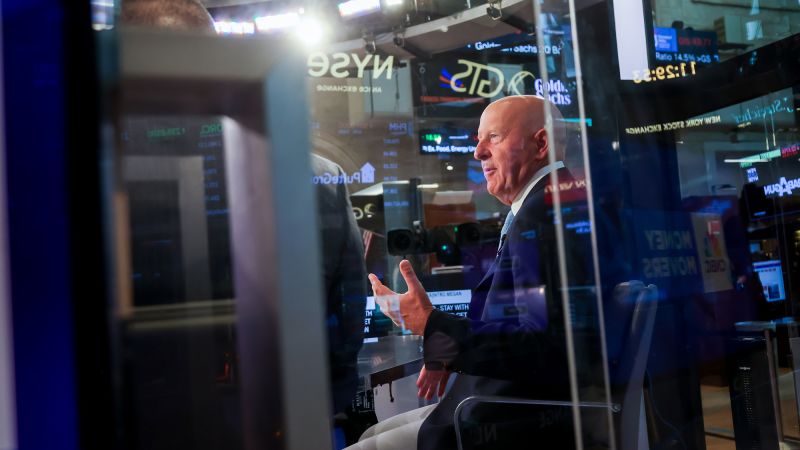
Former President Trump publicly criticized Goldman Sachs CEO David Solomon and the firm's chief economist, Jan Hatzius, over a report projecting consumers will bear a growing share of tariff costs, escalating from 22% to a projected 67% by October. Trump countered that tariffs have not caused inflation but rather generate Treasury revenue, also making personal remarks about Solomon. This public dispute underscores a significant divergence on the economic impact of trade policy, despite recent CPI data showing July consumer prices rose only 0.2%, maintaining an annual inflation rate of 2.7%.
A public dispute has emerged between former President Donald Trump and Goldman Sachs over the economic impact of tariffs, creating a notable point of friction between political rhetoric and institutional economic analysis. The catalyst is a research report from Goldman's chief economist, Jan Hatzius, projecting that the share of tariff costs borne by U.S. consumers will escalate significantly from 22% as of June to 67% by October. Trump directly refuted this, asserting that tariffs have not caused inflation and instead serve as a major source of revenue for the U.S. Treasury. This conflict is underscored by the latest Consumer Price Index data, which showed a modest 0.2% monthly increase in July, keeping the annual inflation rate at a contained 2.7%. While this current data seemingly supports the view that inflation is not accelerating due to tariffs, it does not invalidate the forward-looking nature of the Goldman Sachs forecast. The credibility of the bank's projection is bolstered by Hatzius's strong track record, including his correct contrarian call that the U.S. would avoid a recession in 2023, and the fact that other major financial institutions hold similar warnings about future tariff-related price increases.
AI-powered research, real-time alerts, and portfolio analytics for institutional investors.
Overall Sentiment
mixed
Sentiment Score
0.00
Ticker Sentiment
